

The Corn Palace, Mitchell: Why This South Dakota Landmark Is Better Than It Sounds
A palace covered in corn sounds like the setup to a joke. Then you get to Mitchell, look up at those onion domes and giant grain murals, and quietly drop the punchline.
I’ll be honest — I wasn’t expecting much. The Corn Palace is one of those places that’s easy to dismiss from a distance: an oddball roadside stop, good for a photo, probably not worth slowing down for. I was wrong, and I’m glad I gave it more than five minutes.
Once you understand why it was built, how the murals are made, and what the place actually means to this part of South Dakota, it stops looking like a novelty and starts looking like something genuinely worth your time.
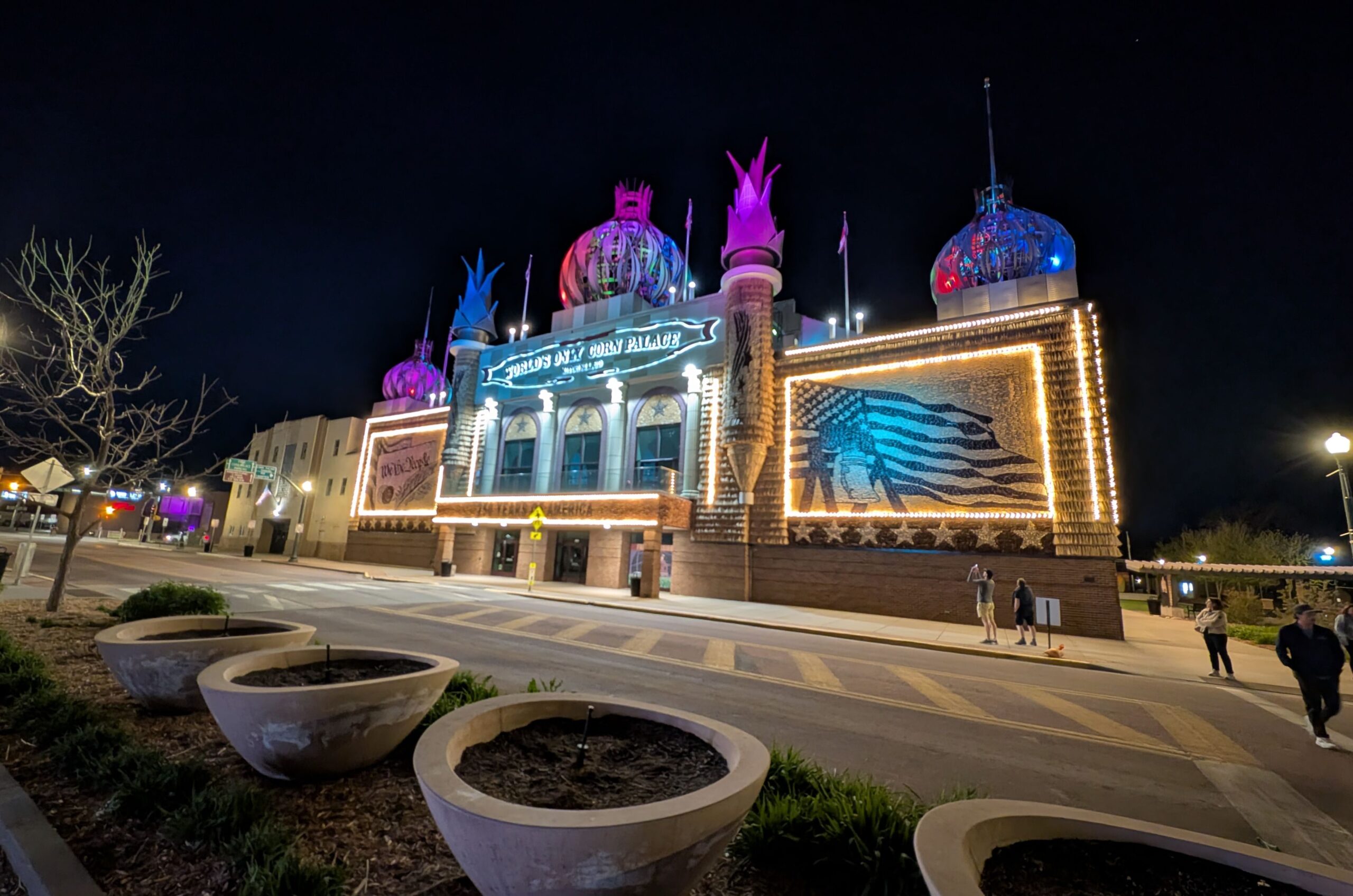
What the Corn Palace Actually Is
The Corn Palace is a civic building in downtown Mitchell. It’s also an events venue, a tourist stop, and a very deliberate badge of local pride. Those things aren’t in tension — they’re the whole point.
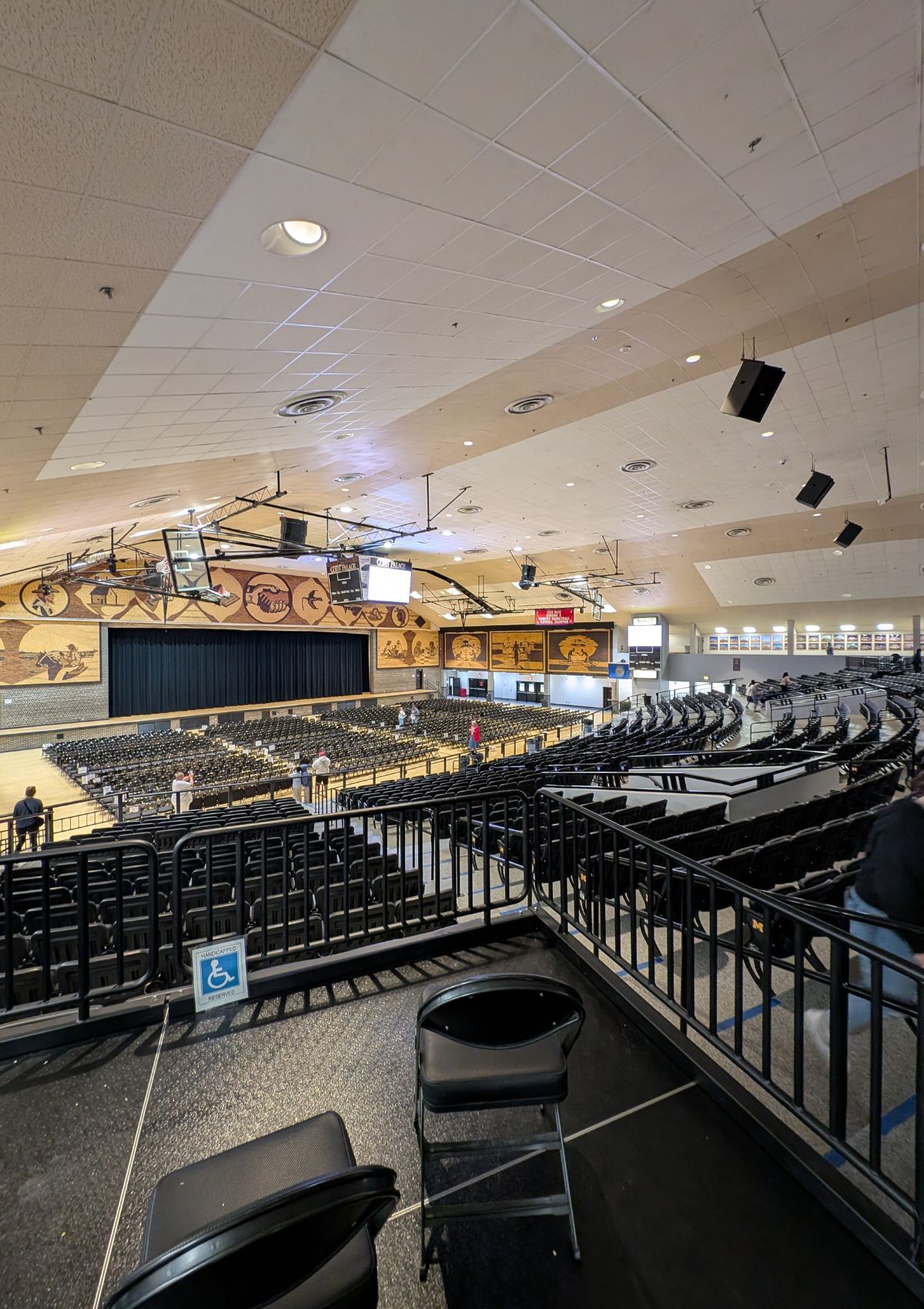
On any given day it might be hosting a community event, a concert, or a basketball game. On the same day, travellers are walking its perimeter trying to work out how anyone builds a building out of corn. That combination of the everyday and the extraordinary is what makes it stick.
Why Mitchell Built It
The first Corn Palace went up in 1892, and the thinking behind it was both simple and clever. South Dakota needed attention. The state wanted settlers, investment, and proof that this wasn’t some barren edge of the map. So Mitchell turned its harvest into a showpiece.
Instead of words and pamphlets, the crops made the argument. Corn, grain, and grasses became decoration. Visitors came to see what the region could grow, and the publicity that followed was the kind that stuck.
The building has been rebuilt and updated over the years — the current structure dates to the early twentieth century — but the ritual has never changed. Refresh the exterior each season, celebrate the harvest, welcome visitors, repeat. That’s why it feels less like a stunt and more like a tradition with genuine roots.
Why Corn, and Why Here
Corn isn’t a random mascot for Mitchell. In eastern South Dakota, agriculture has shaped work, identity, and landscape for generations. You don’t need anyone to explain this — you can read it in the fields lining the Interstate, the grain silos on the edge of town, the machinery yards and the rhythm of the place.
The Corn Palace only works if the crop means something. Here, it does. Corn is food, income, weather anxiety, a good year and a hard one, all folded together. When Mitchell puts it on the wall of its most famous building, it isn’t being self-deprecating. It’s being direct about what this place is built on.
That sincerity is what saves the Corn Palace from feeling like a gimmick.
The Murals Are the Real Story
The domes get your attention first. The murals are what make you stop walking and actually look.
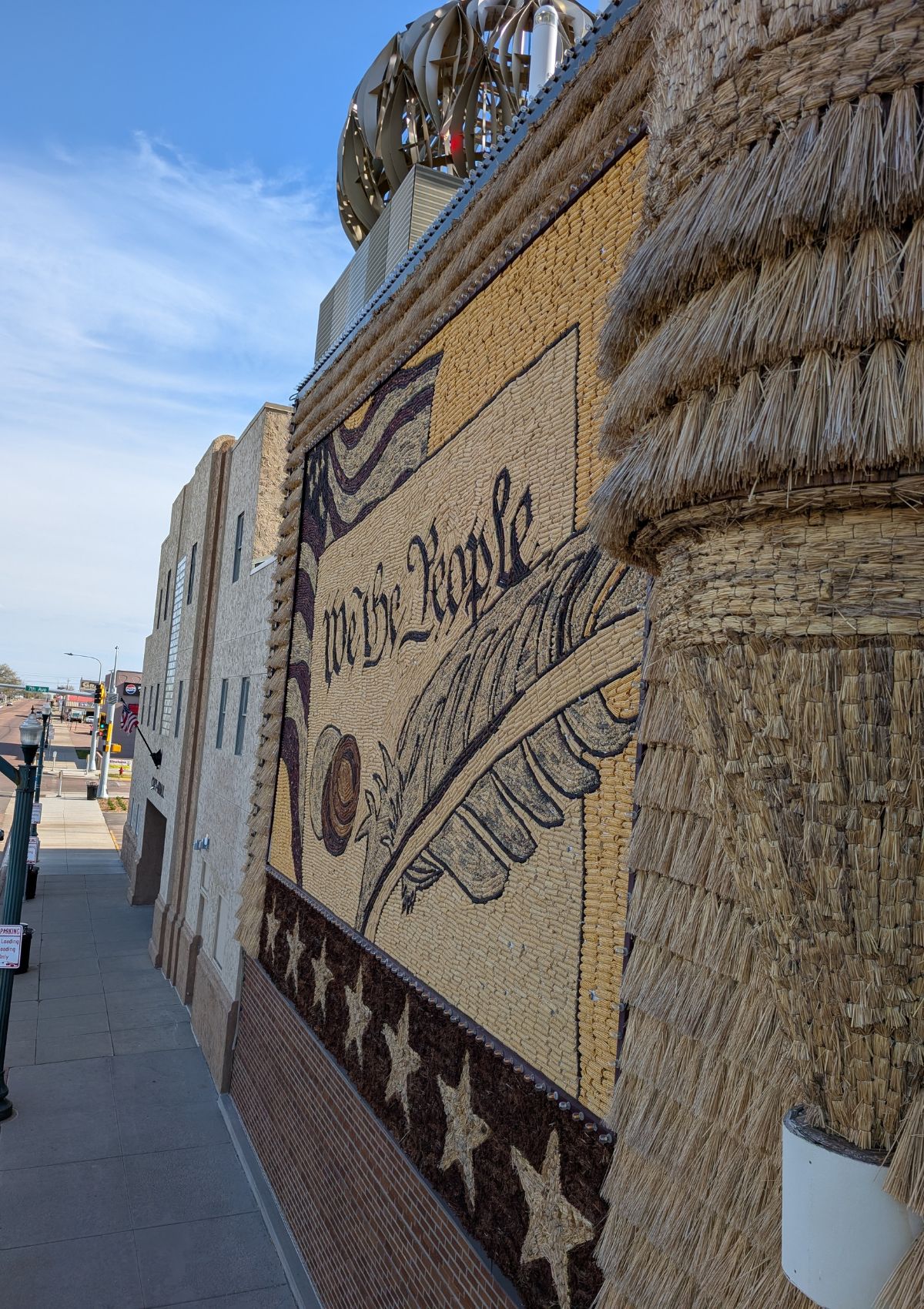
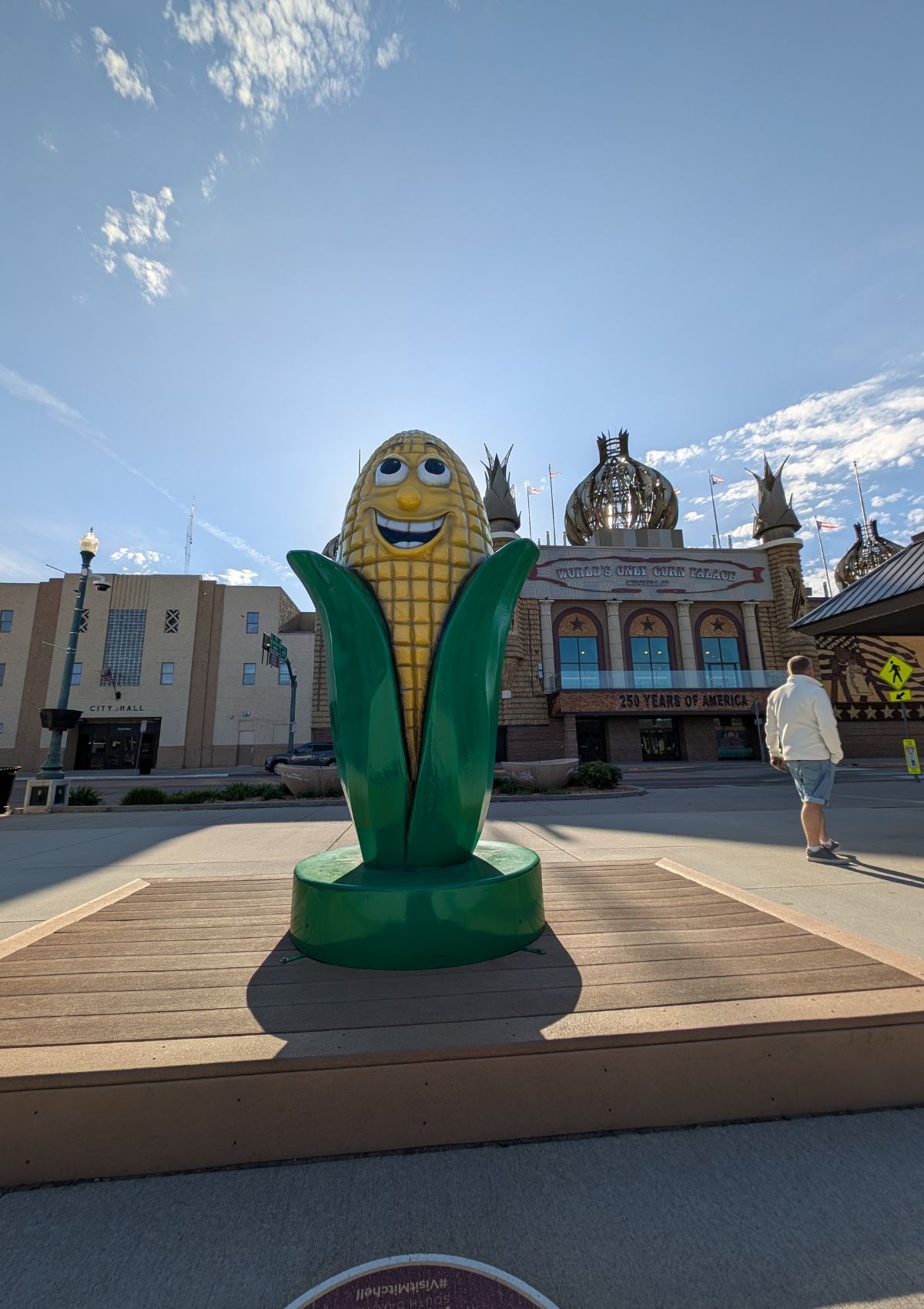
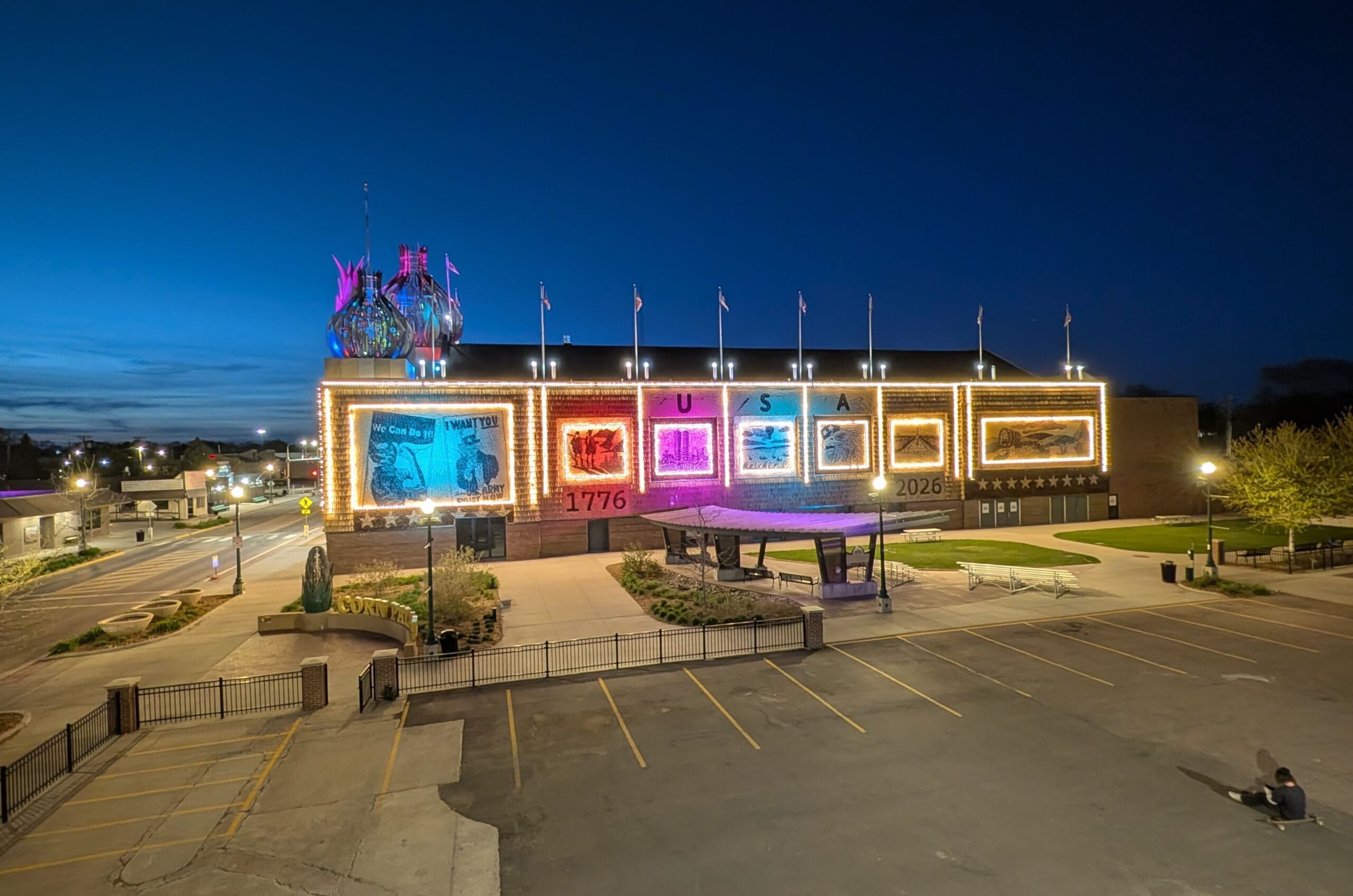
Each year, the exterior is decorated with enormous designs built entirely from natural materials — corn cobs, grains, and grasses — assembled by hand into images that read like bold public art from a distance and like an extraordinarily patient mosaic up close. Cornelia and Cornelius, the palace’s corn-cob mascots, keep watch over the whole thing with an expression that somehow manages to be both ridiculous and entirely appropriate.
The process is more considered than it looks. Themes are chosen, designs are mapped out, and teams work through the building process using naturally coloured plant material to create shading, texture, and contrast. Different ears of corn bring different tones. Grasses and grains fill gaps and add detail. Thousands of individual pieces, fixed by hand.
What you end up with isn’t glossy or perfect in any sterile sense. You can see the human work in it. That’s precisely what gives the place its pull.
The themes shift each year — South Dakota history, local wildlife, community pride, national moments, sport — which means the building is both familiar and different every time you visit. If you came ten years ago, you haven’t seen this version. That’s not a marketing line. It’s how the place actually works.
Visiting Today
You don’t need a full day. You do need more than a drive-by photo stop.
Start outside. Walk the full perimeter. Stand back to take in the facade as a whole, then get close enough to see the individual cobs and plant textures. The closer you get, the better it looks — which is the opposite of most things. Once you’re at arm’s length, the workmanship clicks into focus and the joke, if you were still holding onto one, disappears entirely.
Then go inside. The interior reminds you this is a working building, not a static museum, and that gives it a different energy. Displays, visitor information, and the arena space itself are all worth a look — they fill in the story behind the exterior and add useful context.
Make It a Proper Mitchell Stop
You can pull off Interstate 90, snap the Corn Palace, and get moving again in fifteen minutes. Plenty of people do. But Mitchell rewards a bit more generosity than that.
Stay for lunch. Wander the town centre. If time allows, the Dakota Discovery Museum or the Mitchell Prehistoric Indian Village turn a novelty stop into a genuinely satisfying break in the journey. Either pairs well with the Corn Palace without making the day feel heavy.
Families get an easy win — the building is visual, unusual, and short-stop friendly. Road trippers get a classic piece of Americana that earns its reputation. Photographers get colour, texture, and a subject that looks like nowhere else. That’s a strong return for one town-centre detour off the Interstate.
Why It Still Works
The Corn Palace owns its corniness — and I mean that as a compliment. It leans into the whole thing unabashedly: mascots Cornelia and Cornelius greet you with straight-faced charm, every conceivable surface has a corn-related angle, and the gift shop was doing genuinely brisk business in Corn Star tees when I visited. I watched people buying armfuls of them. You can’t manufacture that kind of enthusiasm.
But here’s what makes the place more interesting than its own merchandise. Behind the corn bling, the building is functional and very much part of the local community. This isn’t a hollow set piece built for visitors. People use it. Events happen here. The car park fills up for reasons that have nothing to do with tourism. That combination — unashamed novelty on the outside, genuine civic life on the inside — is what saves it from feeling like a trap for passing road trippers.
Some attractions survive on nostalgia alone. The Corn Palace isn’t one of them. It works because the idea is odd but the execution is sincere. You can laugh at the name and still end up admiring the place — in fact, that’s part of the experience. It doesn’t take itself too seriously, but it gives you enough history, craft, and civic pride that you end up taking it seriously anyway.
It is part art project, part community venue, part roadside legend. Playful and practical in equal measure. And rooted in the place that built it, which is rarer than it should be.
That is the neat trick Mitchell pulls off. A building covered in corn should be naff. Somehow, this one isn’t.

