

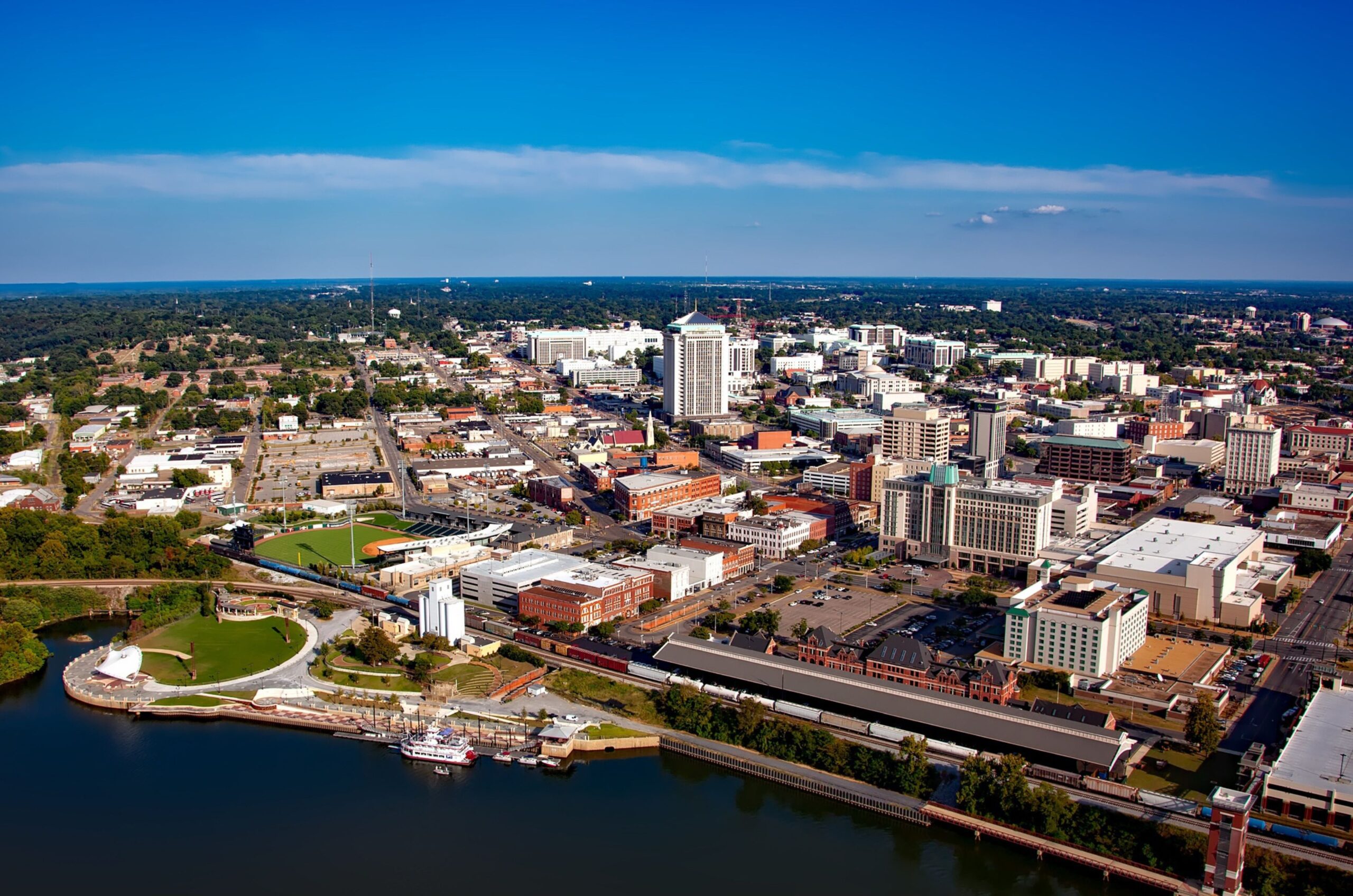
Montgomery, Alabama: From Civil War to Civil Rights
Arriving in Montgomery, it’s difficult to believe that just seventy years ago this gracious southern city was the epicentre of the fight for civil rights in America. When Rosa Parks refused to give up her seat on a Montgomery bus on 1st December 1955, her arrest sparked a movement of peaceful resistance that resonated around the world. That singular act of courage — mirrored by many before and after her — has been woven into the very fabric of this city.
Unlike many places I’ve visited, Montgomery makes it genuinely easy to find your way around on foot. Tasteful, well-designed signs guide you between points of interest without cluttering the historic streetscape. It’s a city that rewards the independent explorer.
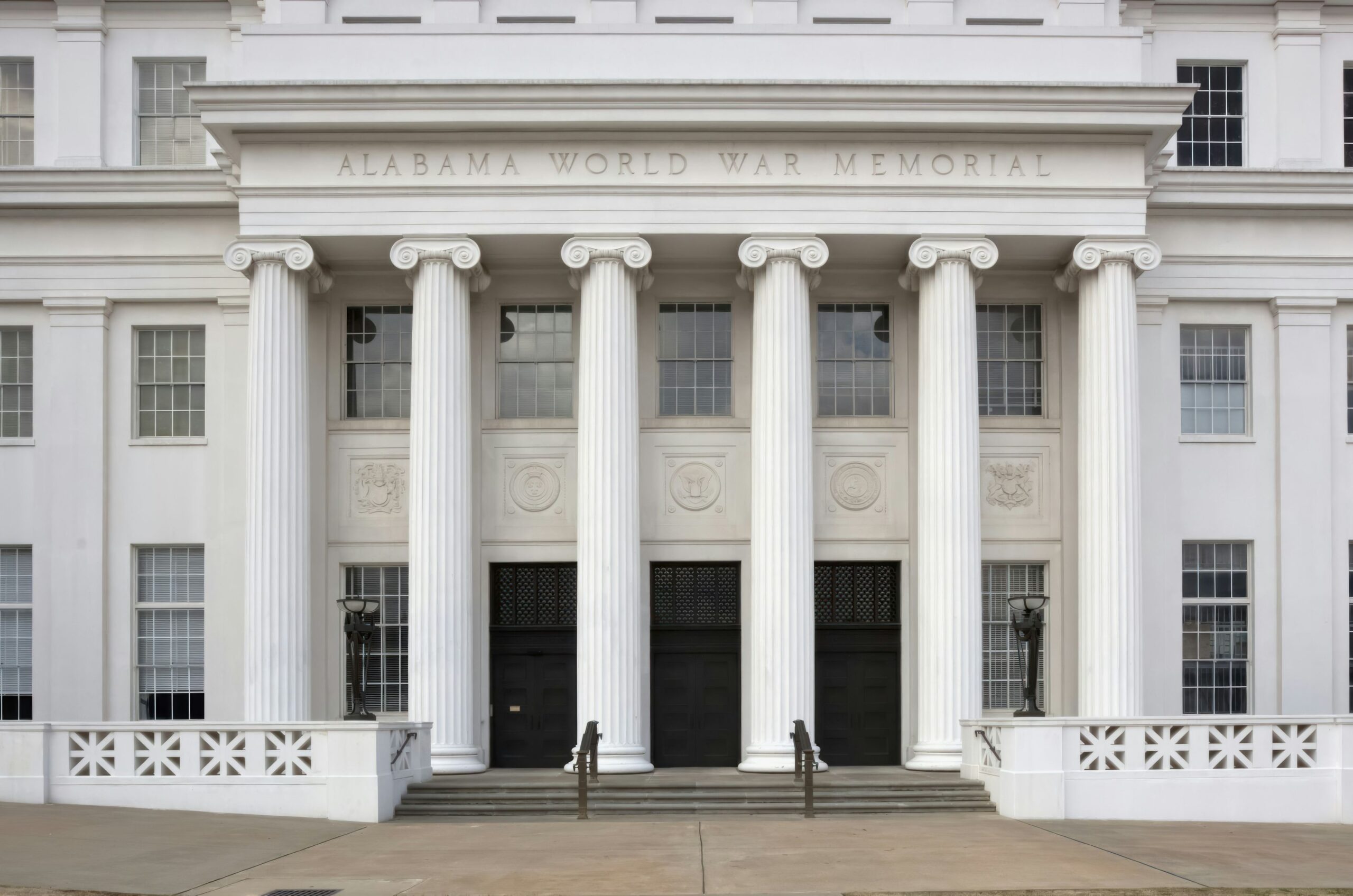
Start at the Capitol
Unless you’re saving the best till last, begin here. The Greek Revival Capitol building is a magnificent focal point — a National Historic Landmark where Jefferson Davis took the oath of office as President of the Confederate States in 1861, and where Dr. Martin Luther King Jr. delivered his address from the steps at the conclusion of the Selma-to-Montgomery march nearly a century later. The interior is as grand as the facade and well worth a wander. Admission is free. Just across the road, the First White House of the Confederacy is also free to enter and preserved as a museum.
The EJI Legacy Sites — Don’t Miss These
Since my original visit, Montgomery has gained what are arguably the most important civil rights attractions in the United States. The Equal Justice Initiative’s Legacy Sites — opened in 2018 with further additions since — are genuinely unmissable.
The National Memorial for Peace and Justice stands on a hilltop overlooking the city. More than 4,400 Black people killed in racial terror lynchings between 1877 and 1950 are remembered here, their names engraved on over 800 corten steel monuments — one for each county where a racial terror lynching took place. It is a deeply affecting place. Legacy Sites
One general admission ticket covers all four Legacy Sites — the Legacy Museum, the National Memorial, the Freedom Monument Sculpture Park, and Montgomery Square. A complimentary shuttle runs between all four sites. The Legacy Sites are closed on Tuesdays. Budget a full day. Legacy SitesTicketapp
The Civil Rights Landmarks
The original civil rights trail remains essential. The Rosa Parks Museum is a brilliant educational attraction built on the site where Parks made her historic stand — the children’s “time machine” bus is a highlight for younger visitors. Dexter Avenue King Memorial Baptist Church is where Martin Luther King Jr. preached from 1954 to 1960, and his former home nearby is now open as a museum. The Civil Rights Memorial Center, with its striking monument and interactive displays, manages to convey both the weight of the past and the hope of those who refused to accept it.
Beyond Civil Rights
Montgomery’s history doesn’t begin and end there, though it can feel that way. The Capitol area is surrounded by handsome government buildings worth exploring on foot. For country music fans, the Hank Williams Museum is a serious pilgrimage stop. Old Alabama Town is a recreation of 19th-century life — a little twee if I’m honest, but excellent for school groups and families with younger children.
Shopping & Nightlife
Montgomery isn’t a shopping destination, but the Eastbrook Flea Market and Antique Mall is worth a rummage. For evenings, there are enough decent restaurants and bars to fill a night out comfortably. The police presence on the streets after dark is notably high — I’ve never felt unsafe here.
Final Thought
Give Montgomery a day, ideally two. The Legacy Sites alone justify the detour. This is American history laid bare — uncomfortable, important, and extraordinarily well presented.
For more information: visitingmontgomery.com
More Alabama stories: Mobile — the original home of Mardi Gras

