

How to pack for Canada in spring
Canada in spring has a habit of changing its mind before lunch. Here’s how to dress for it.
Key takeaways
- Layer, don’t bulk up. Light base layers, a fleece mid-layer, and a waterproof shell will take you further than any single heavy coat.
- Canada is not one weather zone. Vancouver, Montreal, and Banff in April can feel like three different countries. Know your route.
- Waterproof footwear is non-negotiable. Spring terrain means mud, slush, and damp pavements. Pretty shoes will suffer.
- Pack for the coldest hour, not the warmest. Layers you don’t need are invisible. Layers you’ve left at home are not.
Why Canada in spring is hard to pack for
The biggest mistake first-time visitors make is treating Canada as a single climate. It isn’t. Vancouver in April is mild and damp. Montreal in April is still shaking off winter. Banff in April may well have snow on the ground.
Timing complicates things further. Early March can be stubbornly wintry across most of the country. Late May softens considerably in southern cities — but cool evenings, sharp showers, and gusty days still show up. A quick regional snapshot:
| Region | What spring often feels like | What earns a place in your bag |
|---|---|---|
| Pacific coast | Mild, damp, changeable | Lightweight jacket, hooded rain shell, waterproof shoes |
| Rockies and mountain towns | Cool, with snow at higher elevations | Warm mid-layer, gloves, grippy footwear |
| Ontario and Quebec cities | Milder later in spring, cool nights and regular rain | Sweaters, closed shoes, compact umbrella |
| Prairies | Big temperature swings and wind | Easy on-off layers, light hat, windproof shell |
| Atlantic Canada | Chilly, breezy, wet | Waterproof coat, scarf, spare socks |
| Northern Canada | Spring arrives late | Warmer layers than you’d expect |
If your itinerary mixes cities with coast, mountains, or lakes, build your packing list around the coldest and wettest stretch of the trip, then layer down when the weather cooperates.
Layering for Canada travel
A bulky coat looks reassuring in the wardrobe. It’s rarely the smartest choice on the road. Layering lets you adapt as the weather shifts — and spring in Canada shifts constantly.
Start with light base layers: t-shirts, long-sleeved shirts, and one breathable thermal top. Add a mid-layer — fleece jacket, fine sweater, or cardigan. Finish with a waterproof rain jacket. If you’re travelling early in the season or heading to mountain towns, a packable insulated jacket is worth squeezing in too.
Pack for the coldest likely hour of the day, not the warmest.
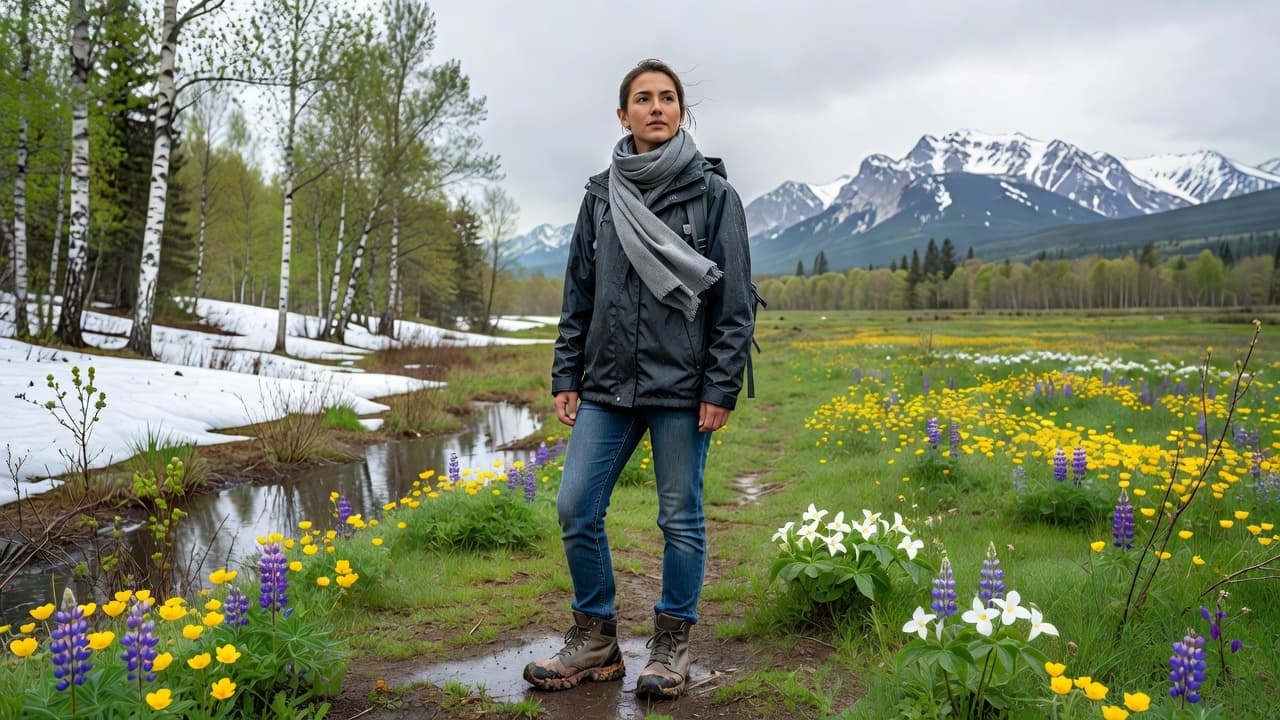
For a week, a practical core packing list looks like this:
- 3–4 t-shirts
- 2 long-sleeved shirts
- 1 warm sweater or fleece jacket
- 1 lightweight insulated layer
- 1 hooded rain jacket
- 2 pairs of trousers — jeans plus at least one pair of quick-dry pants
- Enough socks and underwear for the trip, plus a spare pair of warm socks
- A light scarf and thin gloves if you’re travelling in March, April, or at elevation
Fabric choice matters more than most people expect. Heavy cotton stays cold and damp after a shower. Quick-drying fabrics, merino socks, and trousers that don’t sulk in the rain make the whole trip easier. Pack sunglasses too — spring sun near water or lingering snow can be bright. Lip balm and sunscreen earn their place even when the air still feels brisk.
Shoes and outerwear that earn their keep
Footwear is where packing plans often go wrong. Spring in Canada can be muddy, slushy, damp, or all three. Shoes that resent puddles won’t last long.
One main pair of waterproof shoes covers most trips — sturdy trainers with decent grip or light ankle boots that don’t mind wet pavement. Add a second pair only if it solves a real problem: evening dinners, gym sessions, or soggy shoes on day one.
City trips still need sensible choices. Canadian cities reward walking, and you don’t want to cut a day short because your footwear was chosen for photographs rather than miles. A dark pair of comfortable trainers often outperforms anything cleverer. A rain jacket over jeans is a solid city combination, with a compact umbrella as backup for heavier downpours.
Nature trips need more thought. For national parks, lakeside walks, or shoulder-season hiking, put grip first. Spring paths stay muddy, and higher routes may still carry patches of snow — waterproof hiking boots are worth the suitcase space. Wool socks dry faster and feel better after a damp walk.
A hooded rain jacket is more useful than an umbrella alone. Coastal wind inverts umbrellas in seconds. Look for something light enough to wear over a t-shirt but roomy enough to sit over a fleece.
Packing for cities, parks, and shoulder-season trips
Your packing list should follow your itinerary. A week of galleries, cafés, and train journeys needs different kit from a wildlife-heavy escape or a self-drive through mixed terrain.
City trips: Lean practical but polished. Dark jeans, relaxed trousers, and long-sleeved shirts that layer easily. A smarter top for dinner. A reliable backpack for daily essentials. Let your jacket do most of the weather work.

Photo by Vlada Karpovich
Nature-focused trips: The small extras matter more here. A reusable water bottle, a lightweight daypack, and a basic first-aid kit all earn their place. By late spring, insect repellent is useful in wooded or lake areas. A dry bag keeps spare socks and electronics safe on wetter days.
Shoulder-season travel: April and early May can look mild on paper, then feel considerably colder once wind and drizzle arrive. Pack as if winter might make a late appearance — thin gloves, a warmer mid-layer, and one thermal top make a disproportionate difference. Packing cubes help manage the extra volume of layers without chaos.
A swimsuit may sound optimistic, but hotel pools, hot tubs, and hot springs are common enough to justify the space. A portable charger is essential — cold weather drains phone batteries faster than you’d expect. Keep your medicines, a clean top, chargers, and your rain shell in your carry-on. If checked luggage goes missing, you won’t start the trip scrambling.
One final habit makes spring travel smoother: leave a little room in your case. Forecasts sharpen closer to departure, and last-minute adjustments are easier when there’s space to make them. That’s often the real secret with Canada in spring — not more luggage, just better judgement.
Frequently asked questions
Do I need heavy winter gear for late spring?
Generally, no. A packable insulated jacket handles chilly evenings and mountain visits without the bulk of a full winter coat. Focus on layers rather than volume.
Rain jacket or umbrella?
A hooded rain jacket, every time. It keeps your hands free, and coastal wind will destroy an umbrella in seconds. Carry a compact umbrella as backup if you like, but let the jacket do the real work.
How do I deal with muddy park trails in spring?
Waterproof hiking boots with solid traction. Bring extra wool socks — they dry faster and stay comfortable even if you catch some moisture on the trail.
Should I really pack a swimsuit?
Yes. Many Canadian hotels have indoor pools and hot tubs, and if your route takes you near natural hot springs or mountain resorts, you’ll want it. The cool air outside is irrelevant once you’re in.
If you’re planning a Canadian self-drive, take a look at the itineraries at Rendezvous Roadtrips

