

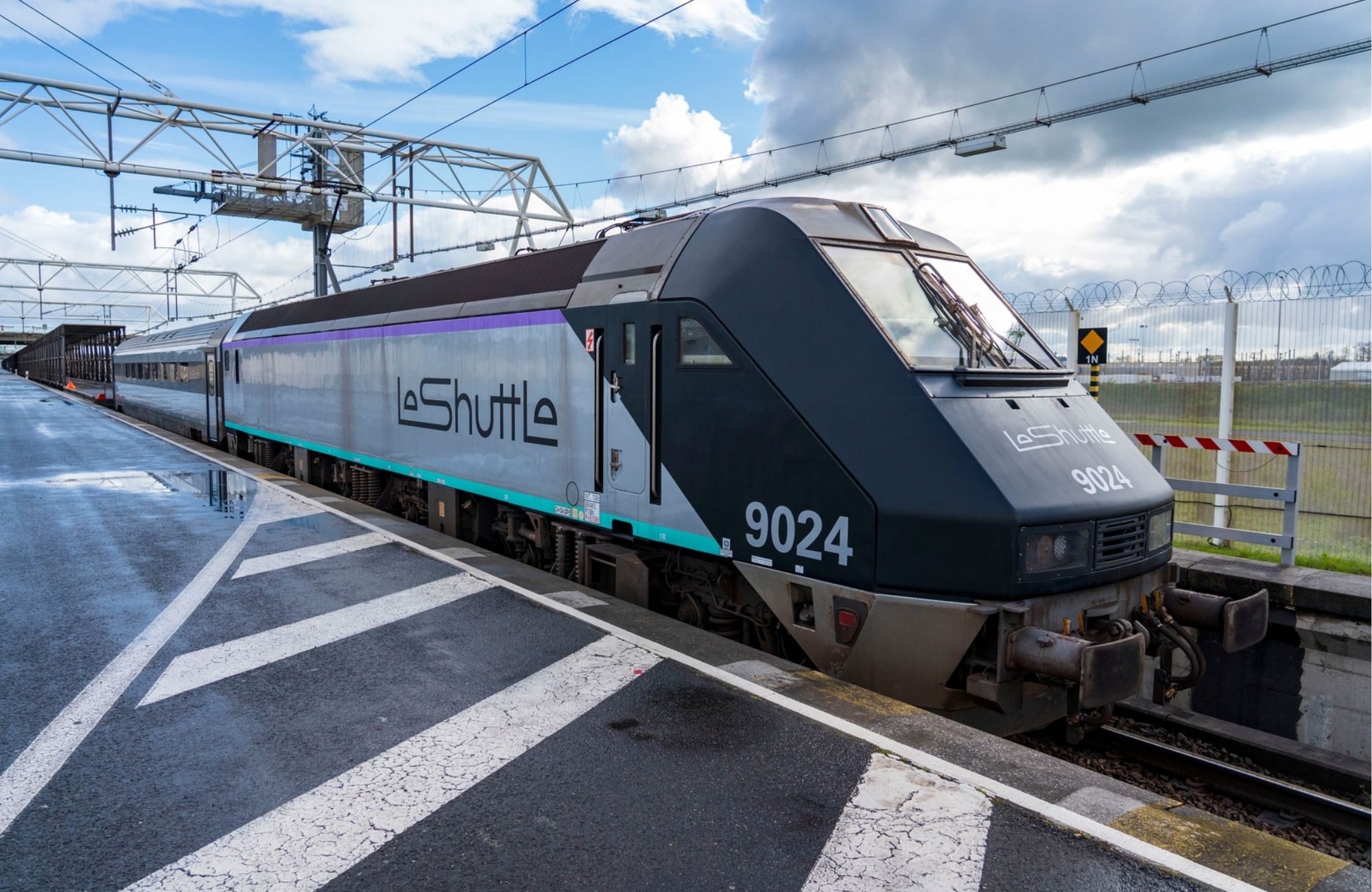
LeShuttle: What a First Channel Crossing Is Really Like
We’ve used the Channel Tunnel a handful of times now, and on our most recent trip we did something we hadn’t tried before: ferry out, LeShuttle back. That comparison, done back to back on the same trip, taught us more about the two options than any amount of reading beforehand would have, so I’ve folded what we learned in alongside the practical detail below.
The tunnel itself disappears beneath you in around 35 minutes, but your first crossing can still feel like a small expedition. Booking a LeShuttle car crossing means thinking beyond the train itself, from vehicle measurements and passports to breakdown cover for the onward drive. The reassuring part is that the process is far less complicated than it first appears once you know the order of events, which leaves you free to focus on the more enjoyable prospect of the road trip from Folkestone to Calais.
Key Takeaways
- Book the correct LeShuttle vehicle category, entering accurate details for height, roof equipment, trailers and any modifications
- Check in at least one hour before departure, with passports, booking details and any pet paperwork ready
- The crossing itself takes around 35 minutes, and passengers normally stay inside their car for the journey
- Standard cars, EVs and hybrids are all accepted, but LPG-powered vehicles are not; combined vehicle and trailer dimensions must stay within the stated limits
- If you’re booking close to travel, complete your passport details online in advance — don’t assume it’s done automatically, as I found out the hard way
Why LeShuttle works so well for a European road trip
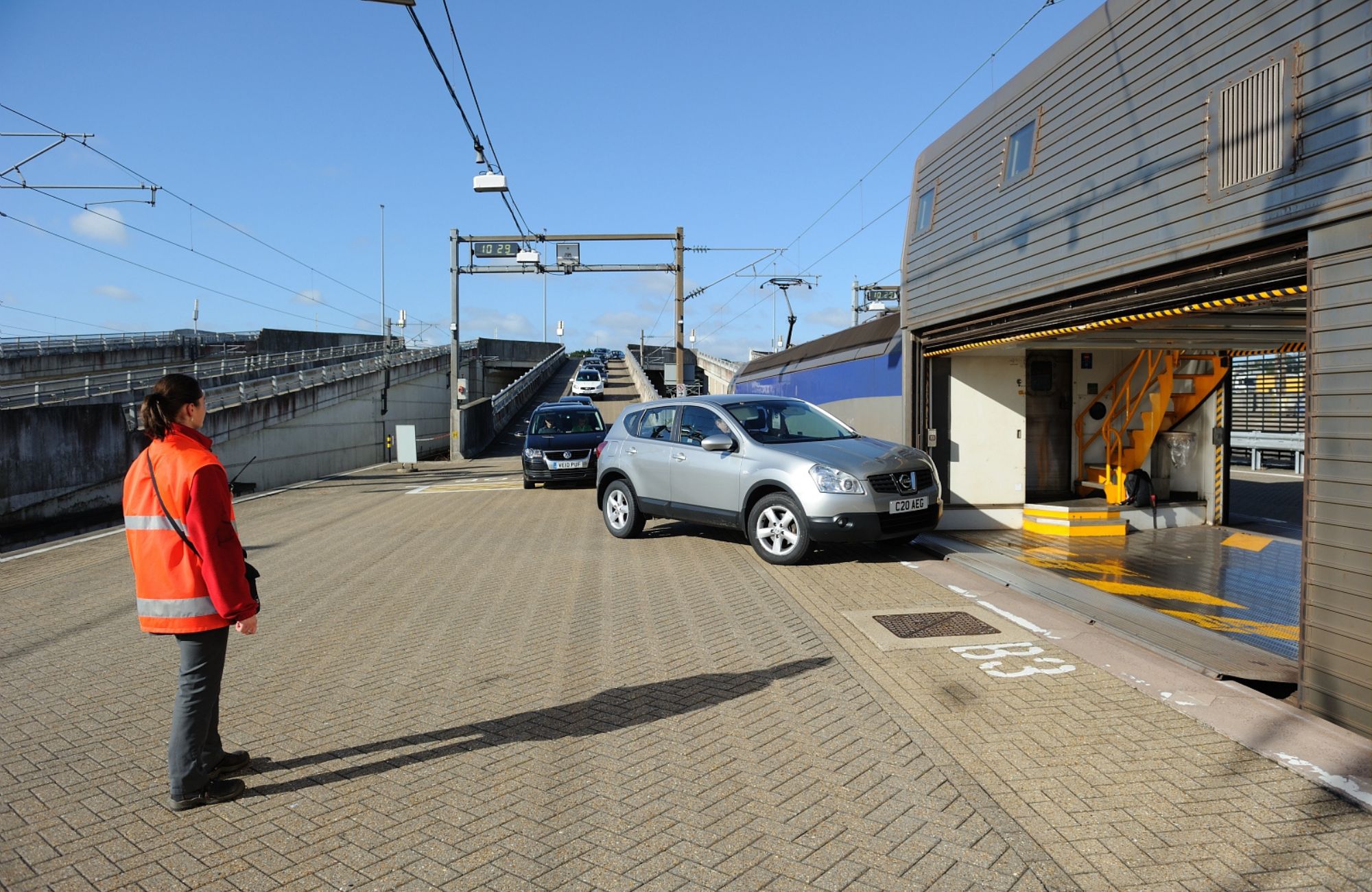
LeShuttle, a Getlink service, runs passenger vehicle shuttle trains on the Folkestone to Calais route through the tunnel. You drive onto a purpose-built train, stay with your vehicle for the journey, then drive straight off in France. Unlike a ferry, there are no luggage belts, cabin numbers or long walks through a terminal.
That’s really the heart of it for us. The boarding and exit points on the UK side alone save around 30 minutes compared with the ferry, and once you add in the crossing time itself, the overall saving on our recent trip came out at around two hours door to door. For families with a boot full of walking gear, picnic supplies or camping kit, that’s two hours you’d rather spend already on the road than queuing.
The trains run day and night, with more frequent departures at busy times, and we like having that flexibility — particularly when a motorway delay, a late hotel departure or an early French arrival changes the shape of the day.
Booking a LeShuttle car crossing
The ticket is priced for the vehicle, generally including everyone travelling in it, rather than charging each passenger separately, which makes it particularly good value when you’re travelling as a family or group.
When booking, enter the vehicle registration, vehicle type, height, roof equipment and trailer details accurately. Roof boxes, bike racks, caravans and tall campervans can all change the carriage category you need, so it’s worth checking LeShuttle’s guide to vehicle types if yours is anything more unusual than a standard family car.
The fare names can feel like a maze at first. Availability changes by date, but broadly:
| Ticket type | Best for | What to watch |
|---|---|---|
| Day Trip & Overnight | A quick same-day or overnight return | Tight return conditions |
| Short Stay Saver | Breaks of five days or less | Fewer options to change plans |
| Standard or Standard Plus | Most holidays and road trips | Check amendment and refund rules |
| Short Stay Flexiplus or Flexiplus | Fixed plans that may shift | Higher fare, but more freedom to change |
A cheap-looking fare isn’t automatically the best value — Flexiplus costs more but suits plans that may shift. Date, demand, school holidays and peak day charges all affect the price, so it’s worth checking Getlink’s current fare, amendment and refund terms before booking, and booking your return crossing at the same time if your dates are already fixed.
Don’t get caught out on passport details
Here’s the one that genuinely tripped me up. I’d booked only a couple of days before travelling and assumed everything was in order, but on arrival I was told that passport details for everyone in the car need to be added online before you reach passport control — it isn’t something that happens automatically as part of booking.
We pulled over and added the details for all six of us, which took a little time, but in hindsight one of us could easily have done it on a phone while queuing for passport control instead, since that queue took the best part of an hour on its own. If you’re booking close to your travel date, do this online in advance and save yourself the scramble in the car park.
Check-in at Folkestone and boarding the train
LeShuttle asks you to check in no later than one hour before departure, though you can arrive up to four hours ahead, which is handy if the M20 has been kinder than expected. It’s worth reading the operator’s on-the-day crossing guidance before you leave home, especially during school holidays and bank holiday weekends.
The terminal generally follows this order:
- Check in using your registration number or booking reference, and collect any vehicle hanger or boarding information
- Pass through UK and French border controls, with every traveller’s passport ready for both checks
- Continue through security, where staff may ask to inspect the boot or ask routine questions about your trip
- Wait in the departure area until the screens and staff direct you towards boarding
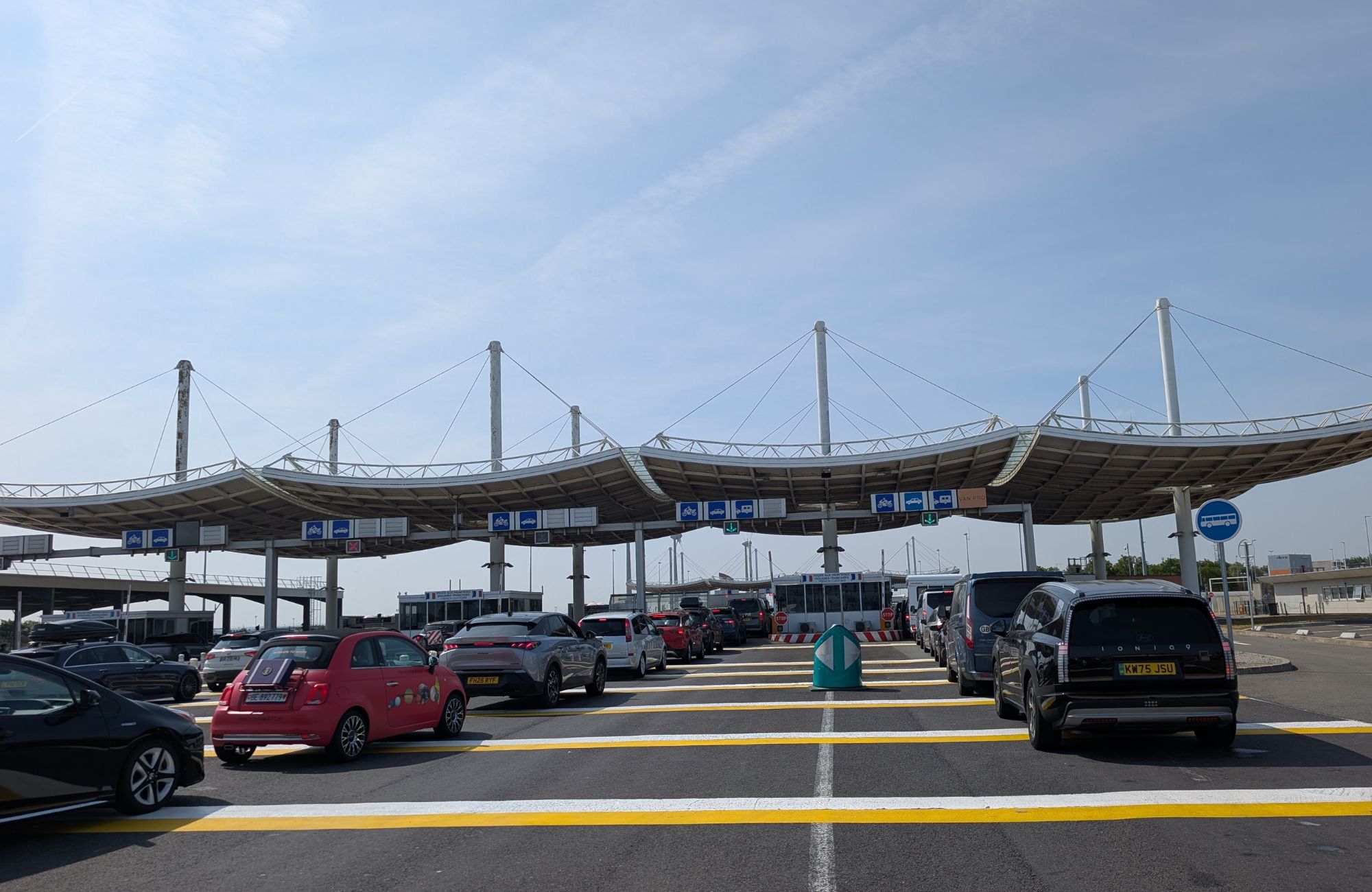
There are food outlets, toilets, fuel and a duty free shop at the terminal, though we’ve never actually used the duty free ourselves — it involves parking up and walking into the service area, and every time we’ve travelled we’ve arrived and gone straight through onto the train rather than stopping. If browsing duty free is part of your holiday ritual, it’s there, but it takes a deliberate detour rather than being part of the flow.
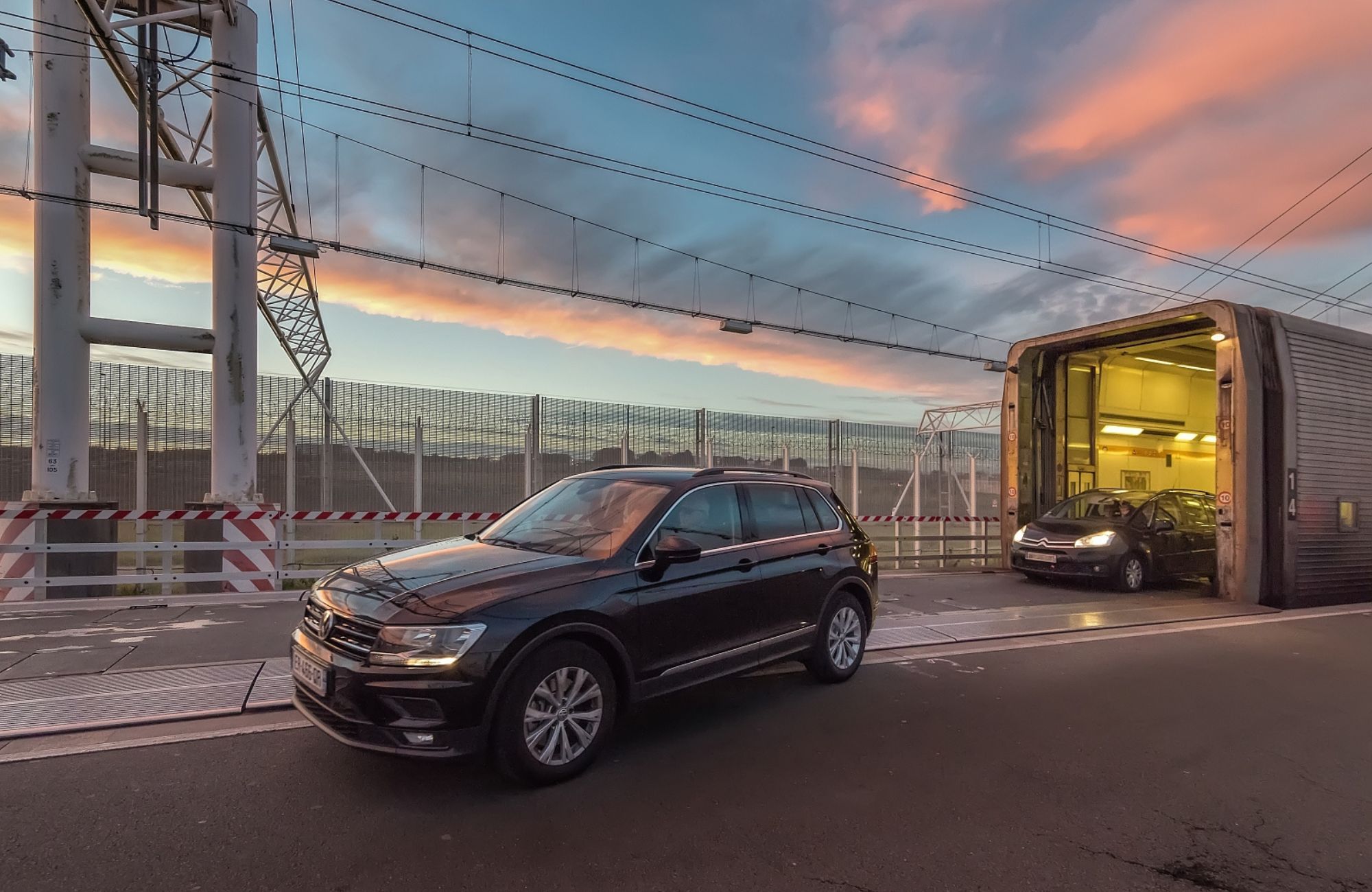
When your lane is called, follow the staff’s instructions onto the train and park up behind the vehicle ahead, in park or first gear with the handbrake on. It’s a slightly surreal moment the first time — one minute you’re inching into a metal carriage, the next you’re sitting in your own car beneath the Channel.
Vehicle limits, campervans and what can’t travel
Most ordinary cars, motorcycles, estates and SUVs fit without any fuss. The complications tend to come with campervans, tall vehicles, trailers, commercial vans and modified cars.
For a vehicle and any trailer, including caravans, the maximum combined dimensions are 18 metres long, 4.2 metres high and 2.55 metres wide, plus mirrors — measure the whole combination rather than guessing, including roof loads. Vehicles above 1.85 metres usually travel in single deck carriages, which covers many minibuses, high-roof vans and cars carrying tall roof loads, so select that category when booking if it applies to you.
Electric vehicles and hybrids are permitted, and you don’t need to empty the battery before travelling, though a decent charge is sensible if you’re heading straight into a longer French drive. LPG-powered and dual-fuel vehicles are not accepted on the passenger shuttle, even if the LPG system isn’t in use — don’t leave this off the booking and hope it won’t matter, because it will.
Pets can travel too, but they need their own booking and paperwork. Dogs, cats and ferrets must meet the UK’s pet travel scheme requirements, including microchipping and rabies vaccination, so it’s worth checking the current guidance and leaving enough time for Pet Reception at Folkestone.
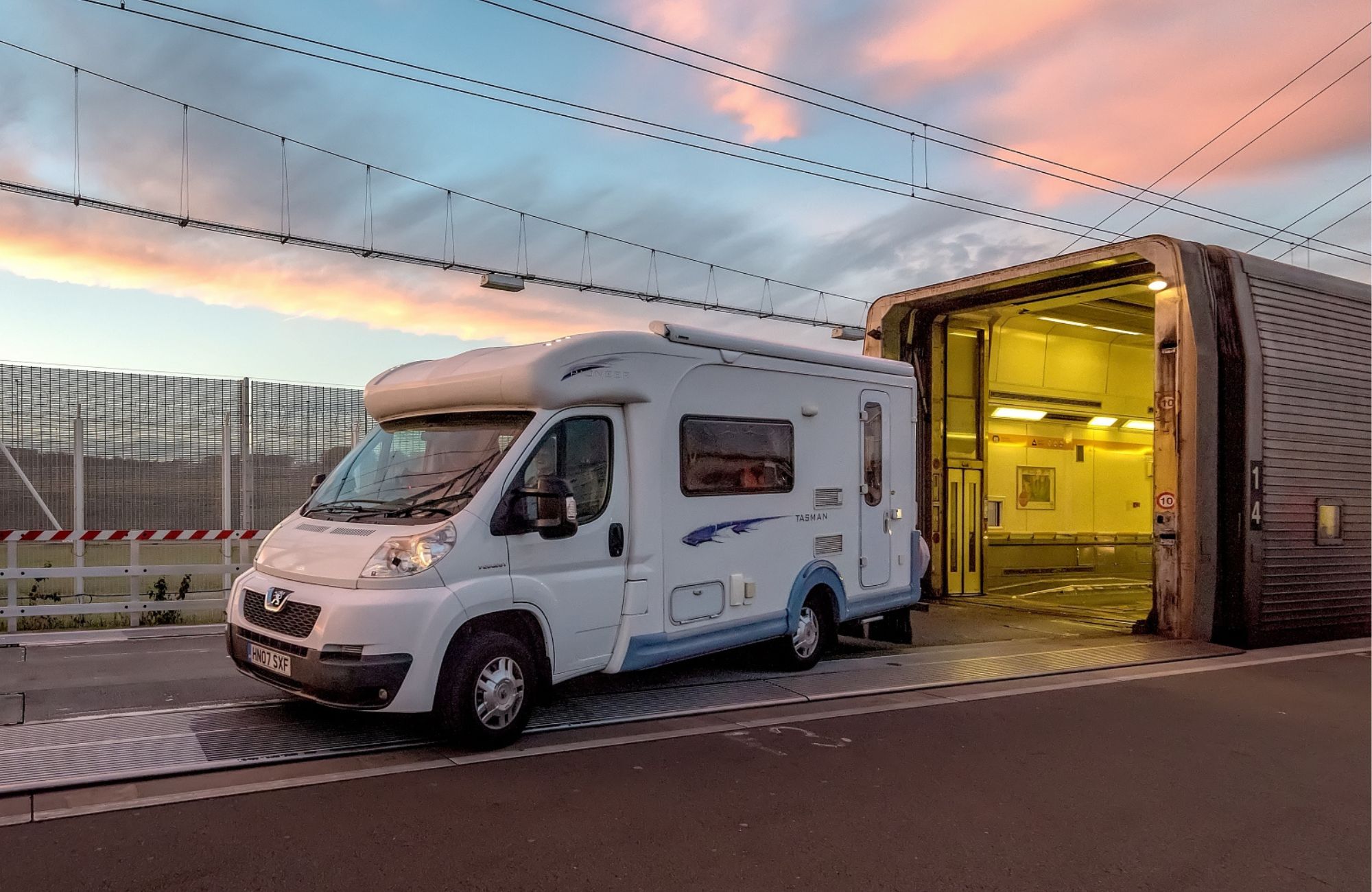
What the 35-minute crossing actually feels like
You can stay inside your car during the crossing, and most passengers do. It’s a quiet, contained journey with announcements and staff nearby if needed. Use the loo before boarding if you can, settle children with a snack or a film, and keep the car comfortable — you don’t need to sit rigidly facing forward for the whole trip, but do follow the safety notices and stay close to your vehicle.
LeShuttle and Eurostar share the same tunnel but are entirely different services. Eurostar is a passenger train for foot passengers travelling between city-centre stations, while LeShuttle is strictly for cars, motorcycles and their occupants — you can’t board it as a foot passenger.
Once the train reaches France, the doors open and vehicles leave in sequence, and within minutes you’re back on the open road, driving on the right.
Preparing for driving in France
Have your route ready before the train arrives, download maps for offline use if mobile data is uncertain, and programme your first stop into the sat-nav before boarding. Carry:
- A passport, full driving licence, V5C vehicle registration document or hire-car paperwork, plus insurance details
- A UK identifier on the rear of the car, either on the number plate or as a separate sticker
- Reflective jackets stored inside the vehicle, a warning triangle and headlamp beam adjustment if your car needs it for right-hand driving
If your route passes through cities such as Paris, Lyon or Grenoble, check whether a Crit’Air emissions sticker is required, as low-emission zone rules can change and fines are an irritating way to start a holiday.
France gives you two very different kinds of driving day. The autoroute suits journeys where you need to cover ground, reach a hotel before dark or make up time after a delayed crossing — tolls add up, but they can save hours, so weigh them against your route and budget. For a slower day, smaller roads bring market towns, village bakeries and the sort of detours that become the stories you remember. We tend to use the motorway for the dull opening stretch, then switch to smaller roads once the scenery gets tempting.
LeShuttle or the ferry — which would we choose?
Having now done both back to back, the honest answer is that the ferry has two real advantages: a genuinely good onboard duty free offering, and the sense of starting your holiday properly as you sail across the water, rather than spending 35 minutes underground. There’s something about standing on deck watching the White Cliffs recede that a tunnel just can’t replicate.
But for ease and speed, LeShuttle wins for us every time. Between the shorter boarding and exit process and the crossing itself, it saved us around two hours overall compared with the ferry on the same trip. The trade-off is cost — a standard, non-flexible LeShuttle ticket runs around 50% more than the equivalent ferry fare, so if budget is tight and you’re not in a hurry, the ferry is still worth considering.
Frequently Asked Questions
How early should I arrive for LeShuttle? Check in no later than one hour before departure. You can arrive up to four hours early if you reach Folkestone ahead of schedule.
Can I stay in my car during the Channel Tunnel crossing? Yes, passengers normally remain inside their vehicle for the roughly 35-minute journey. Keep the car comfortable, follow the safety notices and stay close to your vehicle.
Can campervans, trailers and tall vehicles use LeShuttle? Yes, provided the complete vehicle and trailer combination meets LeShuttle’s limits and is booked in the correct category — maximum combined dimensions are 18 metres long, 4.2 metres high and 2.55 metres wide, plus mirrors.
Can I take an LPG-powered car on LeShuttle? No, LPG-powered and dual-fuel vehicles aren’t accepted on the passenger shuttle, even if the LPG system isn’t in use. Electric vehicles and hybrids are fine.
Do I need to add passport details before I travel? Yes — and don’t assume it’s automatically part of your booking, especially if you’ve booked close to your travel date. Add everyone’s passport details online in advance, ideally as soon as you book, so you’re not doing it in a car park while the passport control queue builds up behind you.
A calmer start to the continent
A first crossing is far less mysterious once you know the rhythm. Book the right vehicle, sort your passport details early, arrive with time to spare, and follow the lanes. Thirty-five minutes under the Channel opens up weeks of possible roads — and once you’ve done it back to back with the ferry, as we have, it’s hard to argue with how much time LeShuttle actually saves.
For tailor-made itineraries – visit Rendezvous Roadtrips

