

Yellowstone and Grand Teton: A Seven-Day Road Trip Worth Slowing Down For
Yellowstone National Park can turn a 30-minute drive into a morning. A bison herd crosses the road, a geyser holds you longer than expected, then a viewpoint appears around the next bend and suddenly the timetable has gone out of the window.
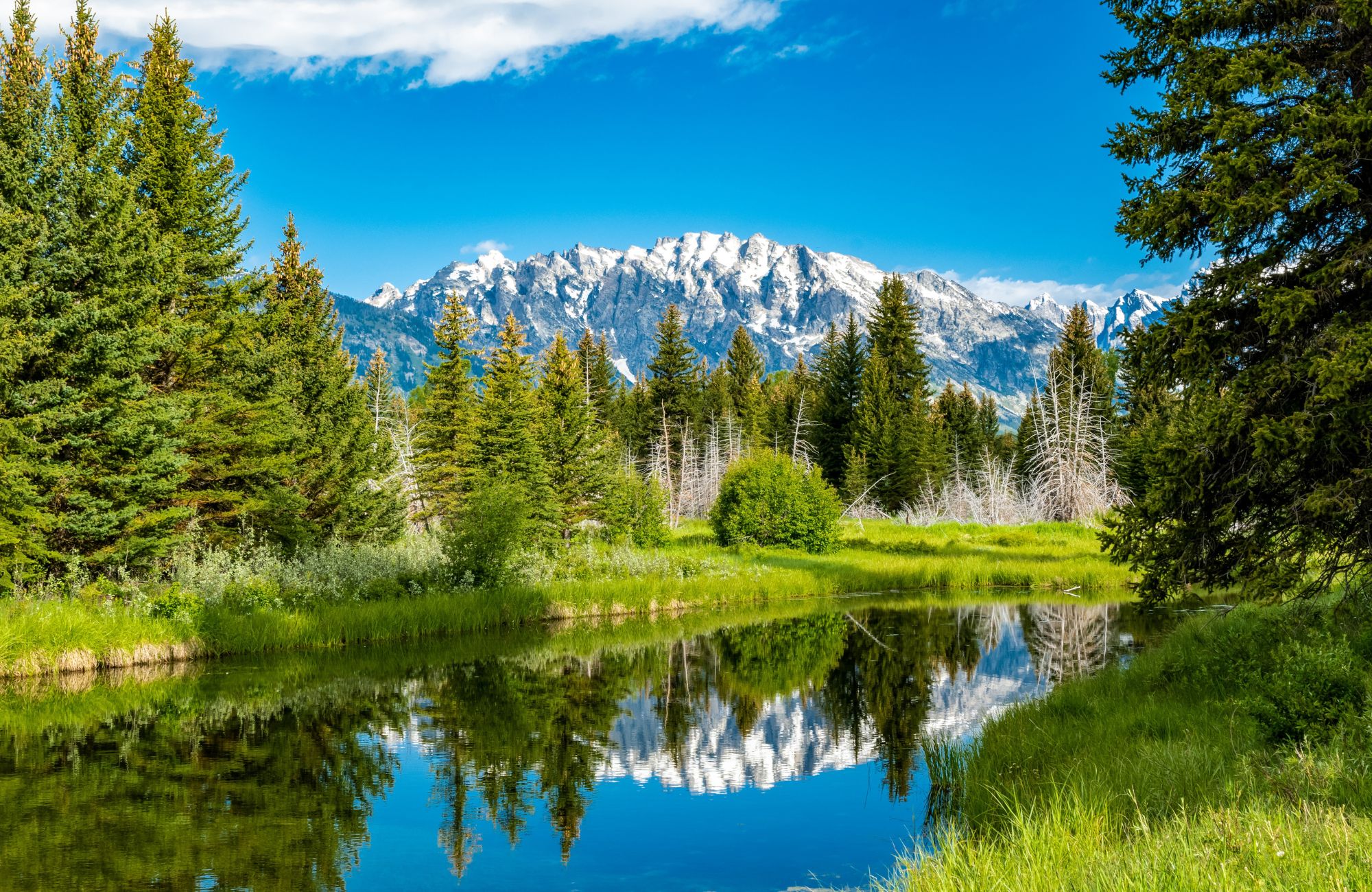
That is why this route needs breathing room. Grand Teton National Park offers crisp peaks, glacial lakes and alpine views, with trailheads that tempt you to stay out longer. Yellowstone is bigger, busier, and full of strange, steaming landscapes that don’t fit neatly into a rushed day.
We’d allow seven days for a first visit, travel south to north, and treat the journey between the parks as part of the holiday.
Key Takeaways
Allow seven days for a first visit: two days in Grand Teton and four in Yellowstone gives you time for walks, wildlife, and unhurried scenic stops. Travel south to north from Jackson towards Yellowstone’s North Entrance, using different overnight bases to avoid exhausting cross-park drives. Book accommodation early, especially inside the park and during July and August, then shape the route around where you can sleep. Start early, check National Park Service alerts, and allow extra time for wildlife traffic, roadworks, weather, and unexpected viewpoints. Keep a respectful distance from wildlife, carry bear spray on hikes, and use binoculars or a spotting scope rather than approaching animals.
How Many Days to Allow for Both Parks
Five full days is the bare minimum for Yellowstone and Grand Teton. You can see the headline sights, but you’ll need early starts, short walks, and a fair bit of driving. Seven days gives you space for two full days in the Tetons and four among the geysers, without treating every stop as a photo sprint.
Here is the honest version of what each trip length feels like.
| Time available | A realistic plan | What to expect |
|---|---|---|
| 3 to 4 days | Choose one park, or see only a few highlights in both | Long driving days and little time for walks |
| 5 days | Two days in Grand Teton, three in Yellowstone | Busy, but possible with careful overnight stops |
| 7 days | Two days in Grand Teton, four in Yellowstone | The best balance for first-time visitors |
| 8 to 10 days | Add longer hikes, quieter corners, and rest time | A far more relaxed road trip |
A week-long trip lets you split Yellowstone into logical sections. The southern geyser country, the Canyon area, and the northern wildlife valleys all deserve their own time. Trying to fit them into one giant loop is how a lovely holiday becomes a string of car parks.
Yellowstone and Grand Teton share a border, but the distances still catch people out. Winding roads, wildlife traffic, roadworks, and viewpoint stops stretch every drive, so check road status with the National Park Service before setting off.
If you have nearly two weeks, a longer route through both parks shows how much more you can see when there is room for detours.
For the smoothest route, fly into Jackson Hole Airport and leave from Bozeman Yellowstone International Airport; West Yellowstone is another possible gateway. This lets you travel north through both parks without retracing your steps. Before booking, compare the full cost of a one-way hire car against a return route — airport charges and one-way fees can make a cheap-looking quote much less attractive.
Where to Stay Without Wasting Each Day on the Road
We wouldn’t use one hotel for the whole trip. Yellowstone is far too large for that, and a late return drive can drain the pleasure from a brilliant day.
For the first two nights, stay in Jackson, Teton Village, Moran, or near Jackson Lake. Jackson has restaurants, shops, and plenty of accommodation, though it is usually the priciest option. Moran, Colter Bay, and Signal Mountain Lodge feel more immersed in the scenery and put you closer to the road north.
After your time in the Tetons, spend one night near Old Faithful or in West Yellowstone. Staying inside the park gives you a head start at dawn, when the boardwalks are quieter and the morning air is full of steam. West Yellowstone has more choice for food and rooms, but it adds an entrance drive each morning.
For the central days, Canyon Village is the practical choice. It keeps several key sights within easier reach and cuts down on cross-park driving. Finish with a night in Gardiner, just outside the North Entrance, if you want an early start in the park’s northern reaches.
Inside-the-park rooms and cabins go first, especially in July and August. Book accommodation as soon as your dates are firm, then build the route around where you can sleep — we would rather adjust a viewpoint than spend three hours driving back to the same bed. In this part of Wyoming, where you sleep often decides whether the trip feels calm or constantly hurried, so it’s worth settling early.
Jackson is still worth considering if you want a livelier evening, good restaurants, and a gentle start to the trip.
A Seven-Day Itinerary
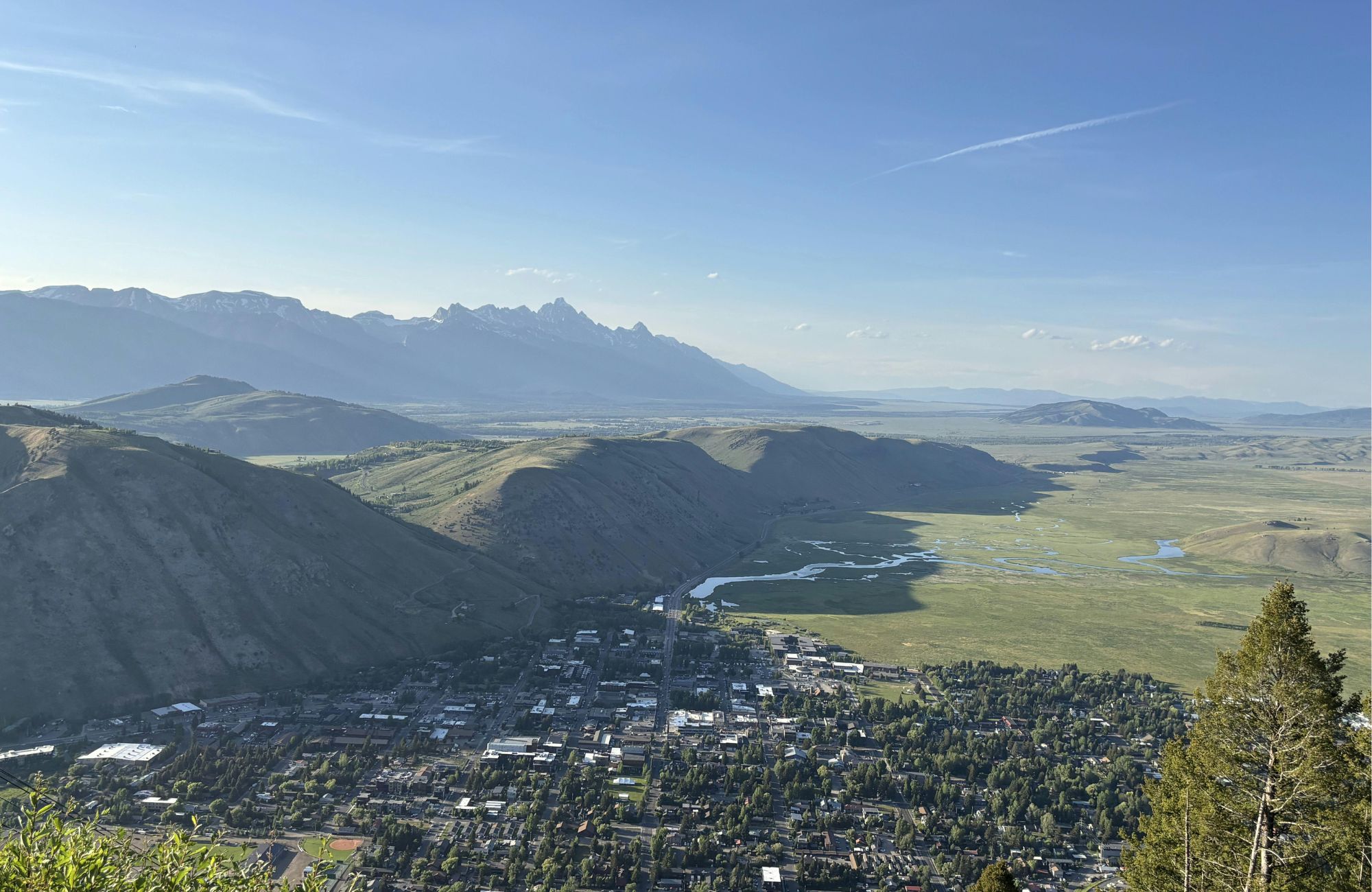
This route begins in Jackson and ends near Yellowstone’s North Entrance. It works in reverse too, although beginning among the Tetons creates a rather lovely build-up, with distant peaks giving way to boiling pools and wide open valleys.
Buy park entry in advance where possible, using the National Park Service’s official guidance. The two parks have separate entrance fees, while an America the Beautiful annual pass covers admission to both. Before setting out, check current alerts for road closures, trail access, and geyser conditions.
Day 1: Arrive in Jackson and Meet the Tetons
Collect your hire car, stock up on water, snacks, and a few easy meals, then keep the first afternoon light. The mountains are the main event here.
Drive north to Mormon Row, where the preserved barns sit beneath the jagged Teton Range. Even in poor weather, the setting has a spare, cinematic beauty. Continue to the Snake River Overlook and, if time allows, Schwabacher Landing for still water and mountain reflections.
Sleep in Jackson, Teton Village, Moran, or near Jackson Lake. If your flight arrives late, leave the scenic stops for sunrise on Day 2 rather than trying to force them in.
Day 2: Jenny Lake, Hidden Falls, and Cascade Canyon
Start early at Jenny Lake, one of Grand Teton’s most loved places for good reason. The lake is framed by forest and rock, with the mountains rising abruptly behind it.
Take the seasonal boat shuttle if it is operating, then walk to Hidden Falls and Inspiration Point. The climb to Inspiration Point is short but steep in places, and the view over Jenny Lake is a fine reward.
Strong walkers can continue into Cascade Canyon, a beautiful valley enclosed by towering walls of granite. A separate, strenuous alternative is the Delta Lake hike, which deserves its own time and preparation. Give either outing a full day for walking, picnics, and watching for marmots, moose, and birds of prey.
For a gentler afternoon, walk around String Lake or have a quiet stop at Oxbow Bend. Return to the same accommodation for a second night.
Day 3: Grand Teton to Old Faithful
Leave Grand Teton early and travel north through Moran towards Yellowstone’s South Entrance. Oxbow Bend is particularly good in the morning, when the Snake River is calm and wildlife often moves through the willows.
After crossing into Yellowstone, stop at West Thumb Geyser Basin. Its colourful hot springs sit right beside Yellowstone Lake, creating an unusual meeting of cold water and geothermal heat.
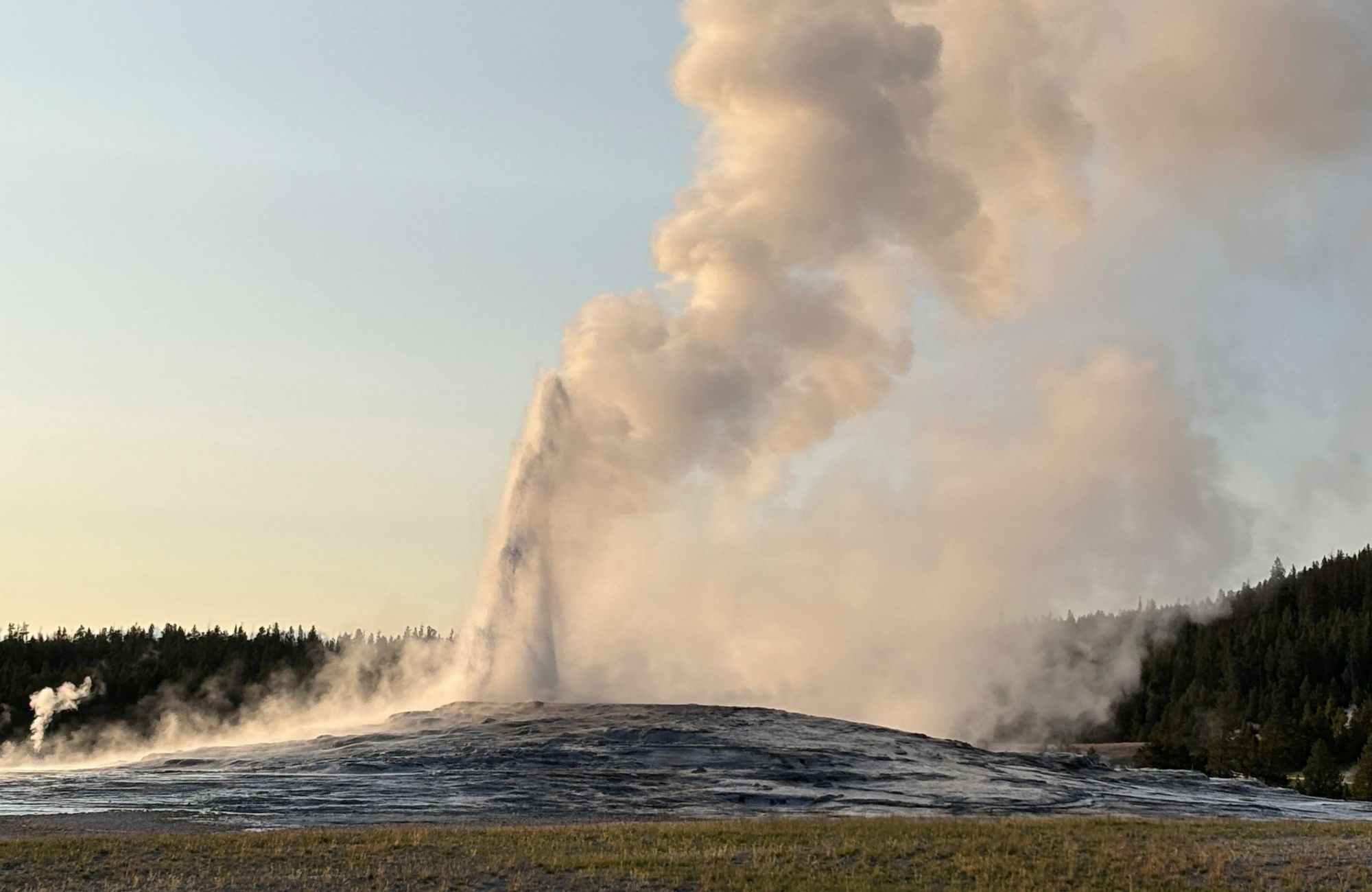
Continue to Old Faithful. The famous geyser is worth seeing, but don’t leave straight after the eruption. Walk the Upper Geyser Basin boardwalks, where dozens of smaller geysers, hot springs, and pools create an otherworldly afternoon.
Overnight near Old Faithful or in West Yellowstone. Check eruption predictions at the visitor centre, but remember that nature keeps its own clock.
Day 4: Grand Prismatic Spring and the Lower Loop
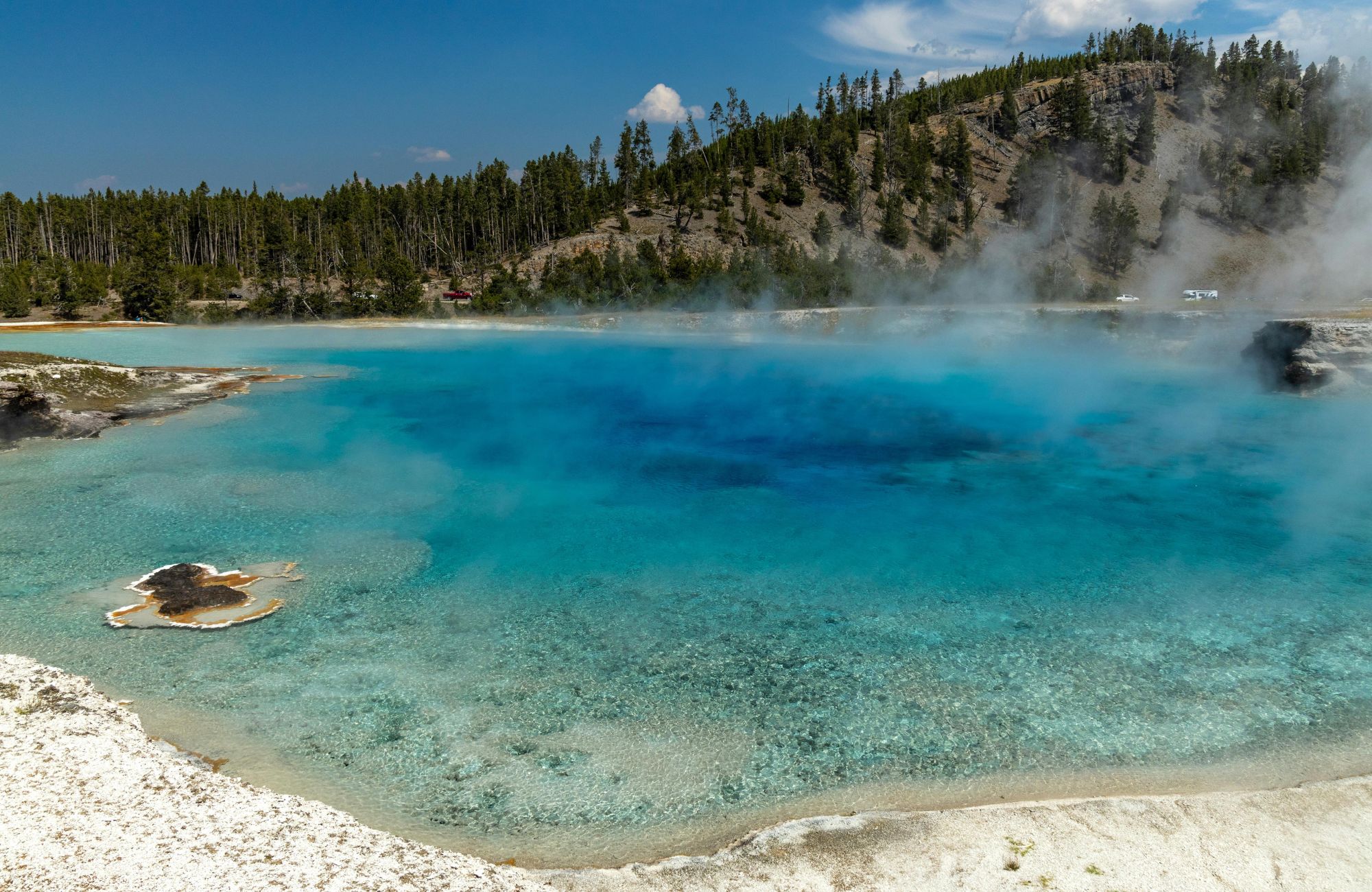
Begin before the busiest part of the morning. Drive to Grand Prismatic Spring, the park’s largest hot spring, where bands of orange, gold, blue, and green gather around the steaming water.
The boardwalk at Midway Geyser Basin brings you close to the spring, although the steam can hide much of its colour. For the wider view, take the short uphill route towards the overlook from the Fairy Falls trailhead, subject to current trail conditions.
Continue through the Lower Loop with stops at Fountain Paint Pot and, if time allows, Firehole Lake Drive. By afternoon, travel east through Hayden Valley towards Canyon Village.
This is a day to keep loose. Bison jams can halt the road without warning. It is better to arrive at Canyon a little later than drive past wildlife in frustration.
Day 5: The Grand Canyon of the Yellowstone and Hayden Valley
This canyon is one of the park’s great surprises. After so much geothermal scenery, the huge yellow cliffs and powerful waterfalls feel like another world entirely.
Start at Artist Point for the classic view of the Lower Falls, then visit Lookout Point or the Brink of the Lower Falls if the trail is open and your knees are happy with stairs. These viewpoints reveal different faces of the canyon — don’t feel you’ve seen it all after one stop.
Spend the afternoon around Yellowstone Lake, Mud Volcano, and Dragon’s Mouth Spring, then return through Hayden Valley in the late afternoon. Bison are common here, and you may also see elk, trumpeter swans, or a distant bear.
Stay at Canyon Village again. Two nights in one place makes this part of the trip much easier.
Day 6: Norris Geyser Basin, Mammoth Hot Springs, and Gardiner
Drive north to Norris Geyser Basin, the park’s hottest and one of its most changeable geothermal areas. The ground here feels raw and restless, with pale mineral terraces, acidic pools, and vents that can look almost lunar.
Allow time for the boardwalks, then continue to Mammoth Hot Springs. Its travertine terraces look sculpted rather than natural, with water slipping over white, cream, and rust-coloured steps that shift in appearance as the water flow changes.
Finish the day in Gardiner. It is a useful base for an early Lamar Valley start, and its position outside the North Entrance makes it a sensible final overnight stop.
A shorter five-day trip can still work, but something has to give — it’s worth deciding early which stops matter most to your group.
Day 7: Lamar Valley Wildlife Viewing and Departure
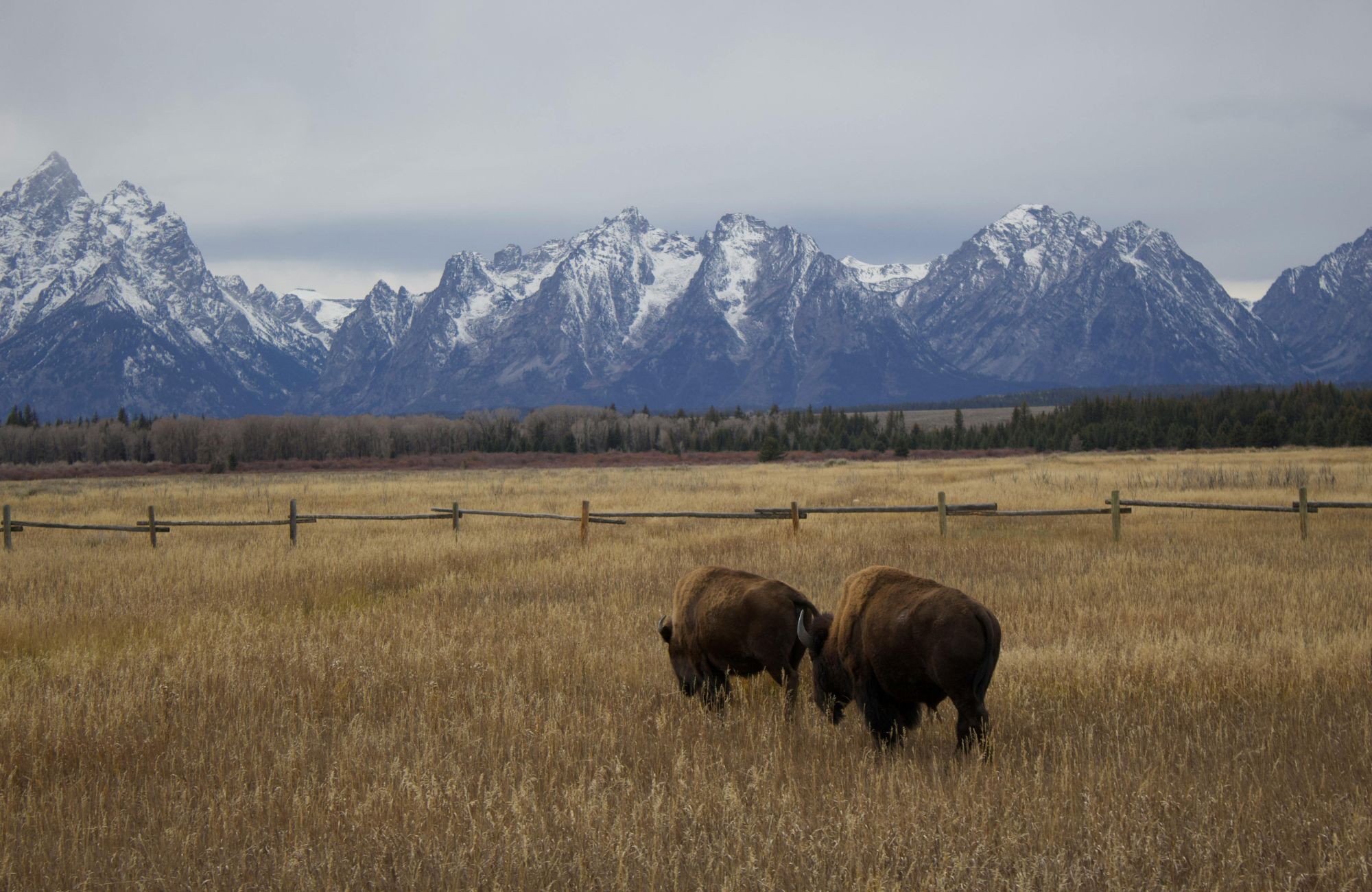
Set off before sunrise for Lamar Valley. It is the best place in the park to look for large herds of bison, pronghorn, elk, coyotes, and, with luck, wolves. Bring binoculars or a spotting scope if you have one. A distant wolf through a scope is far more memorable than a risky close encounter.
Lamar is not a zoo, and sightings are never guaranteed. Give the valley time. Pull into proper lay-bys, watch the hillsides as well as the road, and take the lead from park rangers if they are present.
If you are flying from Bozeman that day, book a late departure. An early flight turns this final morning into an unnecessary rush. Otherwise, add a night in Bozeman and leave the parks with the unhurried feeling they deserve.
Wildlife Viewing and Bear Spray Safety
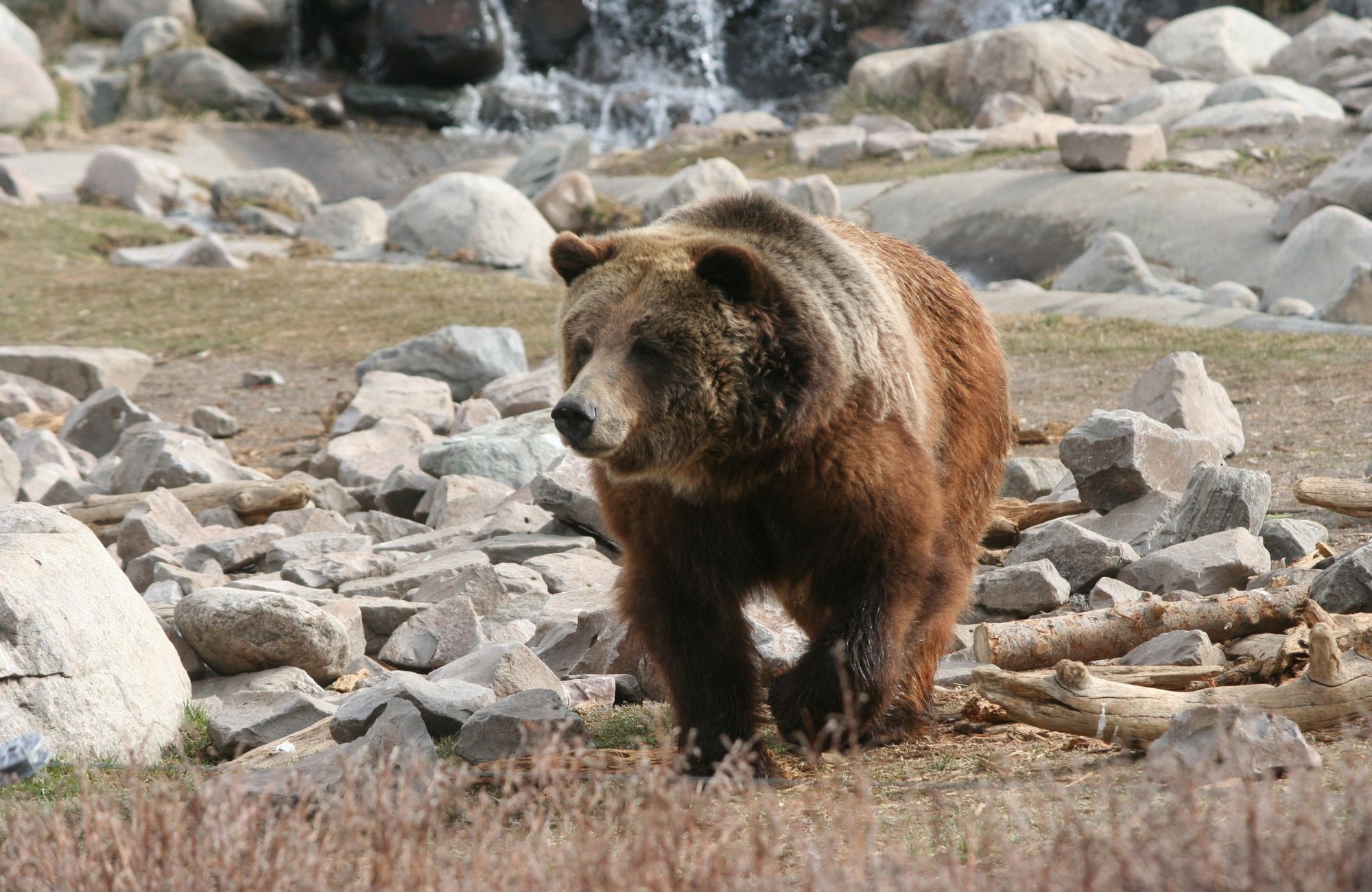
Wildlife viewing is one of the great pleasures of this trip, but it only works when we give animals room. The National Park Service requires visitors to stay at least 91 metres from bears and wolves, and at least 23 metres from all other wildlife, including bison and elk.
That distance can feel excessive until you see how quickly a bison can move. Grizzly bears can also react quickly, so never step closer for a photo, block the road, or gather around an animal. Follow official guidance by using binoculars, a long lens, and marked pull-outs.
Bear spray is a sensible carry item whenever you are hiking, especially on quieter trails in either park. Keep it in a belt holster or an outer pocket where you can reach it at once — it is no use buried under lunch, waterproofs, and a spare jumper.
Buy or hire it after arriving, and ask the shop or ranger for a quick demonstration. Airlines have different rules for aerosol products, so don’t assume you can bring it in cabin luggage.
Choosing the Right Season and Driving With Patience
For most first-time visitors, mid-June through mid-September offers the broadest road and trail access. July and August bring warm days, school holiday crowds, and the greatest competition for rooms. Start before 08:00, take a slower lunch, and return to busy places later in the day.
June can still bring snow to higher trails. Spring road openings vary with the weather, so check for current updates before setting out. September often feels calmer, with cold mornings, changing colours, and fewer families travelling. Services begin to reduce as autumn progresses, so check opening dates before relying on a particular lodge or restaurant.
Winter is beautiful but is a different sort of trip. Most interior roads close to normal vehicle traffic, so it is not the season for this self-drive route — check current updates for winter closures and trail access if you’re considering it.
Download offline maps before entering either park. Mobile signal can disappear for long stretches, and a paper map remains useful when your phone battery is low. Keep the petrol tank well above empty in your hire car, carry water and food, and pack layers even in summer — mountain weather can change in a matter of minutes, and the drive time on your map only ever counts the moving time, not the steaming geyser basin, the wandering bison, or the moment everyone in the car spots the Tetons in evening light.
Frequently Asked Questions
How many days do you need for Yellowstone and Grand Teton? Five full days is the bare minimum for seeing the main highlights, although the pace will be busy. Seven days offers a much better balance, with two days in Grand Teton and four in Yellowstone.
What is the best order for the trip? Travelling north from Jackson through Grand Teton and on into Yellowstone works particularly well for a first visit. You can fly into Jackson Hole Airport and leave from Bozeman, avoiding a return drive along the same roads.
Where should you stay during the trip? Use several bases rather than one hotel for the whole route. Jackson or the eastern Teton area works well at the start, followed by Old Faithful or West Yellowstone, Canyon Village, and finally Gardiner.
When is the best time to visit? Mid-June through mid-September usually offers the broadest road and trail access. July and August are warmest but busiest, while September often brings quieter roads and cooler mornings; always check current road and service conditions before travelling.
Do you need bear spray? Bear spray is a sensible item to carry when hiking, particularly on quieter trails, but it must be accessible rather than buried in a bag. Learn how to use it, keep well away from all wildlife, and follow official guidance on safe viewing distances.
A Road Trip Worth Slowing Down For
The strongest version of this trip is not the one with the most pins on a map. It is the one that gives you time to pause beside a mountain lake, wait for Old Faithful, and watch a valley without checking the clock.
Use Grand Teton for mountain views and rewarding walks. Give Yellowstone the extra days it demands, then leave room for the moments no itinerary can predict.

