

Fort Worth Stockyards: History, Atmosphere, and Knowing What to Skip
The Fort Worth Stockyards can feel like two places at once. One is old brick, worn timber, cattle pens, rail history and a district built by serious cattle money. The other is polished Western fun — photo ops, souvenir shops and the idea of Texas sold by the armful.
I visited recently and came away genuinely impressed. The vibe is great, the dining is excellent, and there’s enough history here to keep you engaged for a solid morning or afternoon. Just go in with the right expectations — and I’ll be honest about the one thing that slightly underwhelmed me.
How the Stockyards Grew From Cattle Trail Stop to Famous Landmark
Fort Worth earned its nickname “Cowtown” for a reason. In the late 19th century, cattle moving north on the trail passed through this part of Texas, and the arrival of the railroad turned that movement into serious business. Stock pens, loading platforms, auction spaces and rail links made the district useful first, and famous second.
The Cattle Roots That Built the Neighbourhood
The Stockyards wasn’t built as an attraction — it was built to move animals, money and people. Ranchers drove cattle in, rail lines carried them out, and a whole working neighbourhood grew around that trade. That working identity still matters. The district’s appeal doesn’t come from cowboy fantasy alone; it comes from the fact that cattle really did pass through here in huge numbers, and Fort Worth grew with them.
What Survives From the Original District
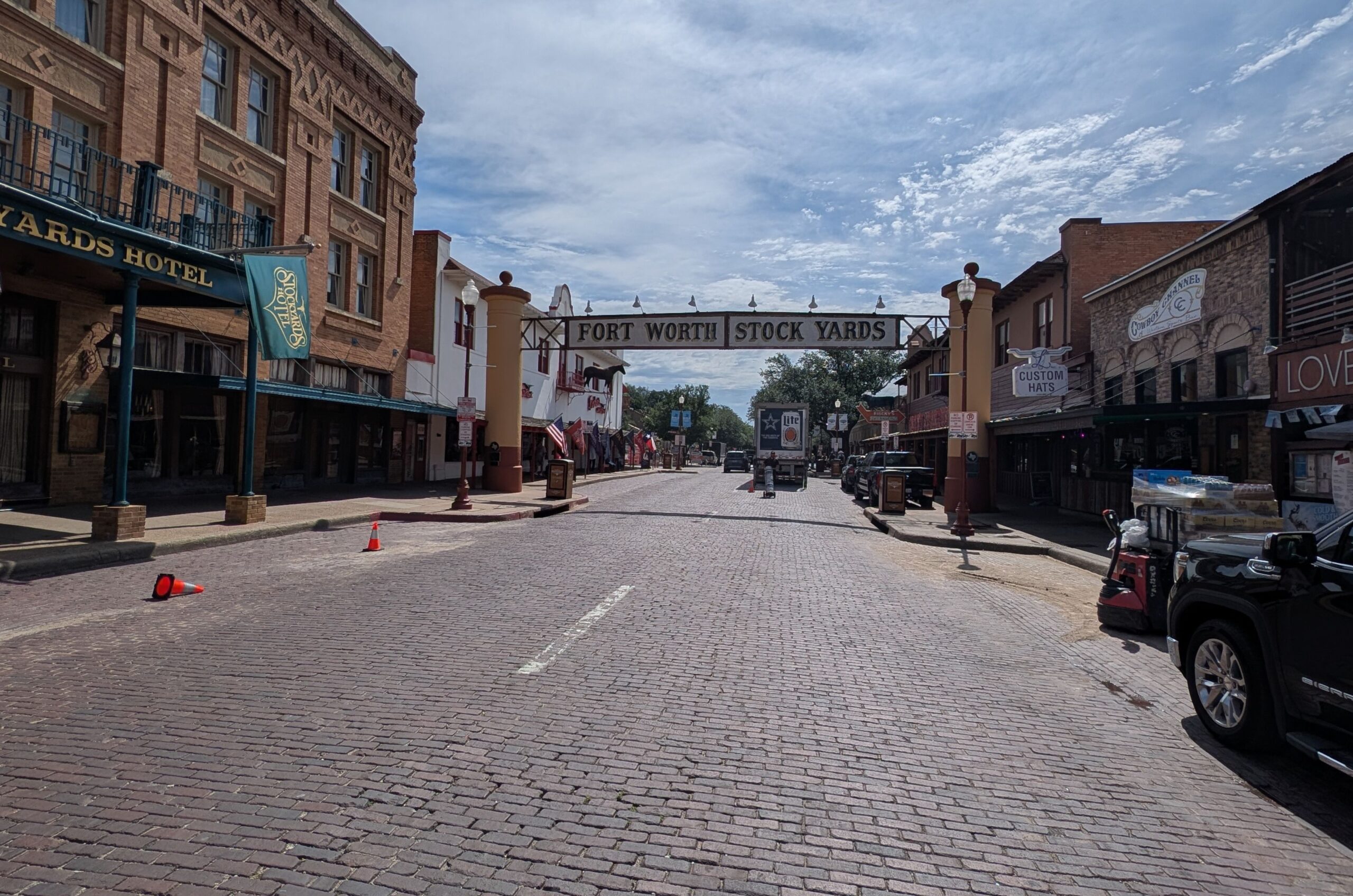
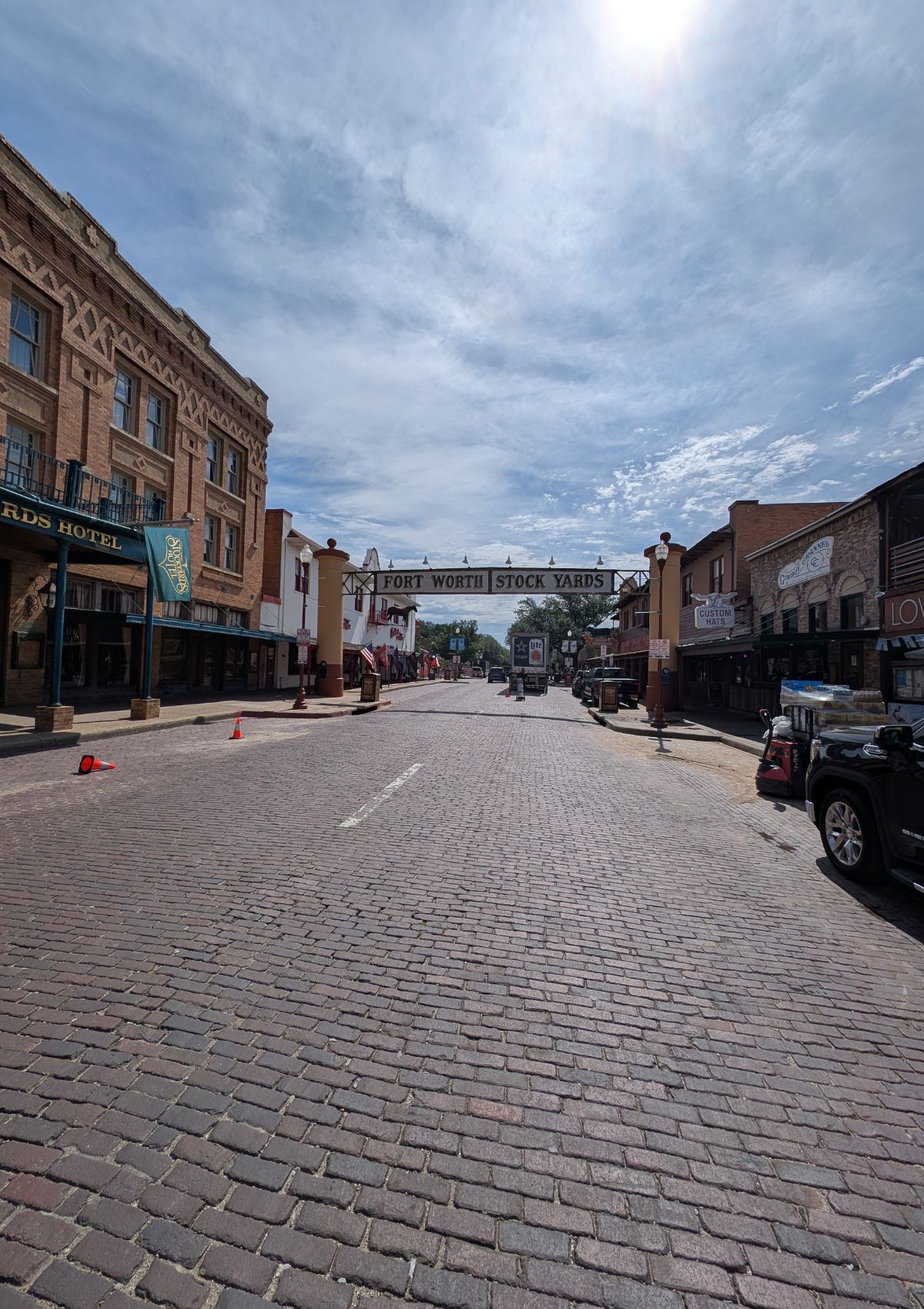
Plenty still survives, at least in outline and texture. You can still read the old street plan, see brick facades, stock pens, alleyways and industrial buildings that give the district a sense of purpose before it had a brand. Not every block lands the same way — some restored areas feel careful and rooted, others a little too tidied up for visitors. But the historic core holds together better than many tourist districts do. Look down as much as up. The street surface, old masonry and surviving pens often tell the story faster than any signboard.
What to See for the Best Mix of History and Atmosphere
If it’s your first visit, keep your focus tight. The Stockyards works best when you prioritise the places where history is still visible rather than buried under novelty.
The Cattle Drive and the Stock Pens
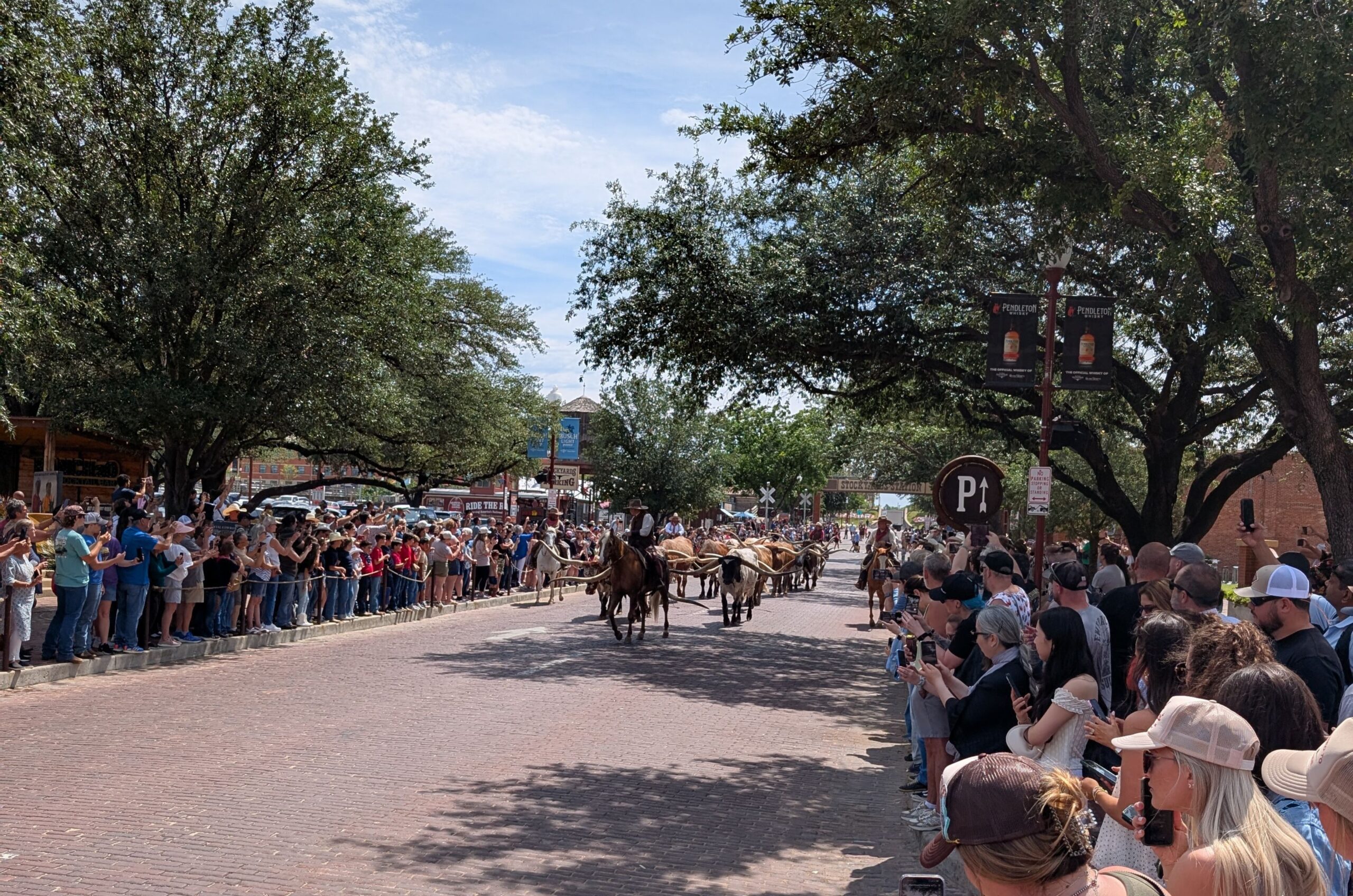
A word of honesty here — the cattle drive is shorter and more modest than the name might suggest. I’ll admit it was one of the few things that left me slightly wanting more. It’s essentially a small herd of longhorns walking along Exchange Avenue, which is over fairly quickly. That said, it’s still worth seeing. Longhorns moving along the same stretch of road that cattle once used connects directly to what this district actually was, and that link gives the whole area a pulse.
The stock pens, though, are the real highlight. They’re the closest thing to the district’s original purpose that most visitors will see, and they’re genuinely fascinating. Walk slowly, read the markers, and notice the gates, the fencing and the plain practicality of the layout. That’s the beating heart of the place.
Timing matters. Arrive early and the district feels calmer, older and more atmospheric. Turn up later on a busy weekend and the same street can feel closer to an outdoor shopping centre in cowboy boots.
Billy Bob’s Texas, Cowtown Coliseum and Other Landmarks
Cowtown Coliseum is one of the anchors of the district — it looks right because it is right. Even if you don’t catch an event, the building carries real weight and belongs here completely. If you do see a rodeo, the experience is all the better for remembering that the Stockyards has always mixed work, competition and spectacle.
Billy Bob’s Texas tells a different chapter of the story — less about trail-era history and more about how the Stockyards kept itself alive by turning Western identity into nightlife and entertainment. It has enough character to earn a look, even if it won’t satisfy someone chasing pure history.
Museums, Markers and Buildings With Real Local Context
Small details do a lot of heavy lifting here. The Livestock Exchange Building, old signage, plaques and museum displays fill in gaps that the streets alone can’t cover. The Stockyards Museum is worth a stop if you want context without a huge time commitment — it helps you understand what you were looking at five minutes earlier.
A good rule: if a place tells you something before it tries to sell you something, it’s usually worth your time.
What Feels Authentic and What’s Built for Tourists
The Stockyards isn’t fake, and it isn’t untouched. It’s both preserved and performed — and the trick is knowing which you’re walking into.
Authenticity here lives in the edges. Weathered materials, old loading areas, the plain geometry of the pens, and buildings that still look built for use rather than display. It also feels more real early in the day, before the crowds thicken and the district’s age comes through more clearly.
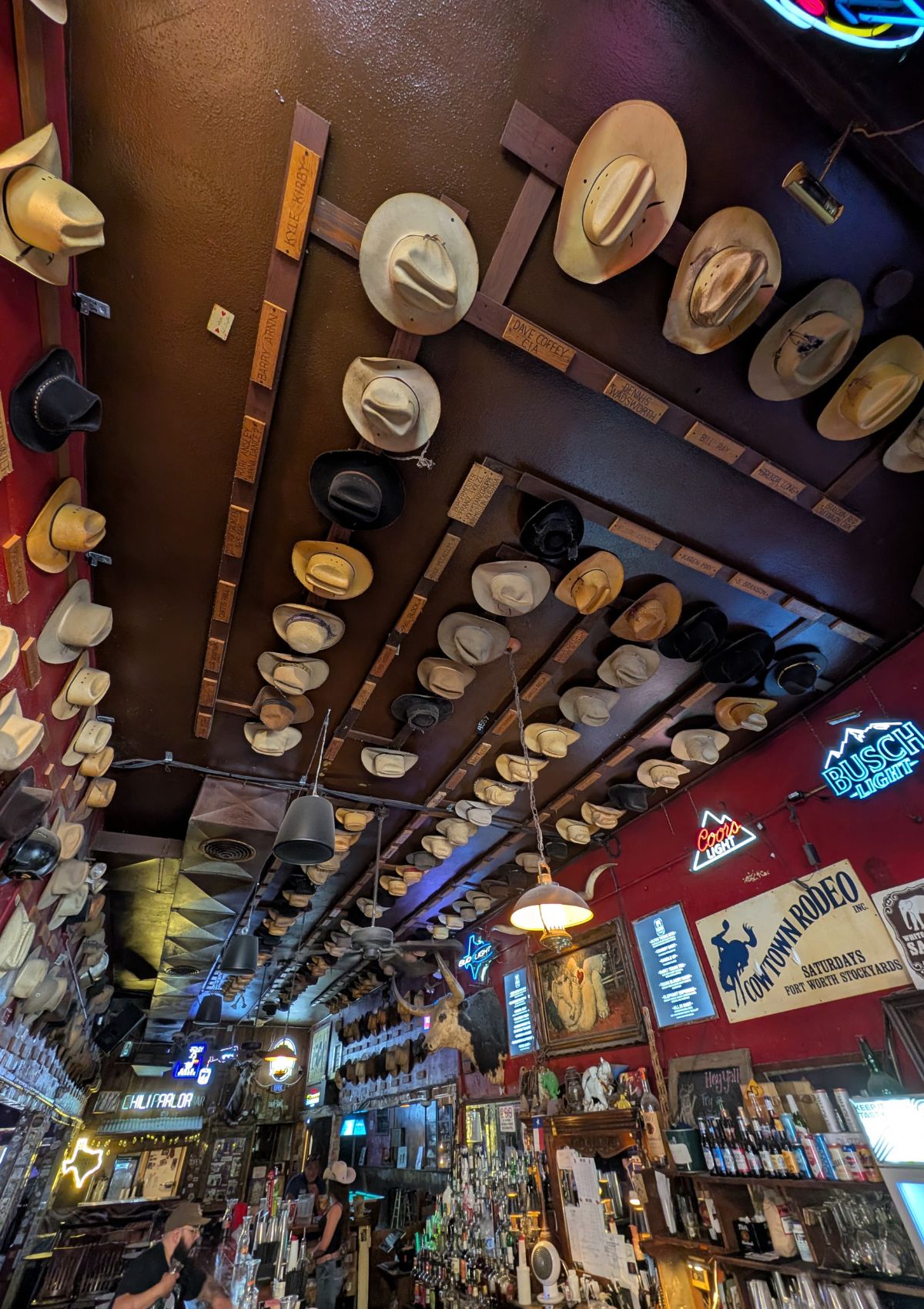
Some corners go hard on the costume version of the West — shops heavy on novelty mugs, slogan T-shirts and cowboy imagery that could sit in any tourist strip in the country. Those places aren’t a problem, they’re just not where the history lives.
Shops and Dining — Better Than You Might Expect
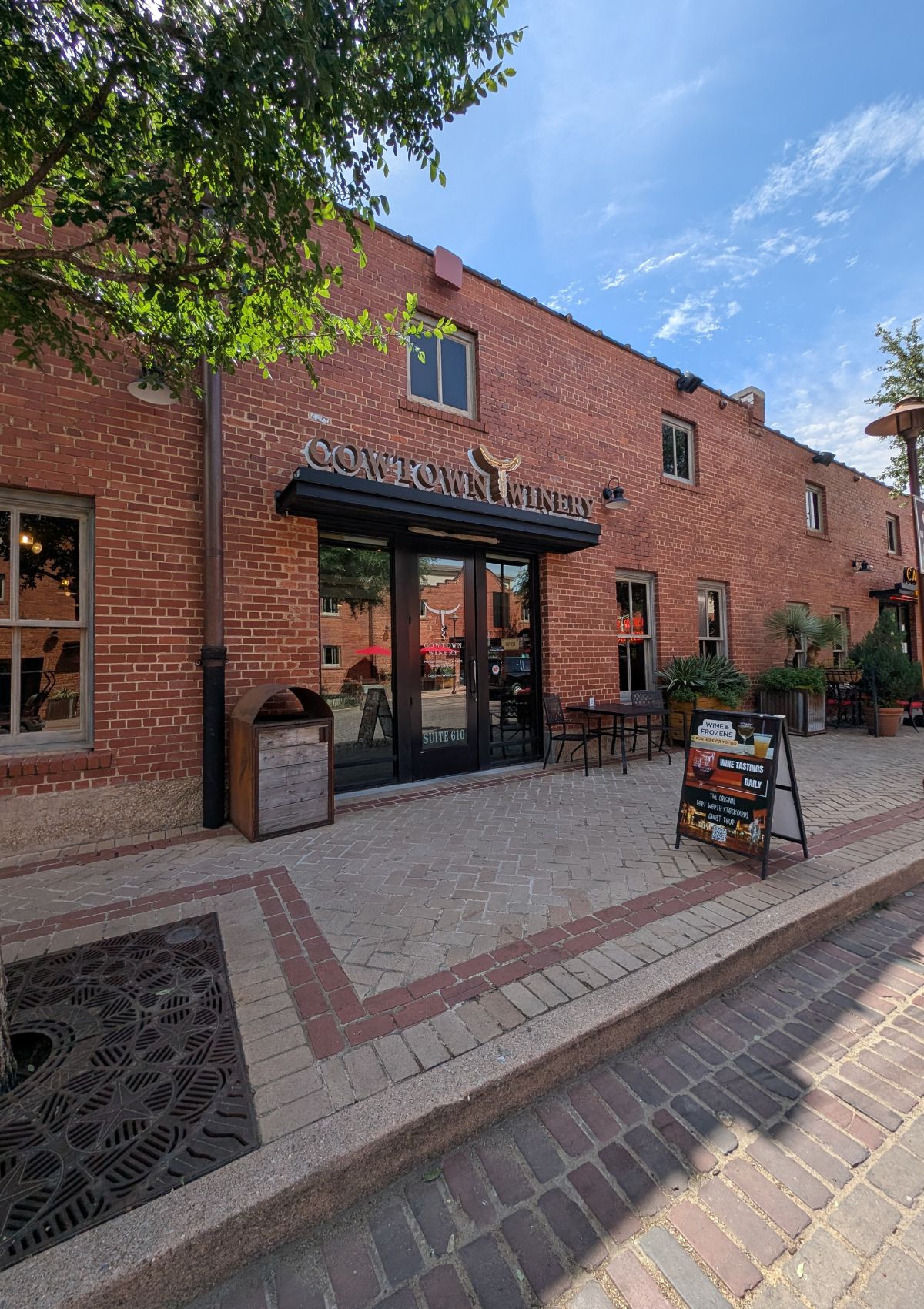
One thing that genuinely surprised me was how good the food scene is. There’s real variety here — from casual BBQ and Tex-Mex to proper sit-down dining with genuine character. It’s well above what you’d expect from a tourist district, and a leisurely lunch or dinner is absolutely worth building into your visit.
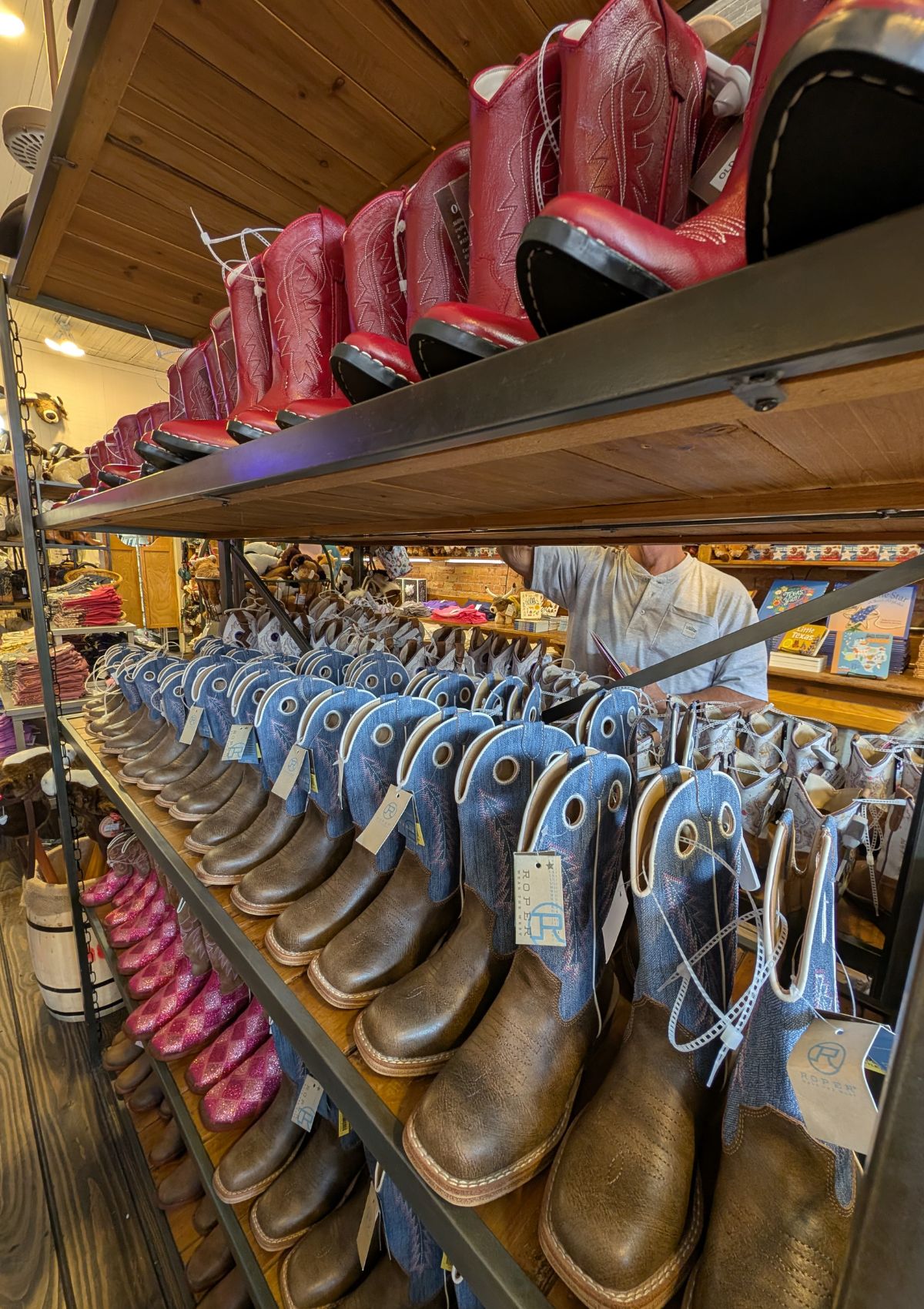
The shopping is extensive too, with plenty to browse even if you’re selective about what you actually buy. One or two souvenir shops can be fun — a dozen will blur together. The better use of your time is the street itself, the pens, a museum stop or a live event in a historic building.
How to Plan Your Visit
A morning or an afternoon is the sweet spot — enough time to cover the historic core properly without the visit starting to drag.
Best Times to Visit
Morning is best for space, softer light and a stronger sense of place. The brickwork looks better, the streets feel calmer and the district’s age comes through more clearly. Late afternoon can also be atmospheric, especially for warm light on the buildings. Midday is the weakest slot — busier, brighter and flatter.
Check the cattle drive schedule before you go and build the rest of your visit around it rather than waiting around for it.
A Simple Walking Order
Start on Exchange Avenue before the street gets crowded. Head to the stock pens and linger there longer than you think you need to. Then move to the Livestock Exchange area and any museum or marker that catches your eye.
From there, Cowtown Coliseum. If you still have time, pick one later-layer landmark — Billy Bob’s or one of the polished redevelopment areas — so you can see how the district has changed without letting that newer layer take over your visit.
Is It Worth It?
Absolutely — the Fort Worth Stockyards is well worth a morning or afternoon of your time. Go in knowing that the cattle drive is more of a brief spectacle than a grand event, and you won’t be disappointed. What you will find is a district with genuine history, great food, a lively atmosphere and enough authenticity to make it feel like more than a theme park.
Arrive early, stay curious, and don’t let the souvenir trail distract you from the real story under your boots.
If you’re planning a self-drive trip through Texas, Rendezvous Roadtrips has a great selection of itineraries that bring the Lone Star State to life.

