

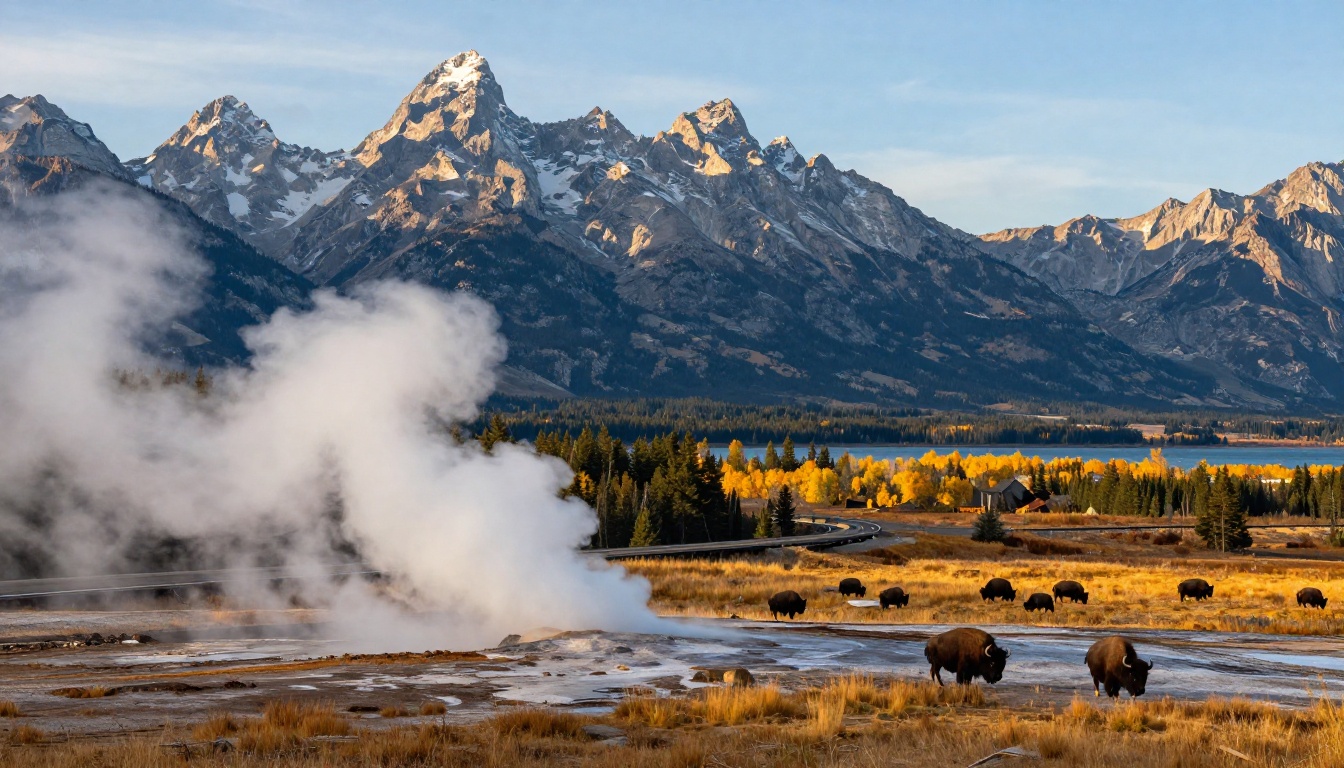
Dreaming of geysers, bison, and those sharp Teton peaks? A first trip here can feel huge on the map, but it doesn’t have to feel hard. The sweet spot is a simple south-to-north route, with Grand Teton first and Yellowstone second.
This Yellowstone Grand Teton itinerary is built for beginners. It keeps daily drives sensible, puts the big sights in the right order, and leaves room for the small moments, like steam drifting over a basin or elk moving through morning sage.
Plan the route around 2026 road openings
For most first-timers, five days works well. Start in Jackson, explore Grand Teton, then drive north into Yellowstone. If you can spare longer, a 7-day version gives you more hiking time and less packing.
Mid-June to mid-September is the easiest window. Roads are usually fully open, lakes are thawed, and daylight is generous. Still, 2026 matters if you’re travelling in spring. In Yellowstone, the West Entrance to Madison, Old Faithful, Norris, and Canyon is due to open on 17 Apr. The East Entrance opens on 1 May, the South Entrance on 8 May, and Dunraven Pass plus Beartooth Highway on 22 May, weather allowing. In Grand Teton, Teton Park Road normally opens around 1 May, while Moose-Wilson Road often stays closed until mid-May. Also, expect some 2026 lane delays near Norris and in Grand Teton’s south end.
As of March 2026, neither park has announced a timed-entry system. That said, rules can change, so check alerts just before you leave. Shuttle options are limited. Grand Teton has seasonal services from Jackson, while Yellowstone still works best by car.
Sleep two nights near Jackson, Moose, or Colter Bay, then two nights near Canyon, Madison, Old Faithful, or West Yellowstone. Inside-park rooms save time, but they book fast. If those are gone, split the trip between Jackson and West Yellowstone.
In Yellowstone, a 60-minute drive can turn into two hours once bison, roadworks, and full car parks join in.
Start early, carry food and water, and fill up when you can. Mobile signal fades fast.
A practical Yellowstone Grand Teton itinerary for 5 days
These drive times are approximate and don’t include wildlife jams or long parking waits.
| Day | Sleep | Main stops | Approx. driving |
|---|---|---|---|
| 1 | Jackson or Moose | Mormon Row, Snake River Overlook, Jackson Lake | 1 to 2 hours |
| 2 | Jackson, Moose or Colter Bay | Jenny Lake, Taggart Lake, Signal Mountain | 1.5 to 2.5 hours |
| 3 | Old Faithful, Madison or West Yellowstone | South Entrance, West Thumb, Old Faithful, Grand Prismatic | 3 to 4 hours |
| 4 | Canyon or West Yellowstone | Norris, Grand Canyon of Yellowstone, Hayden Valley | 3 to 4 hours |
| 5 | Depart north or west | Lamar Valley, Mammoth Hot Springs | 3 to 5 hours |
For another take on pacing, these first-timer route ideas are handy if you want to add an extra night.
Day 1, arrive in Jackson and get your first Teton views
Keep the first day light. After a flight or long drive, Grand Teton is best in broad, easy brushstrokes. Head to Mormon Row for the classic barn-and-peaks view, then continue to Snake River Overlook or Schwabacher Landing if the light is kind. Later, drive up to Jackson Lake Lodge or Oxbow Bend for sunset.
If you only manage one stop, make it a viewpoint. Those mountains rise straight out of the valley, and the effect is almost theatrical.
Day 2, Jenny Lake and Grand Teton’s easy wins
Start by 06:30 or 07:00. First, look for wildlife around Oxbow Bend or Willow Flats. Moose, elk, and bison are often active early, while the light is softer and the roads are calmer.
Then spend the middle of the day around Jenny Lake. First-timers usually love the short Taggart Lake Trail or the walk to Hidden Falls if seasonal boat services are running. After lunch, drive Teton Park Road north, stop at Jenny Lake Overlook, then finish with the view from Signal Mountain Summit.
This is the day to simply look up. The Tetons feel like a painted backdrop, except they keep changing with every bend.
Day 3, cross into Yellowstone for geysers and steam
Drive from the north end of Grand Teton to Yellowstone’s South Entrance, then on to West Thumb Geyser Basin. From there, it’s about 35 minutes to Old Faithful. Park, walk the boardwalks, and see at least part of the Upper Geyser Basin. If you time it right, Old Faithful is easy to pair with nearby pools and smaller geysers.
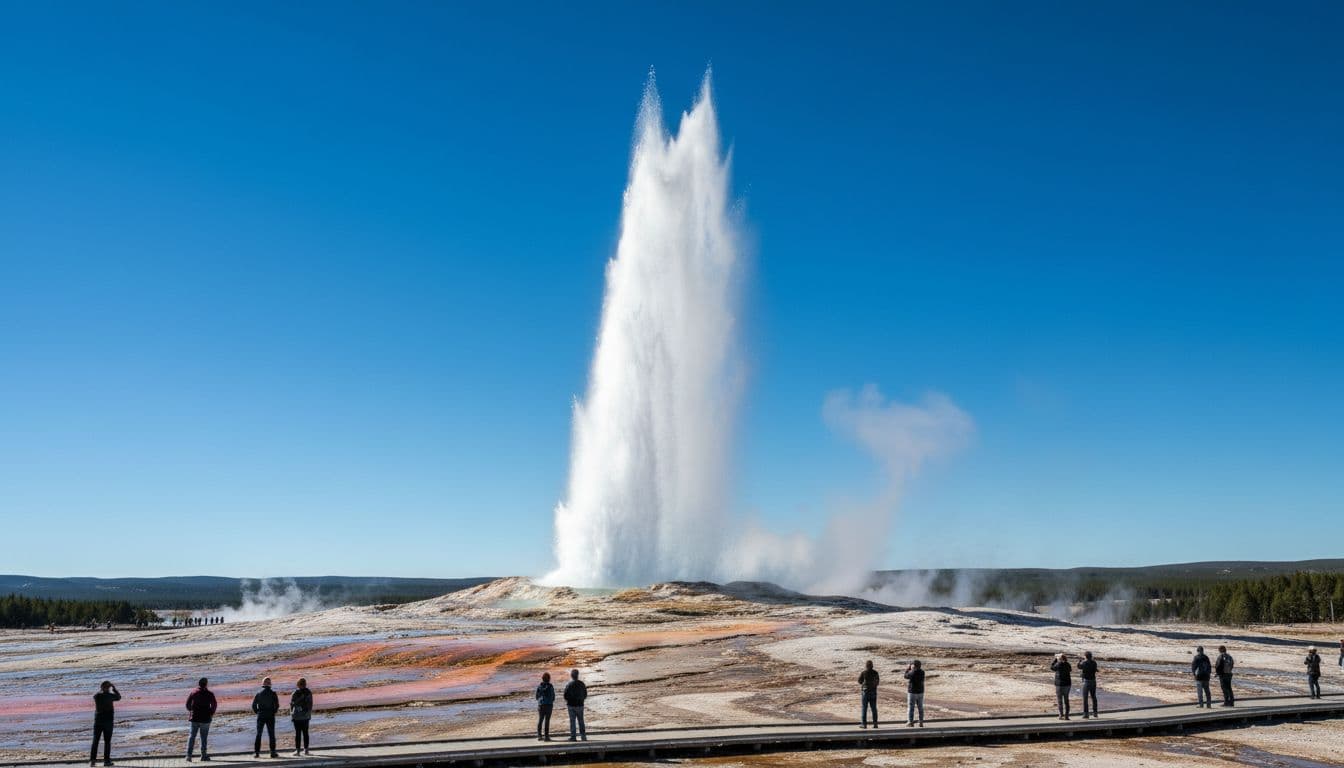
If energy is still good, head to the Grand Prismatic Spring Overlook via the short Fairy Falls trail. Stay near Old Faithful, Madison, or West Yellowstone. That keeps day four much easier.
Day 4, waterfalls, canyon views, and Hayden Valley
This is Yellowstone’s greatest-hits day. Start early again and drive towards Norris Geyser Basin if you’re staying west. Then continue to the Grand Canyon of Yellowstone. First-timers shouldn’t miss Artist Point, Lookout Point, and the Brink of the Lower Falls if stairs don’t bother you.
From Canyon Village, it’s about 25 minutes to Hayden Valley. Go in late afternoon or early evening for bison, elk, and sometimes bears at a safe distance. If the day is warm, the valley often comes alive as the light drops.
Stay in Canyon Village if you can. If not, go back to West Yellowstone and accept a longer final day.
Day 5, Lamar Valley at dawn, then Mammoth or your drive home
If you’re based at Canyon, leave before sunrise and drive about 1 hour 15 minutes to Lamar Valley. For wildlife, this is the big finish. Pull over often, scan the hillsides, and be patient. The best sightings rarely arrive on schedule.
After Lamar, continue to Mammoth Hot Springs for terraces and a very different feel. Then exit north towards Gardiner and Bozeman, or loop back west if that’s where you’re flying from.
First-timer tips that make the trip much smoother
Book lodging as soon as dates are firm. These parks are busy for a reason, and last-minute rooms often mean longer drives.
Pack layers even in summer. Mornings can feel near 0°C, while afternoons may climb past 25°C. Also bring rain gear, snacks, refillable water bottles, and a paper map. When signal disappears, a sat-nav can feel like a very confident liar.
Follow boardwalk rules in geothermal areas and never treat wildlife sightings like a safari free-for-all. Use pull-outs, stay back, and keep voices low. You’ll see more that way.
If you have six or seven days, slow this route down rather than adding more miles. A 5 to 7 day Yellowstone and Grand Teton itinerary shows how extra time helps, especially around Lamar, Jenny Lake, and the canyon.
The road trip you’ll actually enjoy
A first visit doesn’t need every trail and every thermal basin. It just needs the right rhythm, early starts, and enough space to let the parks work their magic. Keep it simple, and this road trip will feel less like a checklist and more like a story you’ll want to tell for years.

