

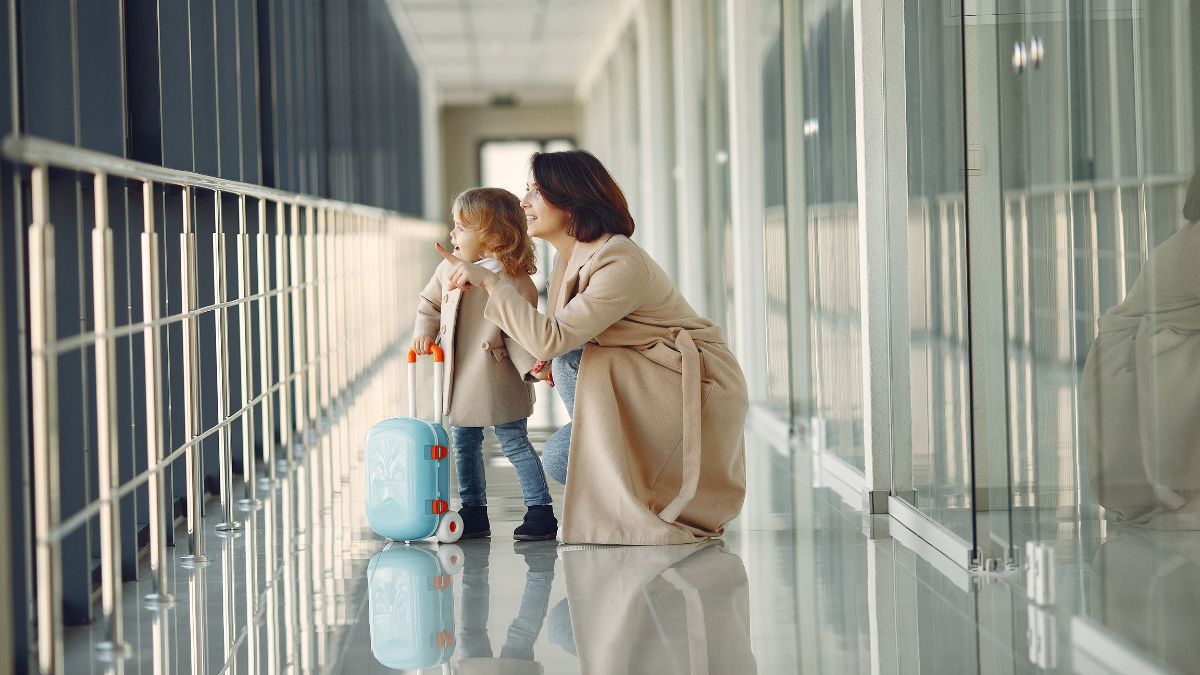
You know that mix of excitement and dread before a big trip with kids. You can almost feel the cabin air and hear the safety announcement, while a small person is already asking for snacks and you have not even left the house.
Long haul travel with kids can feel like a test of patience, planning, and sheer luck. It is also how many of us see grandparents, take that once-a-year holiday, or keep family ties alive across countries.
This guide is for tired but determined parents who want a good enough flight, not a perfect one. Think practical tips, honest expectations, and a gentle reminder that you are doing your best.
Start With Your Own Expectations (Good Enough Is the Goal)
Before you think about snacks and screens, it helps to reset the bar in your own head.
Long haul travel with kids is not a normal day. Sleep will be odd. Meals will be odd. Emotions will be odd. If you expect a smooth, photo-ready experience, you will feel like you are failing by hour two.
Try this instead:
- Aim for managed chaos, not calm perfection.
- Accept that at some point, someone will cry, spill something, or refuse to sit.
- Decide what matters most to you: maybe it is sleep, or being kind to each other, or just getting there in one piece.
A simple phrase to repeat to yourself helps:
“This is temporary, we are doing this so we can be with people we love / see somewhere special.”
Your kids will mirror your energy more than your schedule. If you feel steady, even while tired, they feel safer.
Choose Flights With Sanity in Mind

Photo by Gustavo Fring
You cannot control everything, but a few choices can make a big difference.
Think about timing, not just price
Red eye flights can be great for some kids who sleep anywhere. For others, night flights mean wired children who refuse to sleep, then crash in the taxi at the other end.
Ask yourself:
- Does your child cope better with staying up late, or waking early?
- Are they used to napping on the go, or do they fight it?
Sometimes a slightly shorter connection or an earlier flight is worth paying a bit more, especially if it avoids a 4 hour wait with overtired toddlers.
Use family-friendly policies
Many airlines now let families board early, use app boarding passes, and even pre-select seats for families. In 2025, most boarding passes and seat changes run through airline apps, which is handy when you have your hands full.
Before travel day:
- Check if your airline seats families together as standard.
- Save your boarding passes to your phone wallet (and take a screenshot, in case the app freezes).
- Store passports and any letters for solo parenting travel in one pouch.
Think of it as “future you” being kind to “airport you”.
Pack an Activity Bag That Actually Works
The activity bag is your secret weapon. Not perfect, but powerful.
What to put in the bag
For each child, think in small, quiet activities that you can rotate. For example:
- Stickers and washi tape: no mess, lots of focus.
- Mini colouring pad and a few crayons or twistable pencils.
- Reusable sticker books or simple puzzle books.
- Small figures or cars that fit in a hand, not a shoebox.
- A soft toy that doubles as comfort item and pillow.
For babies and toddlers:
- Teething toy or soft cloth book.
- A small rattle or toy that clips to the seatbelt, so it does not roll away every 30 seconds.
Pop some items away in your bag at boarding, then “reveal” them across the flight. New things feel magical for much longer.
A word on screens
Every family has its own screen rules, and long haul travel with kids can test them.
You might:
- Screen friendly: Load a tablet with films, series, and offline games, plus child-friendly headphones. Tell your child, “The tablet is for the plane and airports, not the whole holiday.”
- Screen limited: Use screens like a pressure valve. For example, 30 minutes after meals, or for the last hour of the flight, when everyone is done.
There is no right way. The goal is not a screen-free medal. The goal is emotional survival for everyone.
Smart Snacks and Simple Meals
Hungry kids are loud kids. Plane food comes at odd times, and sometimes they hate it on sight.
Snack ideas that travel well
Think small, non-sticky, and not too smelly:
- Crackers or rice cakes
- Dry cereal in a small pot
- Raisins or other dried fruit
- Cut grapes or apple slices in a clip box
- Mini sandwiches or wraps, cut into small pieces
- Squeezy yoghurt pouches if allowed by security at your airport
Pack them in separate little bags so you can “hand out” snacks over time, rather than reveal a giant stash in one drama-filled moment.
Talk through food expectations
Before you travel, you can say:
- “The food on planes can be a bit different. We will try it, and we also have our own snacks.”
- “You do not have to eat everything, but we need to eat something so our bodies feel strong.”
This takes the pressure off both of you when the tray appears.
Routines, Sleep, and Letting Go a Little
Sleep is the big worry for many parents. The truth is, some flights end with a miracle 6 hour nap, and some do not.
If you like routine
You can keep a loose version of your home schedule:
- Dress your child in pyjamas at “bedtime”, even if you are still at the airport.
- Do a mini bedtime routine on the plane: toilet, teeth if you can, story, cuddle.
- Use a familiar sleep cue, like a small blanket or a certain phrase.
You might say, “It is bedtime for our bodies now. The plane is our bedroom for a little while.”
If you prefer a flexible approach
You can lean into the oddness of it all:
- Let them nap when they naturally crash, even if it is 4 pm local time.
- Focus on rest rather than perfect sleep; calm play, films, and cuddles still help.
- Plan for an early night at your destination and a quiet first day.
Either way, remind yourself: one very odd night will not ruin your child’s long term sleep.
Handling Meltdowns at 30,000 Feet
Even the most prepared parent gets a mid-air meltdown at some point. The cabin is cramped, ears hurt, and routines are upside down.
Calm steps that help
- Check the basics: Are they hungry, thirsty, too hot, too cold, or need the loo?
- Change environment: If safe, walk to the loo and back, or just stand in the aisle for a minute.
- Name the feeling: “You feel cross and tired. This is really hard.” Kids calm faster when they feel understood.
- Offer a simple choice: “Do you want to sit on my lap or next to me?” or “Snack first or story first?”
If someone gives you a look, remember: they are seeing five minutes of your day, not your whole life. Most parents on that plane are silently cheering you on.
Make the Most of Airport Time
Airports can be boring for adults and wild for children. A little planning turns them into part of the adventure.
Before security
- Keep passports and phones in one easy-to-grab place.
- If your child has energy, let them walk or skip instead of sitting in the buggy the whole time.
After security
Treat this as your reset zone:
- Fill water bottles where allowed.
- Find a quieter corner to let kids move, stretch, and climb on a bench.
- Use toilets before boarding, even if no one “needs it”.
You can frame it as: “We are going on a long sit-down, so now we do our moving-about time.”
Be Kind To Yourself Too
Parents often forget they are also human on these flights. You are not just a travel guide and snack machine.
If you can, pack:
- A spare top for you, not just for the kids.
- A simple snack you actually like.
- Headphones, even if you only use them for 10 minutes while a child sleeps on you.
Give yourself the same grace you give your children. You are tired, out of routine, and doing something hard for a good reason.
Final Thoughts: Long Haul, Short Season
Long haul travel with kids can feel endless while you are in it. The flight clock moves slowly, your patience wears thin, and you wonder why you thought this was a good idea.
Then, you land. A grandparent runs towards your child, or you step into warm evening air, or you see a city you have been longing to visit. The hard bits fade faster than you expect.
If you plan for “good enough”, pack a few simple tools, and stay gentle with yourself, you will get through it. Your kids will not remember every tantrum or tray table disaster. They will remember that they crossed oceans with you, and that is a quiet kind of magic.

