

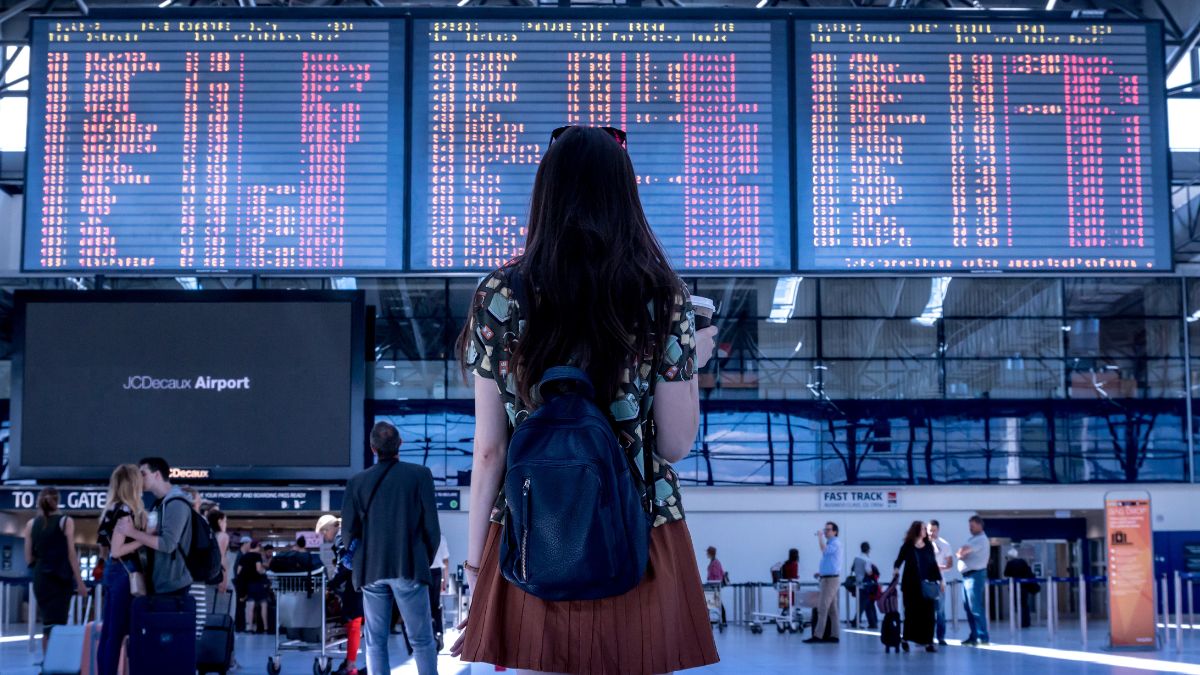
You know that sinking feeling when the board flips from “On time” to “Delayed”, then “Cancelled”? Your plans start to unravel, and suddenly you are trying to make sense of airline jargon while clutching a lukewarm coffee.
In that moment, the last thing you want is a long legal guide. You just want to know what to do, who to speak to, and how to turn this mess into a fair outcome.
This guide walks you, step by step, through making a flight disruption claim in clear, practical language. Keep it open on your phone while you are in the terminal if you need to. Think of it as a calm friend who has been through it before.
Step 1: Stay calm and collect proof at the airport
When your flight is delayed, cancelled, or diverted, your first job is not to argue at the desk. It is to quietly collect proof.
Try to keep:
- Boarding passes and booking confirmations
- Emails or texts from the airline about the disruption
- Photos of the departure board showing delays or cancellation
- Receipts for food, drinks, and hotels you pay for
- Notes on what airline staff tell you, including names and times
If staff give you a written notice or leaflet about your rights, keep that too. It all helps later if the airline argues about timings or the reason for the delay.
Think of every scrap of paper as a small tile in a mosaic. On its own, it is dull. Together, it paints a very clear picture of what happened, which is exactly what a strong claim needs.
Step 2: Check what you can claim: compensation, care, or refund
Before you fire off an angry email, it helps to know what you are actually asking for. There are usually three separate things:
- Compensation for lost time and inconvenience
- Care, such as meals and hotel rooms during long waits
- Refunds or rerouting if your flight is cancelled or badly delayed
What you can claim depends mostly on where you are flying and which airline you are on.
UK and EU flights in plain English
If your trip starts in the UK or EU, or you fly into the UK or EU with a UK or EU airline, strong rules protect you. These are often called EU261 or UK261.
In simple terms, you usually have a right to compensation when:
- Your arrival is delayed by 3 hours or more, and
- The disruption is the airline’s fault, such as technical problems or crew issues, not bad weather or air traffic control strikes
In the UK, typical compensation amounts go up to £520 for long-haul flights, depending on how far you travel and how late you arrive. The Civil Aviation Authority delays guidance explains the amounts and examples in more detail.
You also have rights to food, drinks, and (if needed) a hotel when the wait drags on. The airline should provide vouchers or arrange this directly, but if they do not, keep your receipts and claim the costs back.
For a friendly, step-by-step explanation, the Citizens Advice guide to delayed or cancelled flights is well worth saving. It sets out when delays count as the airline’s “fault” and how much you might get.
In the EU, the rules are similar for now, though changes are expected from 2026, which may raise delay thresholds and cut some payments. If you are flying within the EU, the official Your Europe air passenger rights page is the best current source.
US flights: what you can realistically expect
The picture is quite different in the United States.
For domestic US flights on US airlines, there is usually no legal right to cash compensation for delays or most cancellations. Instead, you may get:
- Rebooking on a later flight
- Meal vouchers
- Hotel accommodation if you are stuck overnight, depending on airline policy
You are entitled to a refund if the airline cancels your flight or makes a “significant schedule change” and you choose not to travel. The US Department of Transportation explains these basics in its plain-language Fly Rights guide and its separate page on refund rights for cancellations or major changes.
If a UK or EU airline flies you to or from the US, UK or EU rules may still apply, so it is worth checking both sets of rights.
Other international flights
On routes outside the UK, EU, and US, your options often come from:
- Local consumer laws
- International agreements, such as the Montreal Convention
- The airline’s own terms and conditions
In practice, you may be able to claim for proven financial losses, such as extra hotel nights, rather than a fixed lump sum for delay. Keep every receipt and be ready to show that these costs were a direct result of the disruption.
Step 3: Decide whether to claim yourself or use a service
Once you know you have a case, you can choose how to make your flight disruption claim.
Doing it yourself is usually free and not as scary as it sounds. Most airlines have an online form for delays and cancellations. You fill in your details, upload documents, and wait.
Claim companies will do this for you but take a cut, often 20 to 40 per cent of any compensation. They can be handy if you are time-poor, but you are paying for something you can often manage in half an hour with a clear head and good notes.
If you are unsure, skim through a consumer-friendly explanation such as the UK’s big comparison sites or advice pages, then decide whether you feel up to it.
Step 4: Put your flight disruption claim in writing
Even if the airline offers a form, it helps to send a short, clear message in your own words. Think of it as telling the story of your disrupted day, but with dates, times, and facts lined up neatly.
Include:
- Your full name and contact details
- Booking reference and ticket numbers
- Flight number, route, and date
- Actual arrival time, if you eventually travelled
- The reason given for the disruption
- What you are claiming (compensation, refunds, expenses, or all three)
- Copies of receipts and screenshots as attachments
Simple email template you can adapt
You can copy and tweak something like this:
Subject: Flight disruption claim for [Flight number] on [Date]
Dear [Airline name] customer relations,
I am writing to make a flight disruption claim for flight [Flight number] from [From] to [To] on [Date], booked under reference [Booking reference].
The flight was scheduled to depart at [Time] and arrive at [Time]. It actually arrived at [Time], giving a delay of [X] hours.
Your staff at [Airport] informed us that the cause was [brief reason given, for example, “technical problems with the aircraft”]. Based on UK/EU passenger rights, I understand this is within the airline’s control.
I am requesting:
- Compensation under UK261 / EU261
- A refund of my reasonable expenses of [£amount], receipts attached
Please confirm acceptance of this claim and the amount to be paid. I would appreciate a response within 14 days.
Kind regards,
[Your name]
[Contact number]
Keep the tone firm but polite. Anger may feel satisfying in the moment, but a calm, factual note often gets a faster, clearer reply.
Step 5: Keep records and know when to escalate
After you send your claim, set a reminder in your phone. Airlines can be slow to answer, especially after major weather events or strikes.
A simple checklist helps:
- Save a copy of your claim email or form
- Keep all replies from the airline in one folder
- Store your receipts and boarding passes together
- Note dates each time you chase
If nothing happens after, say, 6 to 8 weeks, or the airline rejects your claim and you still feel you are right, you can escalate.
For UK flights, you can often go to an approved dispute resolution body or, in the last resort, to the small claims court. The CAA site lists which airlines use which bodies. For EU flights, local enforcement bodies are shown on the EU passenger rights page.
For US flights, if you think the airline is not following its own policies, you can file a complaint with the Department of Transportation. Their site explains how and also helps you check what the airline promised in its customer service plan.
A quick recap before you close your laptop
Flight disruption hits hard in the moment, but a clear head and a few simple steps can make a big difference later. Collect proof while you wait, check which rules apply to your route, then send a short, well‑organised flight disruption claim that tells your story with facts, not frustration.
Remember that you do have rights, especially on UK and EU flights, and that airlines do not always get it right the first time. If your case is strong, be patient, stay organised, and do not be afraid to escalate when the airline drags its feet.
Next time the departure board flips at the worst possible moment, you will not feel quite so powerless. You will know exactly what to do.

