

Arizona road trip itinerary: seven days through Tucson, Sedona and the Grand Canyon
Seven days is enough for an Arizona road trip through Tucson, Sedona and the Grand Canyon, provided you give each stop its own overnight base. I’d start and finish in Phoenix, with two nights in each destination, because that rhythm gives you time to enjoy each place rather than just pass through it.
The route pairs the cactus-studded Sonoran Desert with Sedona’s red sandstone and the immense views from the Grand Canyon’s South Rim, and I’ve found that time to explore matters far more than adding another distant landmark. So the first decision in planning this trip is how much driving you’re happy to do alongside those memorable stops.

The seven-day Arizona road trip route
I’d treat this as seven days on the ground, with your arrival flight the day before. After the long journey from the UK, a night in Phoenix is far kinder than picking up a hire car and heading straight down the interstate.
Here’s the route, with approximate driving times before any sightseeing stops. Allow extra for traffic and breaks.
| Day | Route and main focus | Driving time | Overnight base |
|---|---|---|---|
| 1 | Phoenix to Tucson, then downtown | 1 hour 45 minutes to 2 hours | Tucson |
| 2 | Saguaro National Park and the Sonoran Desert | Local driving | Tucson |
| 3 | Tucson to Sedona via Phoenix and Montezuma Castle | 3.5 to 4 hours | Sedona |
| 4 | Sedona’s red rocks and walking trails | Local driving | Sedona |
| 5 | Sedona to the Grand Canyon South Rim | 2 to 2.5 hours | Grand Canyon Village or Tusayan |
| 6 | Grand Canyon viewpoints and rim walks | Local driving and shuttles | Same base |
| 7 | Return to Phoenix via Flagstaff | 3.5 to 4 hours | Phoenix or departure |
I try to keep driving days to around three or four hours, so most of this week leaves plenty of room for exploring. Day three is the one exception, and a stop at Montezuma Castle breaks it up nicely.
A standard hire car is fine for this itinerary, because every road on it is paved. Our USA car hire essentials guide covers insurance, rental charges and the things British drivers most often ask about.
Key takeaways before booking
- Book two nights each in Tucson, Sedona and the Grand Canyon area, rather than trying to use Phoenix as one central base.
- Book accommodation early, particularly around spring break, US public holidays and for rooms close to the national parks.
- Budget for park fees, which have risen sharply for overseas visitors since 2026 (more on that below).
- Save Page and Monument Valley for a longer trip rather than squeezing them into a Tucson-focused week.
Days one and two: Tucson and the Sonoran Desert
Day one: arrive in Tucson
The drive south on Interstate 10 is a gentle introduction to Arizona’s wide skies and dry mountain ranges. Once you arrive, I’d leave the car at the hotel and spend the afternoon wandering downtown and the older neighbourhoods around it, where adobe buildings, colourful murals and shaded courtyards give the city a character all of its own.
Tucson’s food is a big part of its appeal. In 2015 it became the first city in the US to be named a UNESCO City of Gastronomy, thanks to Sonoran cooking traditions that go back thousands of years, and the flour tortillas and Mexican influences are things to seek out rather than leave to chance.
I’d keep this first day gentle, because an unhurried lunch and an afternoon stroll make a far more inviting start than another long drive.
Day two: a day in the desert
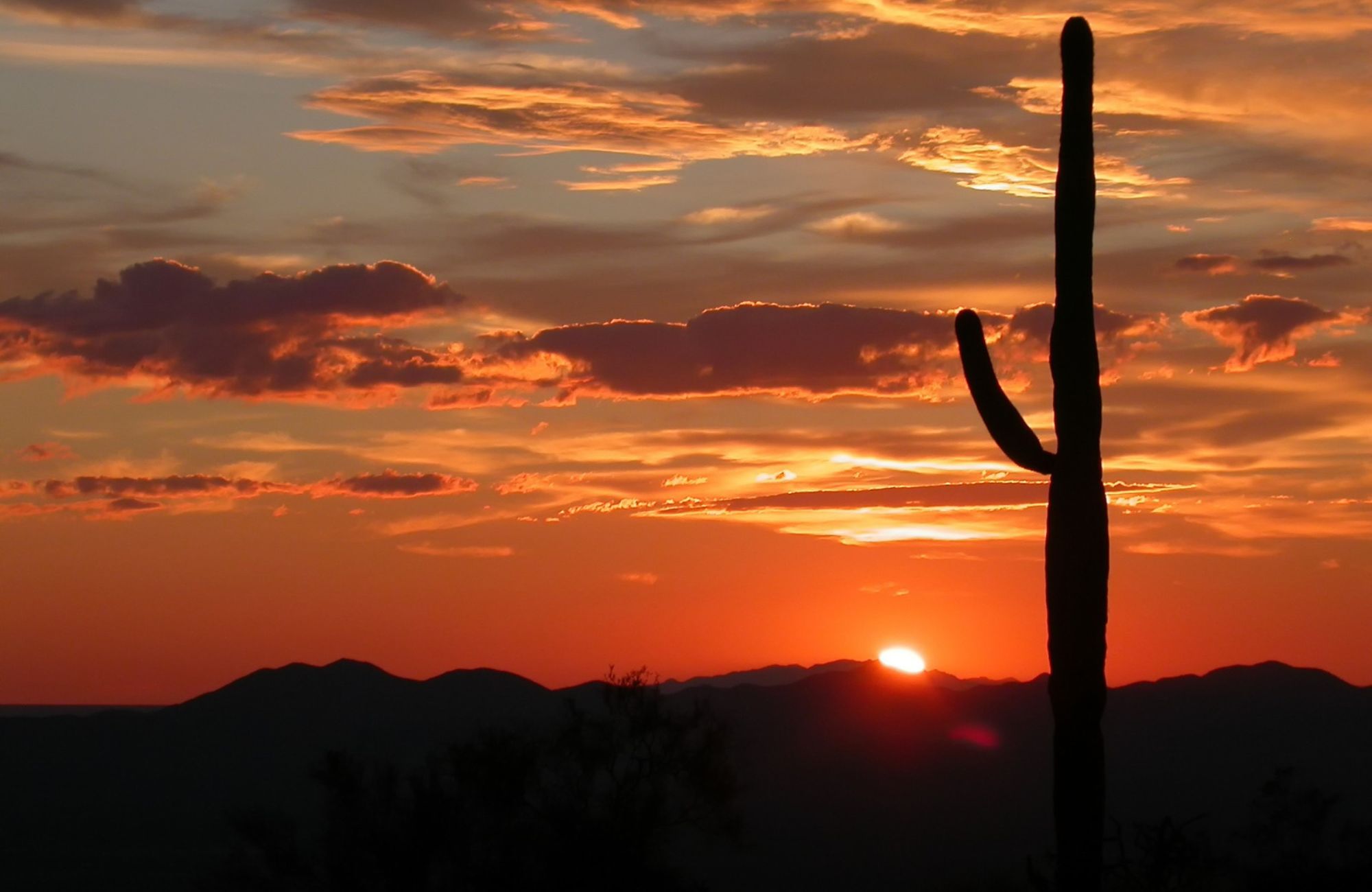
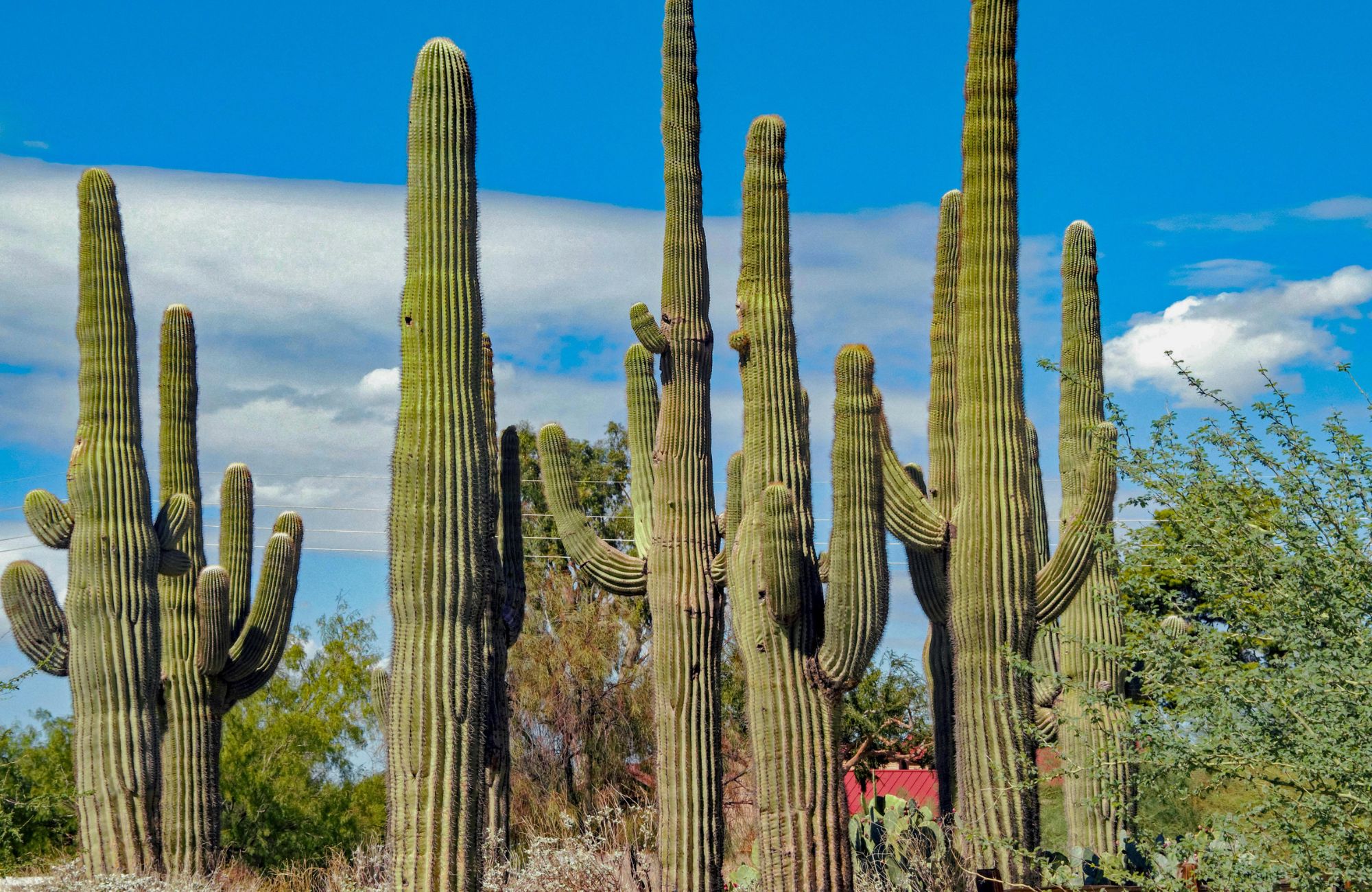
Give your second day to the Sonoran Desert, and Saguaro National Park is the obvious place to begin, with its two districts on either side of the city where towering saguaros rise above rocky slopes and mountain silhouettes. The Arizona-Sonora Desert Museum, close to the park’s western district, is part zoo, part botanical garden and an excellent way to understand what you’re looking at, while Sabino Canyon in the foothills to the north-east and the white-walled Mission San Xavier del Bac to the south are both worth the short drive if you have time.
The desert rewards an early start, particularly when the low morning light catches the cactus spines. I’d choose a short, established trail that suits your fitness, carry more water than you think you’ll need, wear a hat and use sun cream, then head back into town for the hottest part of the day.
Summer temperatures in Tucson can go above 40°C, so in the hotter months I’d keep walks to the early morning and save the afternoon for Tucson’s food, shops and museums. You then have a second night in Tucson, without the interruption of packing up and changing hotels.
Days three and four: Sedona’s red-rock country
Day three: drive north to Sedona
Tucson to Sedona takes around three and a half to four hours, plus time for lunch and traffic through Phoenix, which makes this the longest drive of the week. The one stop I’d make is Montezuma Castle National Monument, just off Interstate 17 near Camp Verde, where a five-storey cliff dwelling built by the Sinagua people more than 800 years ago sits in a limestone alcove above Beaver Creek. It’s a short, flat walk from the car park and an easy 45-minute break.
The scenery changes as you climb north, with desert plains giving way to higher country before the warm sandstone around Sedona comes into view. State Route 179, the Red Rock Scenic Byway, is the most beautiful way into town, passing Bell Rock and Courthouse Butte. If you want photographs, use the designated pull-outs rather than stopping at the roadside.
Once you’ve checked in, I’d find a short walk or a viewpoint for the late-afternoon light.
Day four: Sedona without another long drive
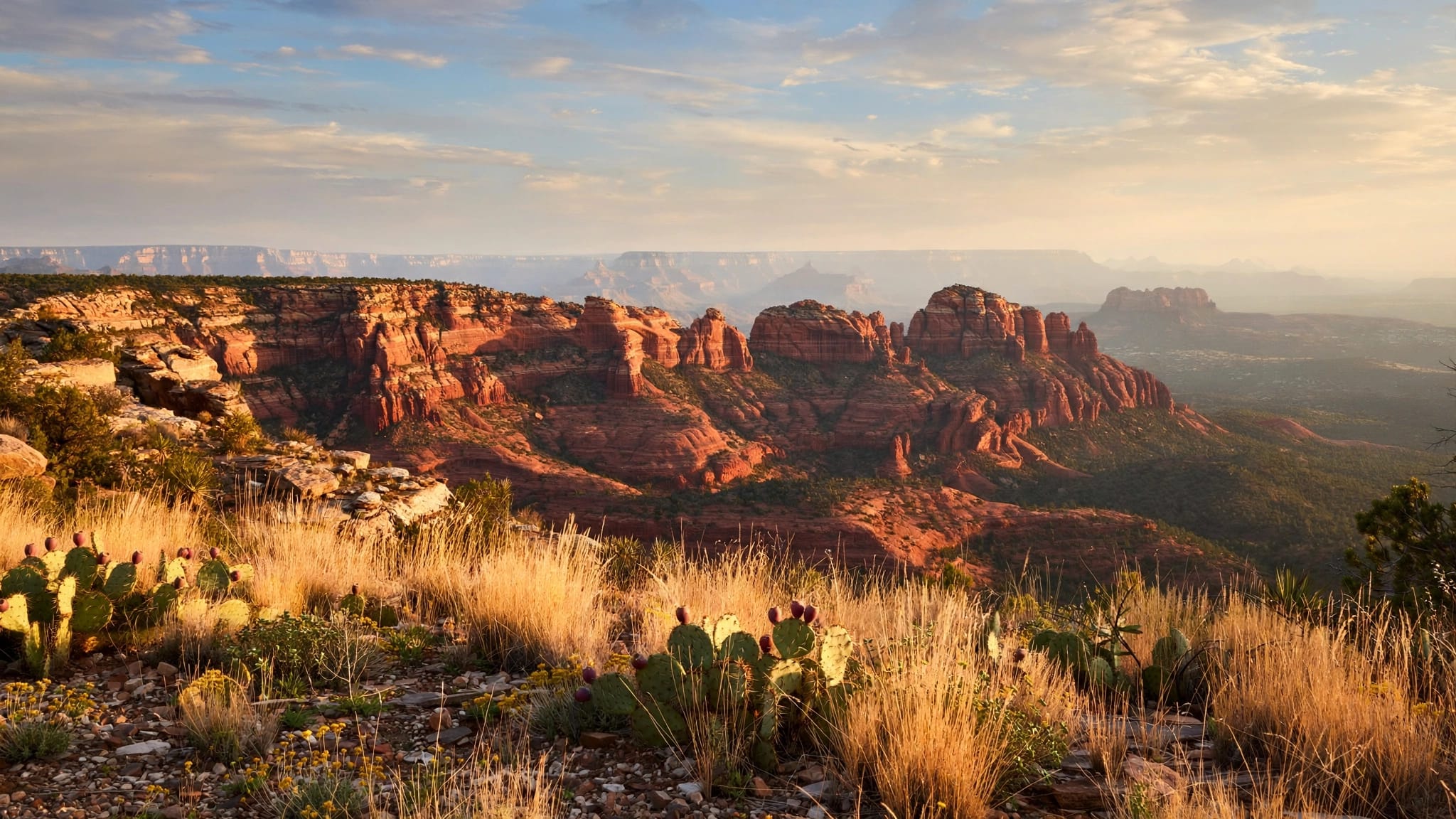
Sedona deserves a full day. Its cliffs and rounded rock formations change colour as the light moves, with the orange and copper tones at their most striking towards sunset.
I’d split the day between one manageable walk and some time in town. Cathedral Rock, Bell Rock and the Chapel of the Holy Cross, which is built right into the red rock, are the best-known sights, but I’d choose a trail by its distance, climb and shade rather than by how it looks in photographs.
Trailhead car parks fill early, especially in spring and autumn, and many of the trailheads in the Coconino National Forest around Sedona need a Red Rock Pass to park there. You can buy one at machines at the main trailheads or at visitor centres, and making an early start also leaves time for the galleries and a leisurely lunch afterwards.
You don’t need to book an off-road jeep tour to enjoy Sedona, because the paved roads, accessible viewpoints and walking trails give you plenty of variety, although a jeep tour is great fun if you’d like a change from driving yourself.
Days five and six: the Grand Canyon South Rim
Day five: arrive with time for the rim
The South Rim is around two to two and a half hours from Sedona via Flagstaff. The park is open all year, although winter can bring snow, ice and occasional disruption at around 2,100 metres.
If being close to the canyon is your priority, stay in Grand Canyon Village. Tusayan, just outside the South Entrance, is a practical alternative.
I’d start with a rim viewpoint, and Mather Point and Yavapai Point, both close to the visitor centre, are the natural first stops. The scale of the canyon is genuinely hard to take in at first, with layers of rust, cream and purple stretching away to the horizon.
The National Park Service’s Grand Canyon visitor information covers access, accommodation and getting around the South Rim.
Day six: viewpoints, trails and changing light
Keep a full day for the canyon. Desert View Drive runs for about 37 km between the village and the East Entrance, with a string of viewpoints and Mary Colter’s Desert View Watchtower at the far end.
The Bright Angel and South Kaibab trails drop below the rim, but every step down has to be climbed back up, so I wouldn’t plan a day hike down to the river and back. For gentler exploring, I’d combine walks along the rim with the free shuttle buses.
For sunset, Hopi Point on Hermit Road is one of the best spots. From March to November, Hermit Road is closed to private cars, so you’ll reach it on the free shuttle. Check the National Park Service’s current South Rim information for shuttle times and any road restrictions before you go.
Our guide to USA national parks has more inspiration if this visit becomes part of a longer American journey.
Day seven: Flagstaff and the return to Phoenix
The South Rim is around 90 minutes from Flagstaff, which makes the city a convenient stop on the way south. Its historic centre and railway heritage are a nice change of pace after two days at the canyon. From there, allow another two to two and a half hours to Phoenix, and leave a generous buffer before an evening flight, or spend your final night near the airport.
With an extra night in Flagstaff, Lowell Observatory’s evening telescope sessions are a highlight. This is where Clyde Tombaugh discovered Pluto in 1930. Flagstaff is also on historic Route 66, although this itinerary doesn’t leave time for a longer detour west along it.
Park fees for UK visitors
This is the part of the budget that has changed most. Since January 2026, non-US residents aged 16 and over pay a $100 surcharge per person at 11 of the busiest national parks, including the Grand Canyon, on top of the standard vehicle entrance fee. Saguaro National Park and Montezuma Castle charge their standard entrance fees only.
The alternative is the America the Beautiful annual pass for non-residents, now $250, which covers the pass holder plus up to three other adults. For a couple on this itinerary, the pass and paying at each gate come out at about the same cost. For three or four adults, or if you’re adding more parks, the pass is the better buy. Fees can change, so check the National Park Service website before you travel.
Page and Monument Valley need extra days
Sedona, Flagstaff, the Grand Canyon South Rim, Page and Monument Valley are the classic stops on a northern Arizona loop, so adding Tucson as well works much better over ten days.
Antelope Canyon and Horseshoe Bend
Page is about two and a half hours from the South Rim via the East Entrance, and it’s the base for Antelope Canyon and Lake Powell. You can only visit Antelope Canyon on a Navajo-guided tour with an authorised operator, which the Navajo Nation lists on its website, and popular Upper Antelope Canyon departures can sell out weeks ahead, so book early.
At Horseshoe Bend, the walk to the overlook is about 1.2 km each way. That’s longer than the half-mile often quoted, and there’s very little shade.
Monument Valley
Monument Valley is around two hours from Page, while Phoenix to Monument Valley via Tuba City takes roughly five to six hours without stops.
The road to the visitor centre is paved, but the valley’s scenic drive is a rough dirt track. A high-clearance vehicle is sensible for it, although it isn’t required to enter the park. Bear in mind that an AWD hire car doesn’t automatically allow dirt-road driving, because your rental contract may still prohibit it, and a Navajo-guided tour avoids that problem entirely.
With more time, Petrified Forest National Park near Holbrook, on Interstate 40, adds another distinctive stop. Its northern section takes in the Painted Desert and its southern section has the main petrified wood deposits, and Holbrook makes a practical overnight base for visiting it.
When to go and how to budget
Spring and autumn suit this route best
I’d choose April, May or October for this mix of southern desert and higher northern country, when the desert is comfortable for exploring and Sedona and the canyon have pleasant days. Whatever the month, pack layers, because a warm afternoon in Tucson does nothing to prepare you for a cold sunrise on the South Rim.
Summer means early walks and extra caution in the heat. Winter can be rewarding, but snow and ice affect the higher roads, Flagstaff and the canyon.
Download offline maps before you leave each town, because mobile reception can disappear between destinations and fuel stops become further apart on the northern routes.
Count the full cost, not the headline rate
For two people sharing, this itinerary needs six hotel nights and seven days of car hire, plus any arrival or departure nights. I’d budget for fuel, parking, a Red Rock Pass, meals, park fees and insurance at the same time, rather than discovering them along the way.
Where you stay makes a real difference, too. A cheaper room a long way from the canyon adds driving to every sunrise and sunset outing. Starting and finishing in Phoenix also keeps the route simple and avoids the one-way drop-off charge some hire companies add.
Frequently asked questions
What changes with five or ten days?
With five days, I’d drop Tucson and split the trip between Sedona and the South Rim. With ten, I’d keep this seven-day route and add Page, Monument Valley and a night in Flagstaff, which leaves room for an Antelope Canyon tour and an evening of stargazing while keeping the desert stop.
Can I see the northern highlights in seven days?
Yes. Start in Phoenix and spend two nights in Sedona, two near the South Rim, one in Page and one near Monument Valley, then return via Flagstaff on day seven. It’s a workable loop, but that last drive is long, so the southern desert is better saved for a separate or longer trip.
Is there a scenic day trip from Phoenix?
Highway 87 from Phoenix towards Payson is a rewarding drive into Rim Country. Payson is the gateway to the Mogollon Rim, an escarpment that runs for roughly 320 km across Arizona.
Leave room for the places that brought you here
The best Arizona road trips give each stop enough time to show you its character, and Sedona and the Grand Canyon in particular reward a proper stay. Two nights in each base keeps the week varied without a daily change of hotel, and I’d protect that unhurried rhythm before adding Page or Monument Valley. Desert mornings, red-rock evenings and a canyon sunset all deserve more than a hurried stop between drives.

