

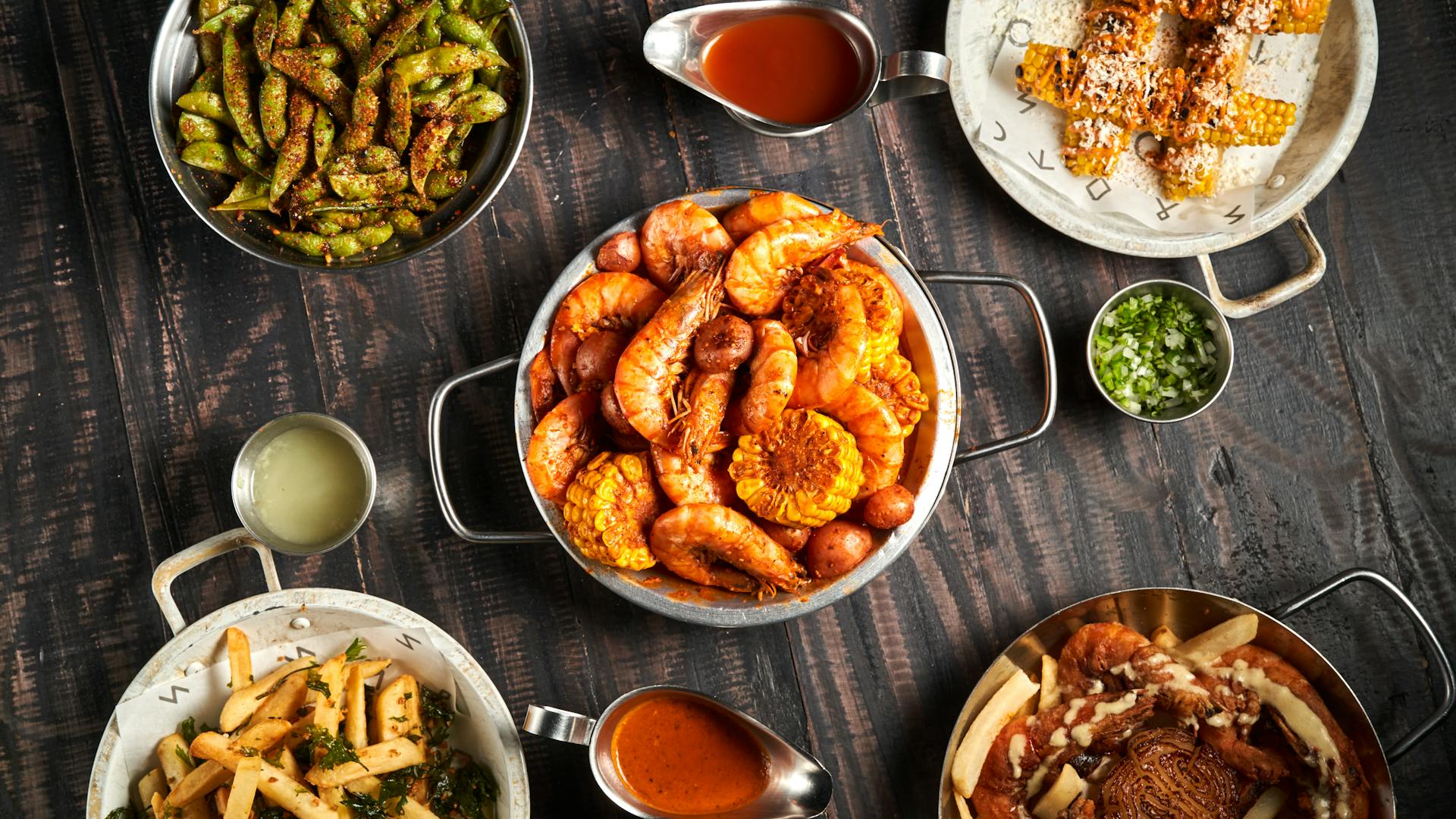
If you’ve ever looked at a Louisiana menu and thought, “Aren’t Cajun and Creole the same thing?”, you’re not alone. The names are often lumped together, especially once gumbo, jambalaya and a good shake of spice hit the table.
But Cajun and Creole aren’t interchangeable. They’re linked, they overlap, and they share a Louisiana home, yet each has its own history, identity and style of cooking. The easiest way to see the difference is to start with the people behind the food.
Shared state, different roots
Cajun culture traces back to the Acadians, French-speaking settlers who were expelled from what is now eastern Canada in the 18th century. Many settled in the rural parts of south Louisiana, where they built communities around bayous, farms, fishing and whatever ingredients were close at hand. Saveur’s overview of Cajun and Creole cooking gives a useful snapshot of that country-based origin.
Creole is a broader and more layered term. In Louisiana, it grew out of colonial society, especially in and around New Orleans. French, Spanish, African, Caribbean, Native American and later other European influences all shaped Creole culture and cuisine. This guide from Fine Dining Lovers explains that urban setting well, and it matters because a port city has a different pantry from a rural settlement.
That difference still echoes on the plate. Cajun cooking is often described as rustic, hearty and built from resourcefulness. Creole cooking is often more city-based, sauce-led and shaped by a wider flow of ingredients and techniques.
They’re not rivals. Think of them more like close relatives with different family stories.
Even so, neat labels can mislead. Families borrow, recipes travel, and modern Louisiana kitchens often blend both traditions without making a fuss about it.
How the food differs on the plate
Before the details, here’s the quick version.
| Feature | Cajun | Creole |
|---|---|---|
| Main roots | Acadian settlers in rural south Louisiana | Colonial Louisiana, especially New Orleans |
| Usual setting | Country, bayou, farm and fishing communities | City and port culture |
| Common feel | Hearty, smoky, one-pot cooking | Layered, saucy, often a bit more varied |
| Pantry clues | Sausage, pork, crawfish, catfish, rice, dark roux | Tomatoes, butter, herbs, seafood, okra, rice |
| Jambalaya style | Often “brown”, usually without tomatoes | Often “red”, with tomatoes |
| Gumbo style | Frequently darker roux, deep roasted flavour | May include tomatoes or okra, often more seafood-led |
The main takeaway is simple: both cuisines love rice dishes, roux, onions, celery and peppers. The differences often sit in setting, ingredients and style, not in a single magic rule.
Cajun food leans into practicality. Picture a dark gumbo with andouille sausage, chicken and a roux cooked until it’s the colour of strong tea. Or a crawfish etouffee with a fuller, earthier base. Rice is central, because it stretches a meal and soaks up flavour beautifully.

Photo by Cristian Jacinto
Creole food often shows a wider pantry. Tomatoes turn up more often. So do herbs, butter and seafood from the Gulf. Shrimp Creole is a classic example, with tomatoes, peppers and a rich sauce spooned over rice. Jambalaya makes the contrast easy to spot too. A New Orleans-style Creole jambalaya is often red from tomatoes, whilst a Cajun jambalaya is usually brown and built without them.
Gumbo causes the most confusion. People love asking, “So is gumbo Cajun or Creole?” The honest answer is both, depending on who’s cooking. Creole gumbo may include tomatoes or okra, especially in older New Orleans versions. Cajun gumbo often goes darker and smokier, with sausage, chicken or wild game. Seafood appears in both.
Seasoning is another area where labels blur. Cajun spice blends are usually pepper-forward, with paprika, cayenne, garlic powder, onion powder and black pepper. Creole seasoning can overlap, but herbs such as thyme, oregano and basil often show up more. Supermarket jars make this sound tidier than it is. Real kitchens are less strict. Cajun Food Tours’ flavour guide is handy if you want to compare common ingredients side by side.
The myths that muddle Cajun and Creole
The biggest myth is that Cajun means “hot” and Creole means “fancy”. That shorthand is catchy, but it doesn’t hold up well.
Cajun food can be spicy, but heat isn’t the whole story. A lot of the flavour comes from roux, stock, sausage, seafood and slow cooking. Creole food can be elegant, yes, but it can also be homely, comforting and built for a family table rather than a white tablecloth.
Another common myth is that tomatoes are the only dividing line. They’re a clue, not a verdict. If a dish has tomatoes, it may lean Creole. If it doesn’t, it isn’t automatically Cajun.
Etouffee is a good example of the overlap. Today you’ll find Cajun and Creole versions, usually with crawfish or shrimp. One cook may use more butter and a lighter base. Another may go darker, smokier and heavier on the pepper. Both can be authentic to the people making them.
That’s the heart of it, really. Food traditions are living things. They move with migration, trade, family habits and restaurant culture. Louisiana cuisine isn’t a museum display with little labels under each pot.
Conclusion
That menu question has a simple answer and a more interesting one. Cajun and Creole cooking come from the same Louisiana ground, but not from the same story.
If you remember one thing, let it be this: Cajun usually points to Acadian, rural, hearty cooking, whilst Creole usually points to New Orleans, mixed heritage and a broader pantry that often includes tomatoes and more seafood-led sauces. Then look at the plate, because the best Louisiana food rarely fits into a neat box.

