

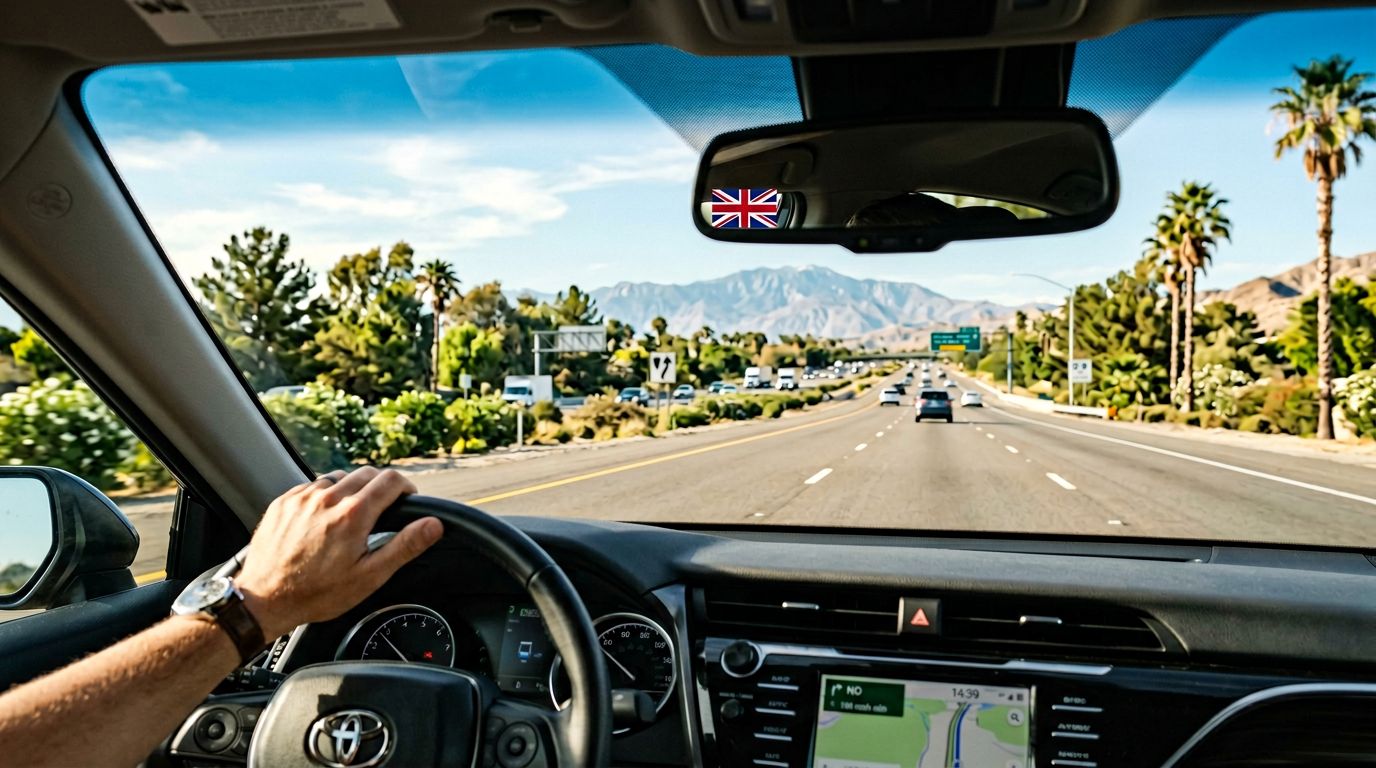
The first junction in America can feel wrong, even when you know you’re doing it right. Your instincts still whisper “keep left”, while the road wants the exact opposite.
The good news is that driving in the USA is usually easier than many British travellers expect. Roads are often wider, automatics do most of the work, and signs are clear. Most driving USA worries come down to habits, not skill. Get the basics right before you land, and the rest feels far less daunting.
What you need before picking up a hire car
For most short visits, a full UK photocard licence is enough. Because it’s in English, many states and rental desks accept it without fuss. Still, USAGov’s advice for foreign drivers says some states may also expect an International Driving Permit, so taking one as backup is sensible, especially on a multi-state trip.
Bring the same name on every document. That means your licence, passport, booking, and credit card should all match. A provisional licence won’t do, and many firms want drivers to be 25 or over. Some rent to drivers aged 21 to 24, but usually with a hefty daily fee.
Before the details pile up, keep this split in mind:
| Broadly nationwide | Often state-specific |
|---|---|
| Drive on the right, speed signs in mph, most hire cars are automatic, and rental firms pass on toll and camera charges | Right turn on red, phone laws, child-seat rules, toll systems, and whether an IDP is strongly advised |
That last column matters more than many people realise.
When you book, check what insurance is already included. In the US, the terms are different from UK car hire. LDW or CDW covers damage to the hire car, while liability cover pays for damage or injury you cause to others. Counter staff may try to sell more. Sometimes that’s useful, but sometimes you’re paying twice. This US car rental guide gives a good feel for the extras and the language used at the desk.
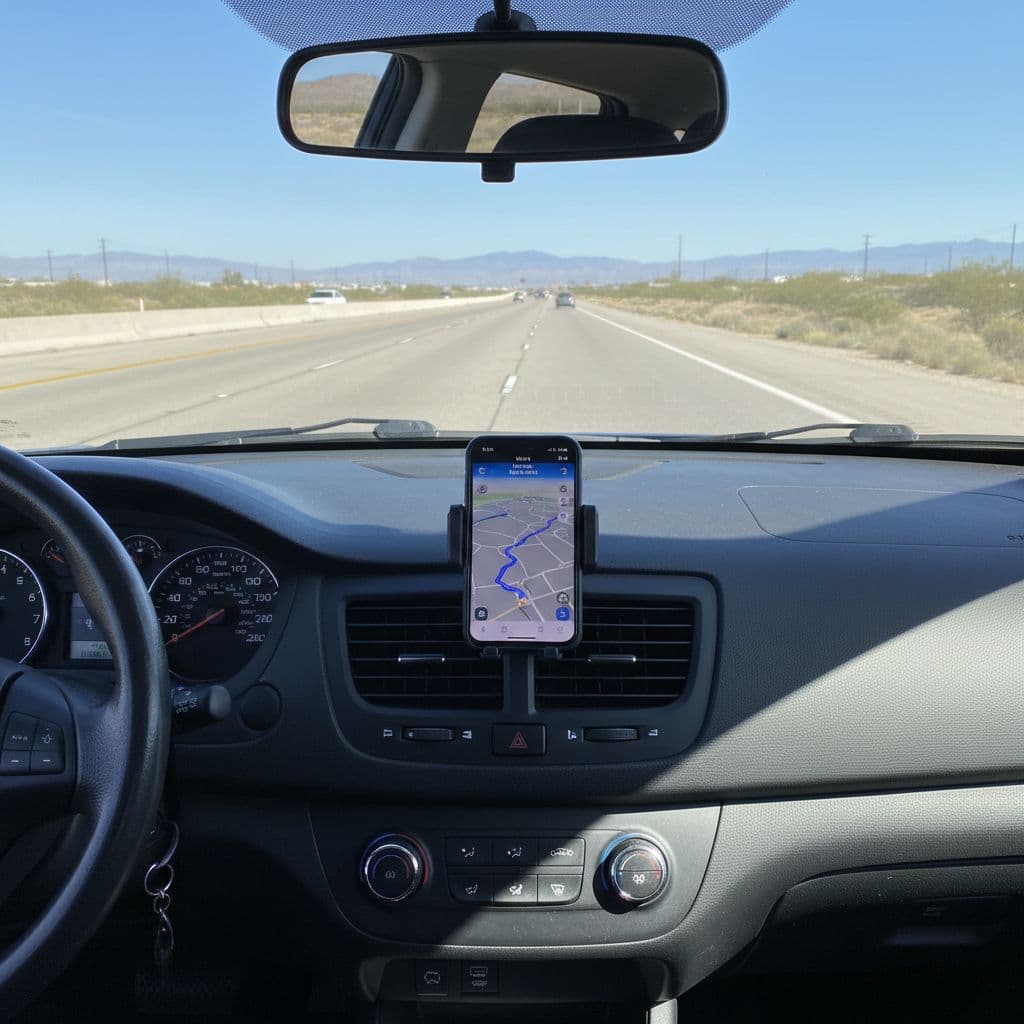
Also, slow down before you leave the car park. Set the mirrors, find the lights and wipers, pair your phone legally, and check the speedo reads mph, not km/h. Take photos of every panel, wheel, and the windscreen. That two-minute habit can save a long argument later.
US road rules that catch British drivers out
The biggest shift is obvious: you drive on the right. Yet the smaller differences cause more trouble. British drivers often drift into the wrong lane after turning, especially when the road is empty. Stay calm, turn into the nearest correct lane, and say it out loud if you need to: “right side, right lane”.
Traffic lights often sit on the far side of the junction. Stop at the line or crosswalk, not under the signal. Four-way stops also need a moment’s thought. The first vehicle to stop goes first. If two arrive together, the one on the right usually has priority.
If you see a stopped school bus with flashing lights, stop and stay stopped. Fines can be steep, and the rule is enforced hard.
Another surprise is right turn on red. In many states you may turn right at a red light after a full stop, unless a sign bans it. However, it isn’t compulsory. If you’re unsure, wait. Local drivers may grumble, but that’s better than guessing wrong.
As of April 2026, there are no special new federal rules for British visitors, but enforcement has tightened in ways that hit everyone. More cities use speed and red-light cameras, especially in work zones. Handheld phone use is also more heavily policed, so use a proper mount and hands-free calls only.
Seat belts are non-negotiable. Drink-driving laws are strict, and so are “move over” laws. If police, fire, recovery, or other emergency vehicles are stopped with flashing lights, change lane if it’s safe, or slow well down.
For a quick state check before you cross a border, TyreMap’s state-by-state driving summary is handy.
Fuel, tolls and route planning for a fly-drive holiday
Petrol is “gas”, and it’s sold by the gallon, not the litre. A US gallon is 3.8 litres, so prices can look cheaper or dearer than they really are at first glance. In April 2026, regular gas averaged about $4.04 a gallon nationwide, while California sat much higher.
UK bank cards sometimes fail at self-service pumps because they ask for a ZIP code. If that happens, go inside and pay the cashier. Fill up earlier than you think you need to in desert, mountain, or rural areas, because the next station may be far away.
Tolls are another easy place to lose money. Many US toll roads are cashless now. Your hire car may have a transponder, but the rental company can charge daily toll-programme fees on top. If you decline that option, learn how each state wants payment. Miss a toll, and the admin fee can sting more than the toll itself.
Distance also plays tricks on British brains. A 300-mile day on a US highway can feel easy on paper, then tiring in practice. Build in breaks every two hours, keep water in the car, and avoid long night drives in areas with deer or poor mobile signal. A fly-drive holiday works best when the route has breathing space.
The first junction may still feel odd. After that, preparation does most of the heavy lifting.
Carry the right documents, understand what changes by state, and don’t let the hire desk rush you. Once those pieces are in place, driving in the USA becomes what it should be: a practical, freeing way to see far more of the country.
Want to plan a trip? Rendezvous Roadtrips offer bespoke self drive holidays for the discerning traveller.

