

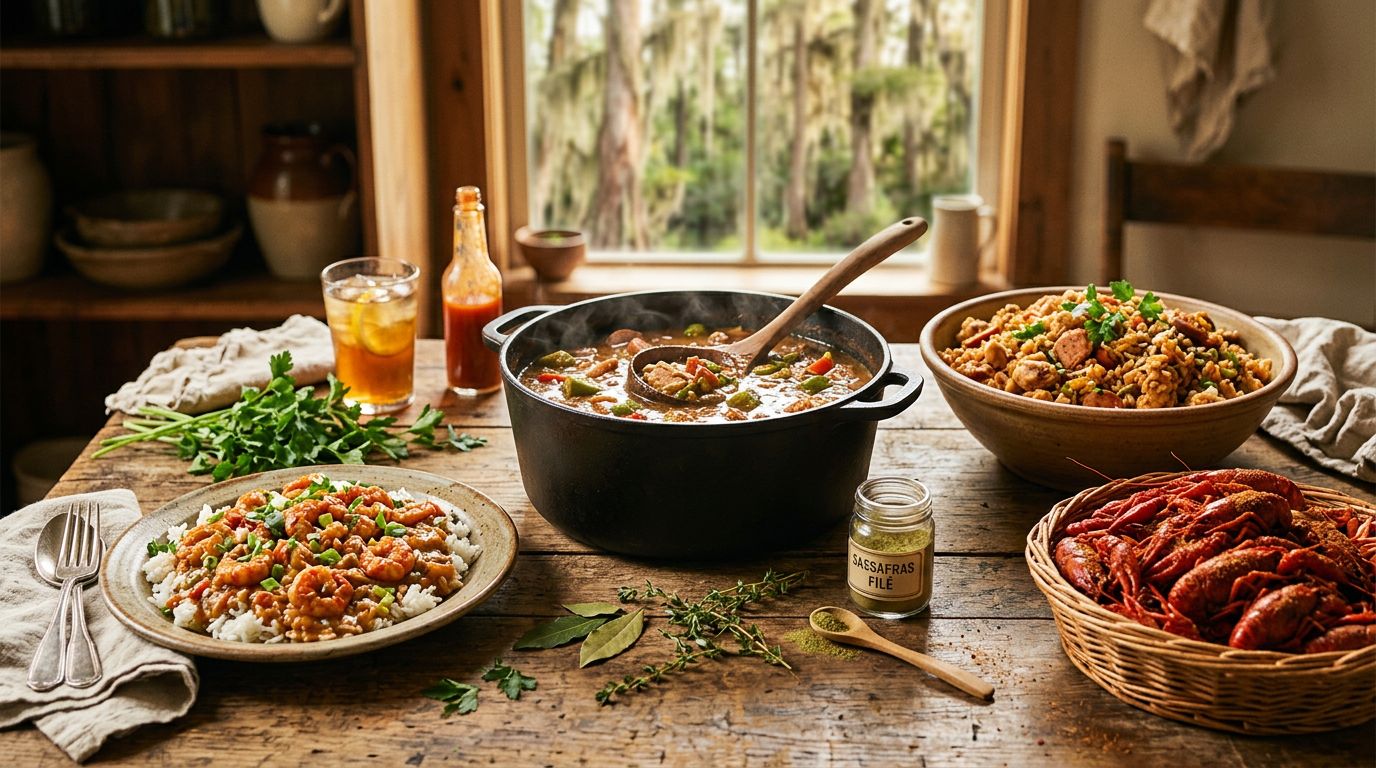
The first time I stared at a Louisiana menu, words like “filé” and “etouffee” felt like clues in a puzzle. Once you know a few key terms, though, the whole meal starts to make sense.
Use this cajun creole food glossary as a plain-English guide when you’re cooking, ordering, or travelling. The flavours overlap, the histories cross paths, and the names tell you a lot about what is heading to the table.
Cajun and Creole are close cousins, not the same thing
People often bundle Cajun and Creole food together, and that is partly fair. They share Louisiana roots, plenty of ingredients, and a love of bold flavour. Still, they are not identical. For a fuller background, Food & Wine’s guide to Creole vs. Cajun food gives useful context.
Cajun and Creole food overlap on the plate, but the words do not mean the same thing.
Cajun cooking grew from Acadian home cooking in rural Louisiana. It often feels hearty and practical, with one-pot dishes and smoky meats. On a menu, that might mean boudin, dark-roux gumbo, or jambalaya. It is more closely tied to Cajun cuisine.
Creole cuisine has strong New Orleans roots and mixes French, Spanish, African, Caribbean, and local influences. It often shows up in sauces, seafood dishes, and city restaurant classics. You might spot shrimp Creole, oyster dishes, or tomato-based jambalaya. It is more closely tied to Creole cuisine.
Pantry words that shape the pot
A lot of Louisiana food language starts before the dish itself. If you cook from local recipes, these are the terms that appear again and again. If you enjoy old-school food language, Chef John Folse’s dictionary of Cajun terms is a good extra read.
Roux is flour cooked in fat until it turns pale, brown, or deeply dark. It thickens gumbo and etouffee, and it adds a toasted, nutty taste. When a recipe says “make a dark roux”, expect patience. It belongs to both cuisines, though dark roux often leans Cajun.
The holy trinity means onion, celery, and green pepper. It is the base for many Louisiana dishes, much like mirepoix in French cooking. Recipes often start by telling you to cook the trinity in oil or butter. It is common in both Cajun and Creole kitchens.
Andouille (ahn-DOO-ee) is a smoked pork sausage with a firm bite and strong seasoning. Cooks slice it into gumbo, jambalaya, and beans, or serve it with rice. “Chicken and andouille” is a classic menu pairing. It is strongly linked with Cajun cooking, though Creole cooks use it too.
Filé (FEE-lay) is ground sassafras leaves. It thickens gumbo and adds an earthy note, usually stirred in near the end or at the table. A common mistake is treating it like a general spice mix. It is associated with both, especially gumbo traditions.
Tasso is cured, smoked, peppery pork, usually cut from shoulder. Cooks use small pieces to season beans, gravies, and sauces rather than serve it as the main event. If a recipe calls for tasso, expect a smoky push in the background. It is more often associated with Cajun cooking.
Menu favourites that tell you what is coming
These are the words that turn up on restaurant boards, festival stalls, and handwritten specials. Once you know them, reading a Louisiana menu gets much easier.
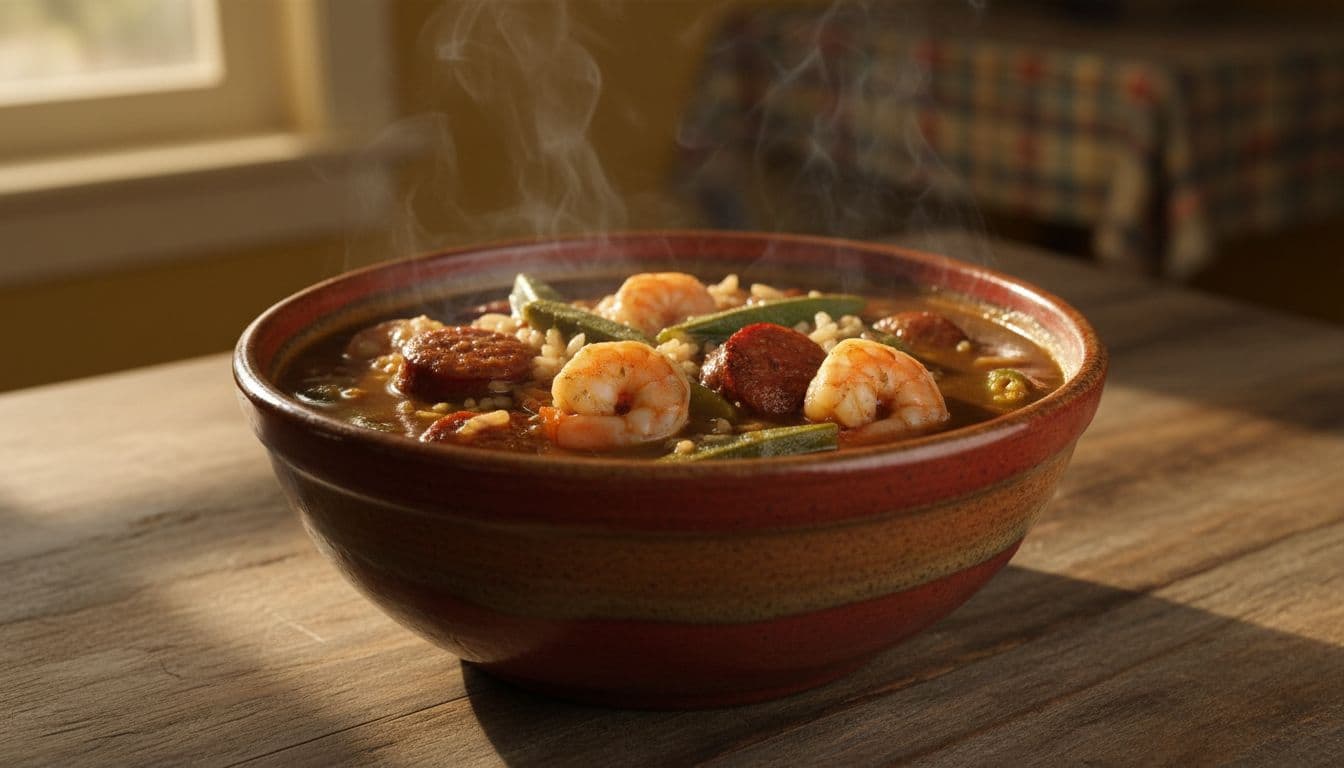
Gumbo is a rich stew built with stock, meat or seafood, and usually roux, okra, or filé. It nearly always comes over rice. You might see seafood gumbo, chicken and sausage gumbo, or duck gumbo on a menu. It belongs to both cuisines. Also, gumbo does not always include okra.
Jambalaya is a one-pot rice dish cooked with meat, seafood, or both. Cajun versions are often brown from browned meat and stock, while Creole versions may include tomato. On a menu, “shrimp jambalaya” or “sausage jambalaya” tells you the main protein. It is common to both.
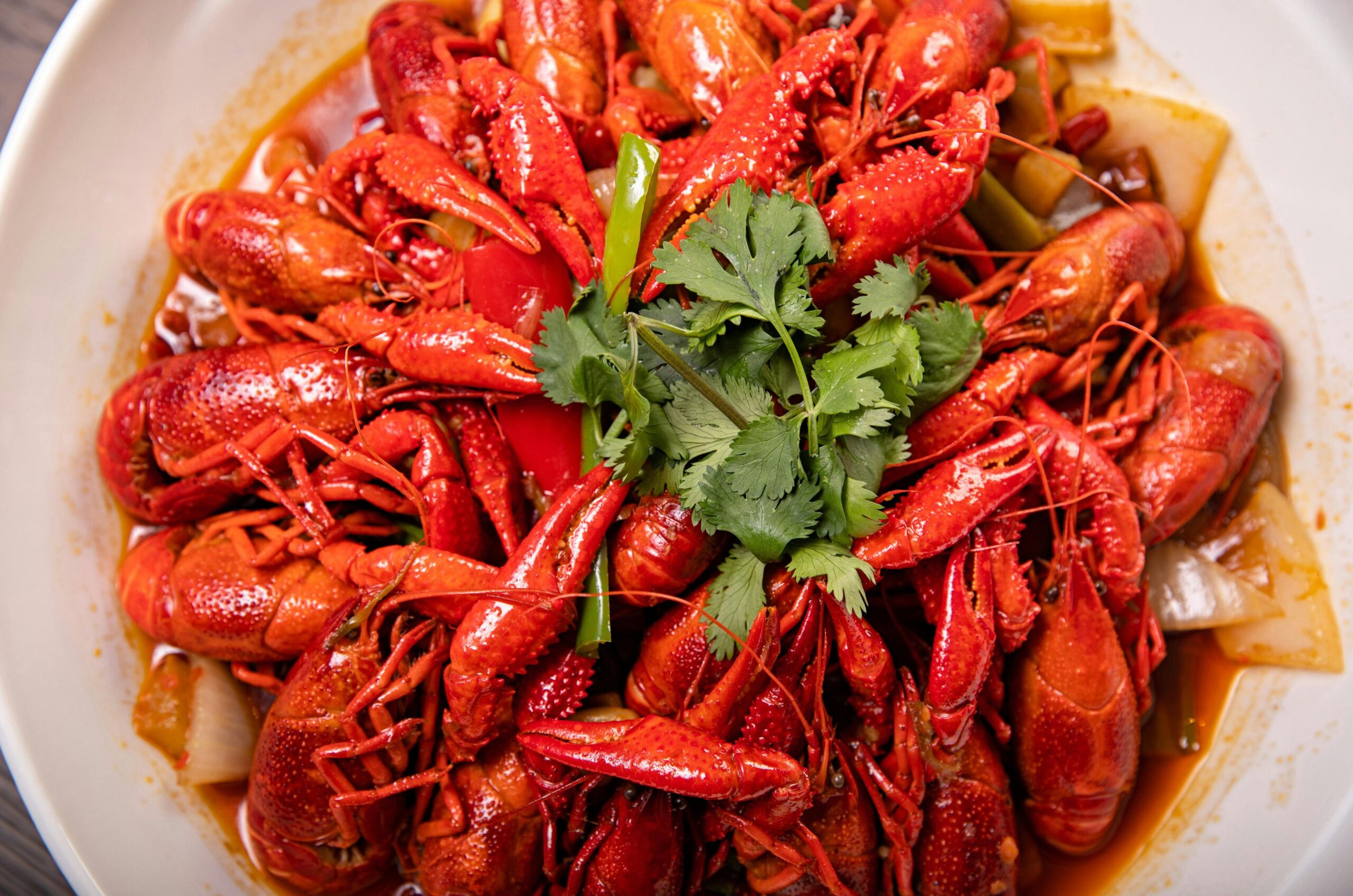
Etouffee (ay-too-FAY) means “smothered”. The dish is usually crawfish or shrimp cooked in a thick, seasoned sauce, then spooned over rice. “Crawfish etouffee” is the phrase you will see most often. It is more often linked with Creole cuisine, though Cajun cooks make it too.
Boudin (BOO-dan) is a soft sausage filled with pork, rice, and seasoning. People eat it in the casing, stuffed into bread, or fried into boudin balls. You are as likely to find it at a petrol station counter as in a cafe. It is mostly associated with Cajun cooking.
Po’boy is a long sandwich on French bread, filled with fried seafood, roast beef, or other savoury fillings. In New Orleans, ordering it “dressed” usually means lettuce, tomato, pickles, and mayo. It is more closely tied to Creole and New Orleans food than to Cajun cooking.
Sweet bites and comfort classics
Not every key term is a stew or sausage. Some words belong to cafe stops, sweet shops, and Monday supper plates.
Red beans and rice is exactly what it sounds like, but the slow simmering matters. It is often served with sausage and plenty of seasoning, and it has strong New Orleans ties. You may see it as a weekday special. It leans Creole, though people eat it across Louisiana.
Beignet (ben-YAY) is a square piece of fried dough covered with icing sugar. It is usually served hot with coffee, often at breakfast or as a mid-afternoon treat. Visitors sometimes call it a doughnut, which is close, but the texture is lighter. It is more closely associated with Creole New Orleans.
Praline in Louisiana usually means a soft pecan sweet made with sugar, butter, and cream. You will spot it in sweet shops, hotel gift corners, and dessert cases. It is not the same as the crisp praline you may know from Europe. It is mainly associated with Creole tradition.
A good glossary does more than translate words. It helps you read the story behind the dish, whether that is a dark roux on the stove or a hot beignet at a cafe table.
If you are heading south, a Louisiana Cajun food road trip is a fine way to put these terms to work. After that, “gumbo” and “filé” stop looking like mysteries and start sounding like dinner.

