

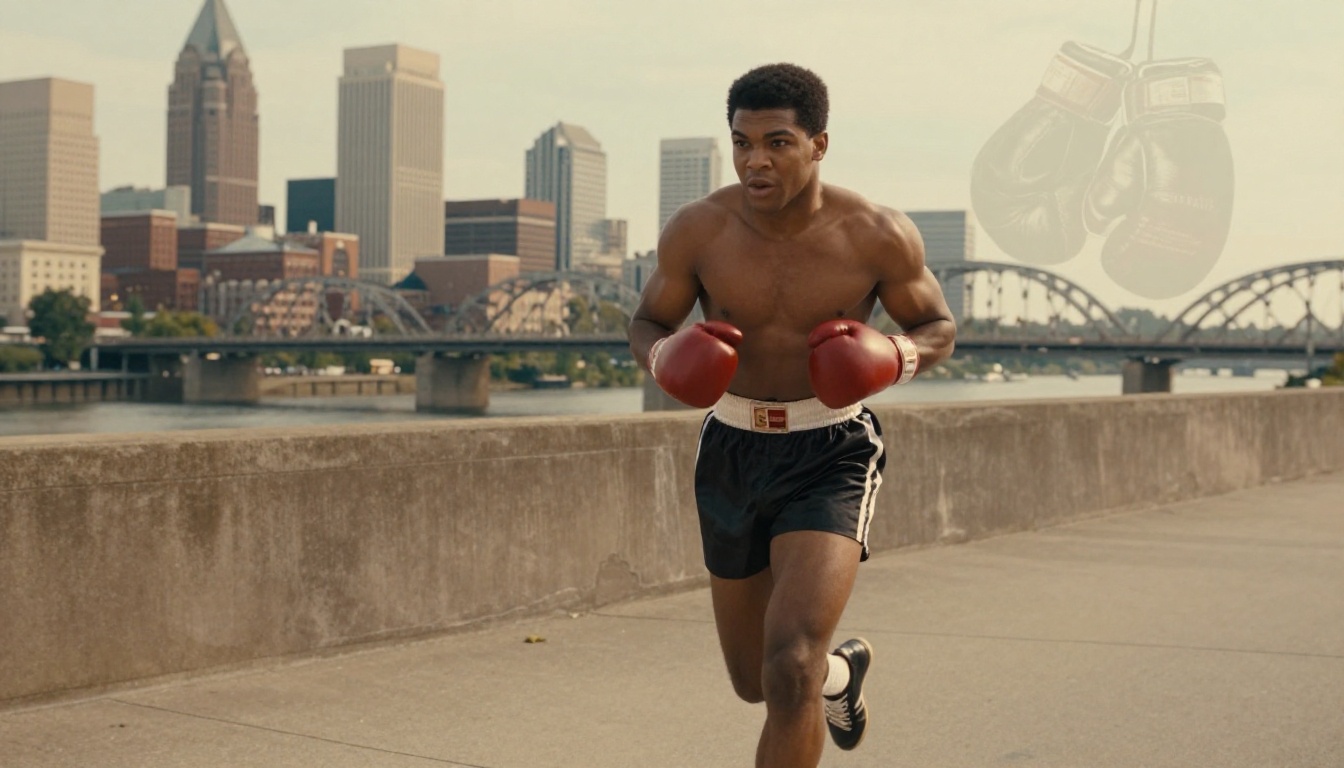
Few sporting figures belong to a city as fully as Muhammad Ali belongs to Louisville. Long before he became a global name, he was Cassius Clay, a Louisville boy with sharp wit, quick feet, and a confidence that refused to stay small.
If you’re visiting Louisville, Ali’s story gives the city a deeper shape. It helps you see its pride, its scars, and its sense of possibility. And because he never fully let go of his hometown, Louisville still carries his imprint in a way that feels personal, not staged.
How Louisville shaped the young Muhammad Ali
Muhammad Ali’s legend started on a world stage, but its roots were local. He was born in Louisville in 1942 as Cassius Marcellus Clay Jr, and he grew up in a city that was both warm and hard-edged. That mix mattered.
Louisville gave him his first audience. It also gave him his first obstacles. He learned early how to be noticed, how to protect his pride, and how to speak with force. Those traits later made him famous, yet they were formed close to home.
His early years weren’t only about boxing. They were about neighbourhood life, church, family, school, and the daily rules of a segregated city. Because of that, Ali’s public voice didn’t come from nowhere. It grew from what he saw around him and from how he learned to answer back.
Growing up in a divided city
Louisville in the 1940s and 1950s was a city of limits for Black families. Segregation shaped schools, housing, public spaces, and everyday opportunity. So, while young Cassius Clay had talent and charm, he also grew up in a place that told many people exactly where they could and couldn’t belong.
That experience helped form Ali’s sense of justice. He didn’t simply want to win in the ring. He wanted dignity outside it too. His later refusal to stay quiet about race, religion, and power makes more sense when you place him back in his hometown.
He grew up in West Louisville, where family and community offered strength, even when the wider system did not. That contrast stayed with him. You can hear it in his pride, in his defiance, and in the way he turned confidence into armour.
The stolen bike story that changed everything
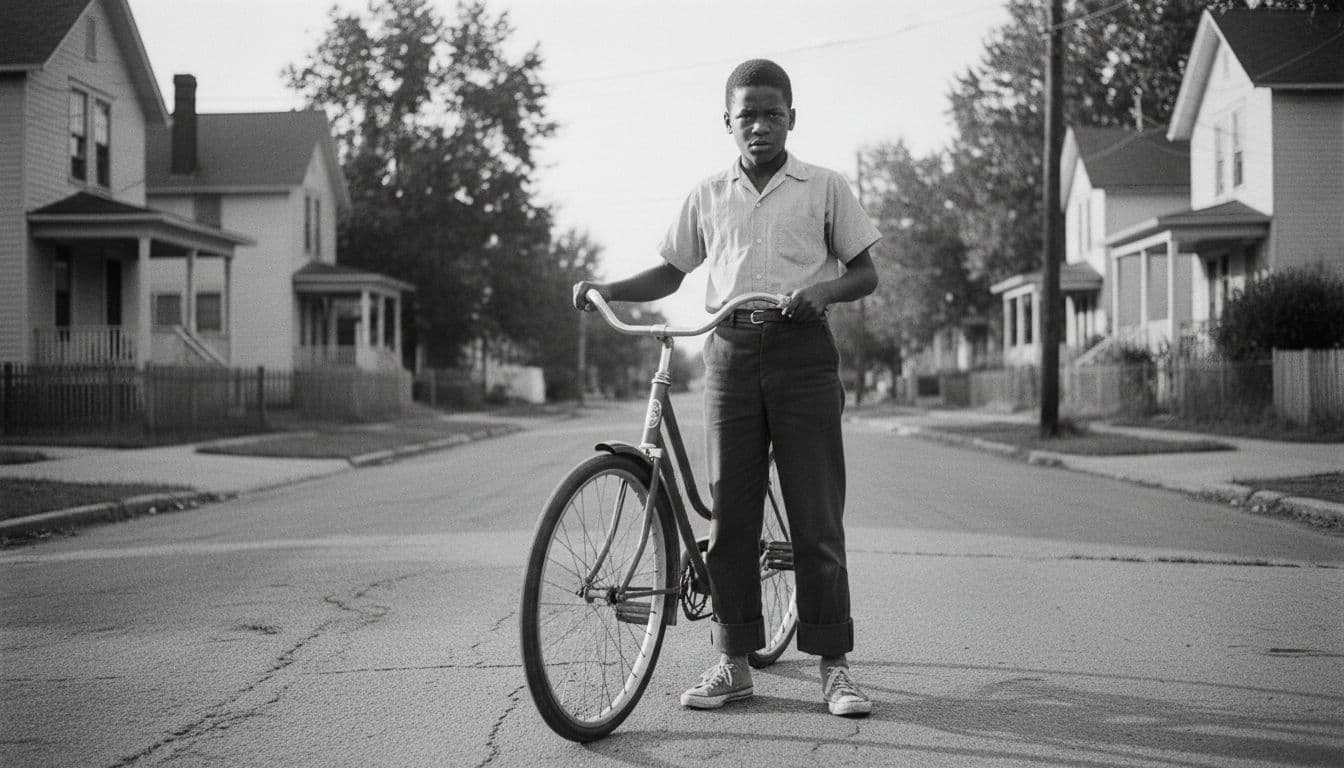
Every city has a story it tells with a bit of pride, and Louisville has this one. When Cassius Clay was 12, his bicycle was stolen. Angry and upset, he told police officer Joe Martin that he wanted to beat up the thief.
Martin, who also coached boxing, gave him simple advice. First learn how to fight.
That moment became one of the best-known origin stories in American sport. It matters because it feels so ordinary at first. A lost bike doesn’t sound like the start of history. Yet in Louisville lore, it marks the exact point where frustration turned into purpose.
The story also says something about the city. Ali’s rise did not begin in a polished training camp or under bright lights. It began in a local encounter, shaped by chance and by a community institution. For visitors, that detail makes his greatness feel grounded. He wasn’t dropped from the sky. He came out of Louisville’s streets, moods, and rhythms.
What Muhammad Ali gave back to Louisville
Ali gave Louisville fame, of course, but his legacy runs much deeper than that. He gave the city a symbol people could claim with feeling. Not only a champion, but a man who stood by his beliefs, even when it cost him.
Cities often celebrate winners. Louisville celebrates Ali because he represented more than victory. He showed that someone from here could speak to the world and still carry his hometown with him.
A hometown symbol of courage and self-belief
For many residents, Ali stands for boldness without apology. He was funny, proud, stylish, stubborn, and fearless in public. That made him larger than sport, and it also made him unmistakably memorable as a Louisville son.
His image now works almost like a civic mirror. Louisville sees in him a story of ambition, struggle, and reinvention. For younger people, he proves that local roots don’t limit you. They can sharpen you.
In Louisville, Ali isn’t remembered only for how hard he punched, but for how fully he believed in himself.
That self-belief still matters. It’s part of the city’s language of pride. When locals talk about Ali, they often speak with ownership, because his rise reflected something they recognise in Louisville itself, toughness, talent, and a refusal to be underestimated.
His work for children, compassion, and community
Ali’s legacy in Louisville also rests on kindness. People remember the headlines and the titles, yet they also remember his warmth with children, his humour, and his concern for others. That part of the story often lingers longer than a record sheet.
Across the years, Ali became linked with service as much as spectacle. His humanitarian work, his concern for the vulnerable, and his public compassion shaped the way Louisville honours him today. He is celebrated as a fighter, yes, but also as a person who cared.
That balance matters for the city. It means his memory doesn’t sit in a single lane. He belongs in sports history, civil rights history, and community life all at once. In Louisville, that fuller picture gives his legacy staying power. He remains admired not only because he won, but because people saw heart behind the fame.
Where visitors can experience Ali’s legacy in Louisville today
If you’re travelling through Louisville, Ali’s story is easy to find, but it helps to know where to look. Some sites offer a full museum experience. Others are quieter, stitched into streets, murals, and neighbourhood memory.
This quick guide helps place the main stops in context.
| Place | Why it matters | What you’ll find |
|---|---|---|
| Muhammad Ali Centre | The city’s main tribute to his life and values | Exhibits, films, personal items, interactive displays |
| Public murals and memorials | Shows how the city keeps Ali visible in daily life | Street art, sculptures, photo spots |
| Neighbourhood and historic markers | Connects visitors to his early years | Local context, heritage stops, wider city story |
Taken together, these places tell you that Ali’s legacy lives in both major attractions and ordinary streets.
Inside the Muhammad Ali Centre
The Muhammad Ali Centre is the clearest place to begin. Set in downtown Louisville, it goes beyond belts, gloves, and famous fights. Boxing is there, of course, but the centre pushes you towards the bigger themes of his life.
Visitors can expect exhibits on his career, beliefs, public battles, and humanitarian work. The tone is reflective rather than flashy. You move through spaces that ask you to think about courage, respect, conviction, dedication, giving, and spirituality, the six principles often linked to Ali’s life.
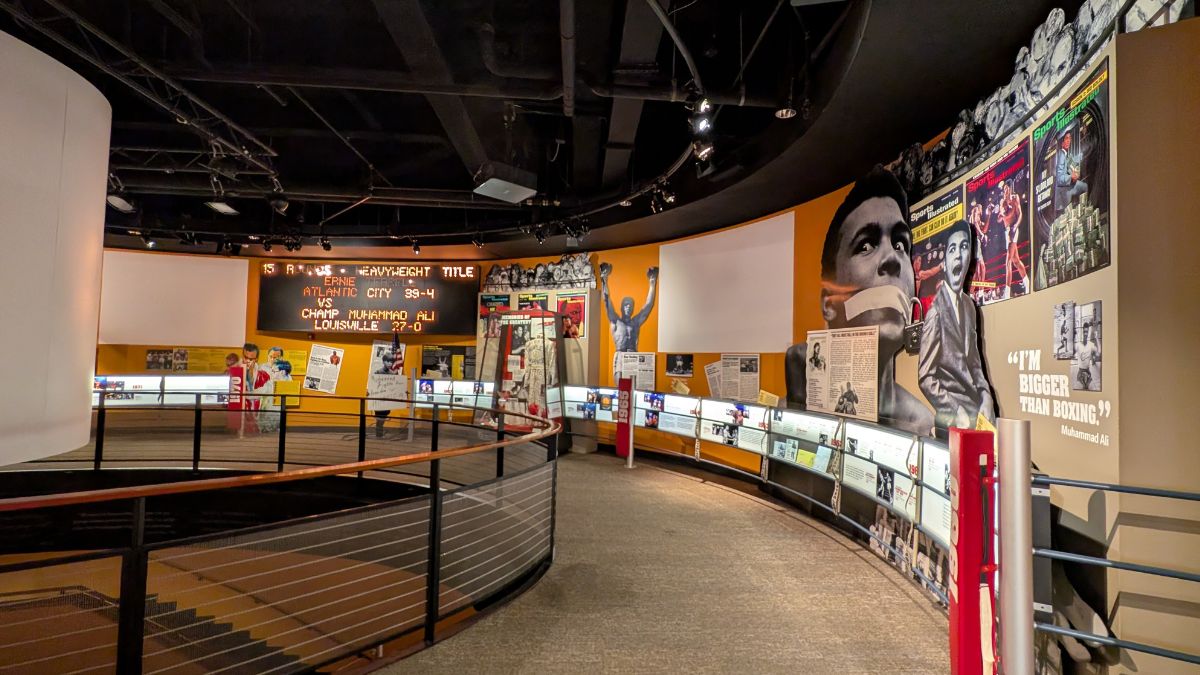
What makes the centre memorable is its range. One moment, you’re looking at a sports icon. Next, you’re thinking about conscience, race, fame, and what it means to use a public voice well. Even if you’re not a boxing fan, the centre still works because Ali’s life touched much more than sport.
If you only have time for one Ali-related stop in Louisville, this should be it. It gives the broadest picture and helps the rest of the city make more sense.
Murals, memorials, and local sites tied to his life
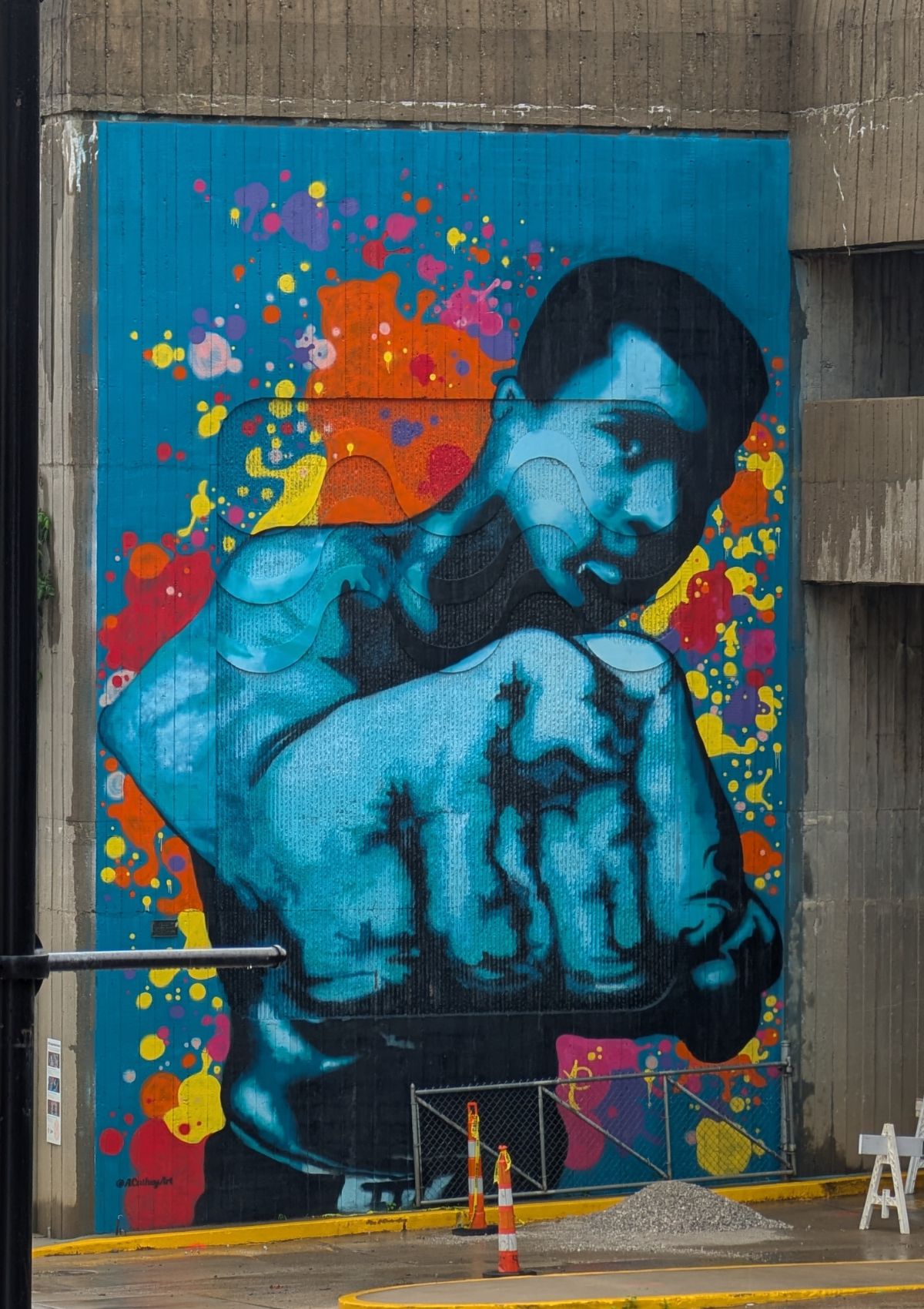
After the centre, Ali’s presence appears across Louisville in a more scattered, human way. Murals are part of that appeal. They turn walls into reminders that this city still speaks his name with affection.
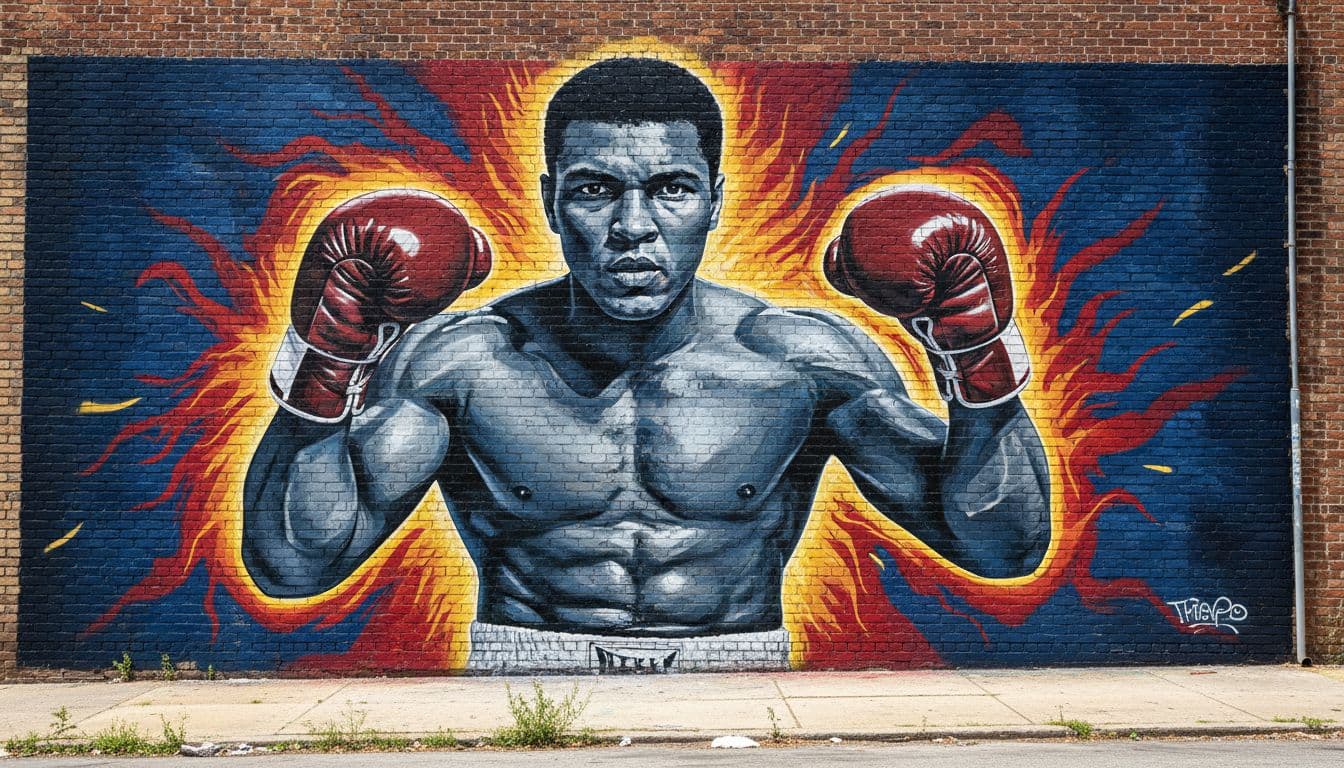
You’ll also find memorials, historic markers, and neighbourhood references that tie back to his early life. Some visitors seek out childhood connections. Others prefer public art and downtown landmarks. Either way, these stops matter because they place Ali in the city’s living fabric, not only behind museum glass.
That makes a difference. A mural catches you by surprise. A marker asks you to pause. A local conversation fills in what a plaque can’t. So, if you’re planning a Louisville itinerary, leave room to wander a little. Ali’s story often appears where you least expect it.
Why Ali’s legacy still shapes Louisville’s image
Ali’s influence didn’t end with his lifetime. Louisville still uses his story to explain itself, both to residents and to visitors. He gives the city a language of pride that feels global and local at once.
For tourism, that matters. For civic identity, it matters even more.
How the city uses his story in culture and tourism
Louisville presents Ali as one of its defining figures, and that choice feels natural. He appears in visitor guides, museum routes, public art, and cultural storytelling across the city. In other words, he helps frame Louisville as a place of character, talent, and history.
That use of his story works because it doesn’t feel pasted on. Ali is woven into the city’s public memory. Travellers don’t only hear his name in one attraction. They meet it in exhibitions, walking routes, local recommendations, and the wider conversation about what Louisville values.
As a result, Ali helps Louisville stand out. Bourbon, baseball, and the Kentucky Derby all matter here. Still, Ali adds something those themes can’t quite offer. He brings moral weight, personality, and a global connection that reaches far beyond sport.
What new generations in Louisville can learn from him
Ali still speaks to younger generations because his lessons feel practical. Confidence mattered to him, but so did discipline. He valued style, yet he also valued hard work. He stood out, though he never treated purpose as optional.
That mix remains useful in any era. Louisville can look at Ali and see how talent grows when matched with training. Young people can also see that speaking clearly has a cost, but silence has one too.
His legacy, then, isn’t only about memory. It’s about example. He showed that faith, conviction, and self-respect can live alongside humour and grace. That’s a rare model, and it still feels fresh.
Louisville gave Muhammad Ali his first footing, but he gave the city something lasting in return, a way to see itself with more courage. You can feel that in museums, on walls, in neighbourhood stories, and in the pride locals still carry when they talk about him.
If you’re travelling to Louisville, follow Ali’s trail and you’ll understand more than one man’s past. You’ll understand the heart of the city.
And once you’ve seen that, Louisville stops feeling like a stop on a map. It starts feeling like the place that helped shape a voice the whole world heard.

